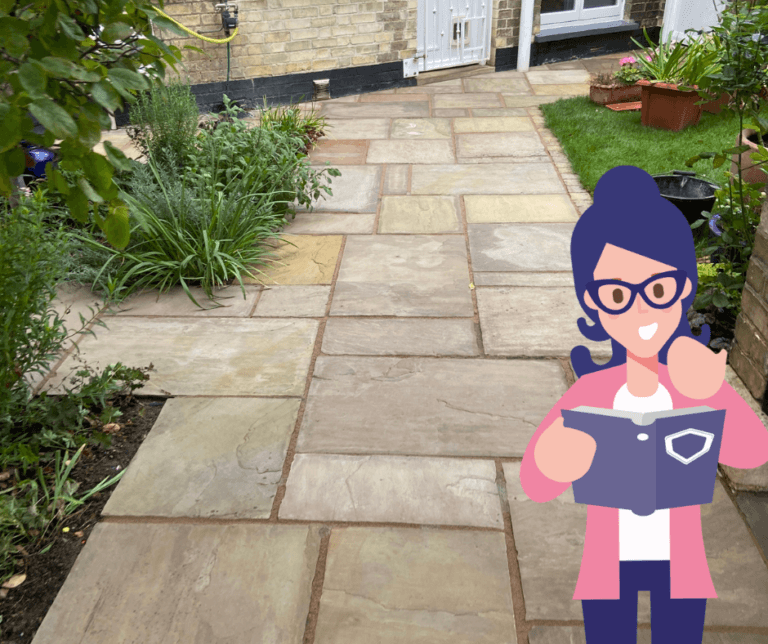
If you have pets at home, cleaning your patio or driveway is not only about making the surface look better. It is also about thinking carefully about what your dog, cat or other animal may walk on, sniff, lick or lie near afterwards.
A patio cleaner that sounds strong enough to remove green algae, moss or black spots may not be the right first choice for a pet-friendly home.
At the same time, leaving a patio slippery, dirty or covered in organic growth is not ideal either, especially if pets, children or visitors use the area every day.
The safest answer is usually not “use the strongest product”. It is to clean the surface in a way that suits the material, controls residue and keeps pets away until the area is safe to use again.
Quick answer for pet owners
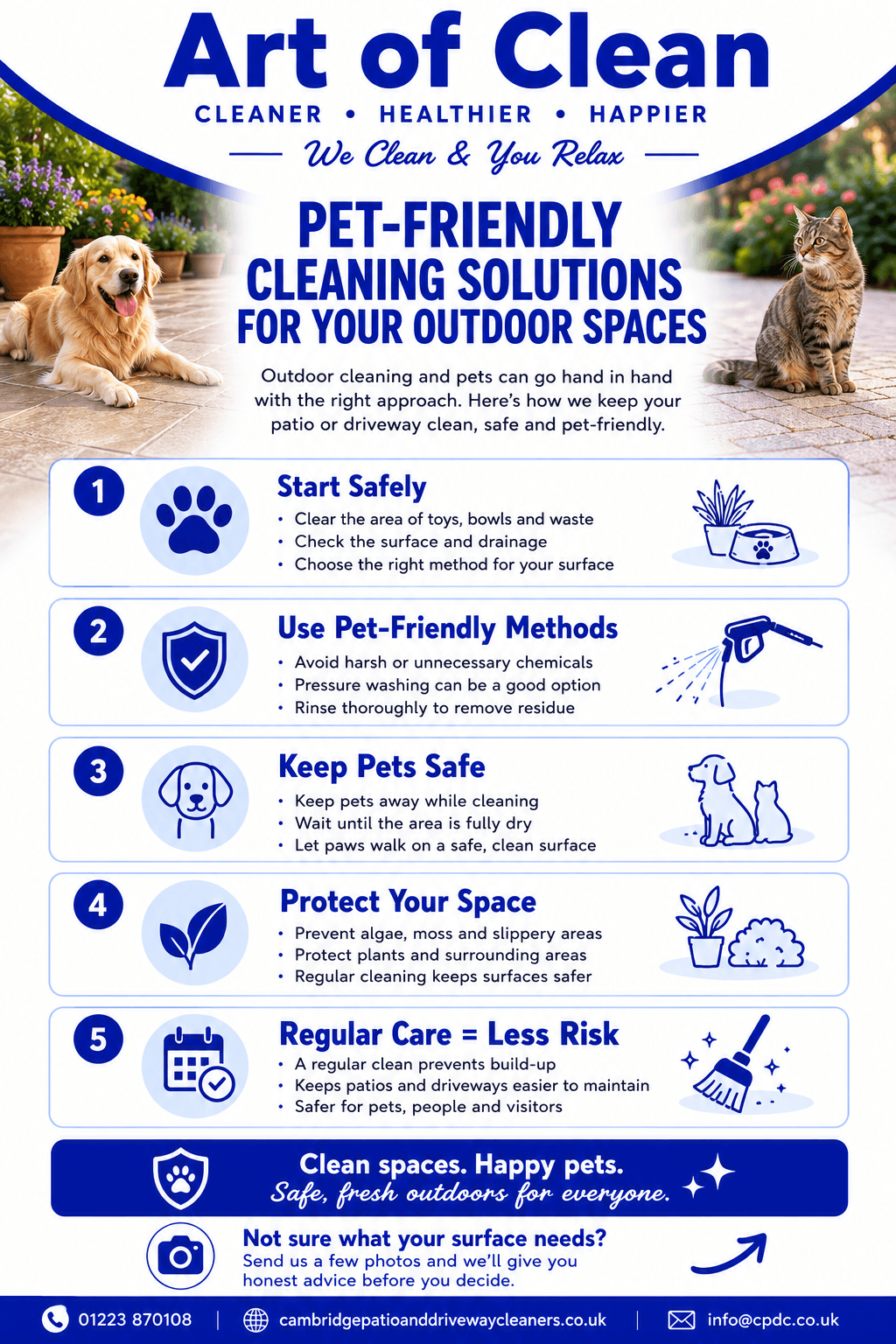
Yes, you can keep patios and driveways with pets in mind.
The safest route depends on:
- what the surface is made from
- whether there is algae, moss, black spot, oil or general dirt
- whether any chemicals or garden products have already been used
- where the water will drain
- whether pets use the area daily
- whether the surface needs re-sanding, sealing or further care after cleaning
If your pet uses the patio as a regular route into the garden, or your dog likes to lie on warm paving, it is worth being a little more careful before applying any outdoor cleaner.
For wider surface advice, you can also read our guide to patio and driveway cleaning in Cambridge.
Why pet-friendly outdoor cleaning matters
Pets experience outdoor spaces differently from us.
We may walk across a patio in shoes. Dogs and cats walk directly on it. They may sniff corners, drink from puddles, lick their paws, roll on the surface or lie down where cleaning residue could still be present.
That is why pet-friendly patio cleaning is not just about choosing a product with kind wording on the label. It is also about how the work is planned, how the surface is rinsed, how long the area is kept clear and whether the cleaning method is suitable for the paving.
The RSPCA gives sensible general advice around cleaning products and pets, including using pet-safe products where possible and keeping pets away from freshly cleaned surfaces until they have dried and aired out. You can read their advice here: RSPCA spring pet safety advice.
Start with the safest first step: clear and assess the area.
Before using water, pressure or any cleaner, clear the patio or driveway properly.
Move pet bowls, toys, bedding, planters, garden furniture and anything your pet may return to later. Sweep away loose leaves, mud and debris. If there is pet waste, remove it safely and hygienically before cleaning begins.
This simple step helps in two ways. It makes the clean more effective, and it gives you a better look at the surface underneath.
Check for loose slabs, damaged pointing, low block paving joints, standing water, cracked areas and spots where previous products may have been used. If the surface is natural stone, older concrete, block paving or porcelain, the cleaning method needs to suit that material.
If you are dealing with algae or moss, our guide to removing algae and moss from your patio explains why moisture, shade and surface condition all matter.
Be careful with “natural” cleaning hacks.
It is easy to assume that natural means safe.
That is not always true for outdoor surfaces or pets. Vinegar, baking soda, washing-up liquid, bleach-based mixes and other household methods are often suggested online, but they may not suit every patio or driveway.
Some products can affect natural stone, leave residue, damage plants, disturb wildlife, run into drains or react badly with previous treatments. A patio that has been sealed before may also respond differently from an untreated one.
If pets use the area, the risk is not only the paving. It is also what may remain on the surface afterwards.
A safer approach is to pause before adding unknown products. If you are not sure what the surface is made from, or what has already been used, take a clear photo and ask for advice first.
Can pressure washing be pet-friendly?
Pressure washing can be part of a pet-conscious clean, especially when the aim is to remove dirt, algae, moss and loose organic growth without relying heavily on products.
But pressure washing still needs judgement.
Too much pressure, the wrong nozzle or cleaning too close to the surface can damage softer paving, disturb weak joints or remove sand from block paving. On some patios, pressure washing may improve the general appearance but not remove every stain or black spot.
For pet owners, the useful point is this: pressure washing might reduce the need for harsh product use in some situations, but it still needs to be controlled, rinsed properly and matched to the surface.
If your driveway is block paving, you may also need to think about the joints afterwards. Our article on putting sand back into block paving after cleaning explains why kiln-dried sand may be needed once the surface is clean and dry.
What a professional should check before cleaning around pets
A good patio or driveway clean should not start with maximum pressure or a strong product.
It should start with a proper look at the surface and the way the area is used.
For a pet-friendly clean, it helps to check:
- where pets usually walk, eat, play or rest
- whether there are bowls, kennels, runs or hutches nearby
- where rinse water will drain
- whether there are lawns, beds, ponds or plants close to the cleaning area
- whether the surface is fragile, loose or previously sealed
- whether staining needs a specific treatment rather than general pressure washing
- whether pets can be kept away during cleaning and while the area dries
This is especially important if the patio has stubborn marks. Black spot lichen, rust, oil and older staining may need a different approach from normal surface dirt.
If your patio has small dark marks that do not brush away, our guide to black spots on patio slabs may help you understand what you are looking at before you try a product.
When can pets go back onto a cleaned patio or driveway?
There is no single answer that fits every job.
It depends on the surface, the cleaning method, the weather, whether any product has been used and how well the area has dried. A sunny, well-drained patio may dry much faster than a shaded path with poor airflow.
As a sensible rule, pets should be kept away while cleaning is happening and until the surface has dried and aired properly. If a cleaning treatment has been used, follow the product instructions and ask the cleaning team when pets can safely return to the area.
This is one of the reasons planning matters. If your dog needs garden access during the day, it may be worth arranging a safe route before the clean starts.
What about pet smells, mess or accidents outside?
Outdoor pet mess should be handled carefully, but it is important not to overpromise what patio or driveway cleaning can do.
A professional clean can often improve the appearance and freshness of the area, especially where dirt, algae and general outdoor build-up have gathered. However, odour, staining and residue can depend on the surface type, how long the issue has been there and what has already been used.
Porous surfaces may hold residue more than harder, sealed or less absorbent materials. If there has been repeated pet soiling in one area, mention it before the clean so the team can give realistic advice.
The honest answer is better than a rushed promise. Some areas may improve well. Others may need careful treatment, more than one step or a discussion about what is realistic.
How to keep outdoor areas cleaner between professional visits
Small habits can make a real difference, especially in homes with pets.
Sweep the patio regularly so leaves, soil and pet hair do not sit in damp corners. Move bowls and outdoor beds now and again so the surface underneath can dry. Rinse muddy paw areas where suitable, but avoid leaving standing water if drainage is poor.
Keep an eye on shaded paths, steps and the route your pet uses most often. These are often the first places to become green or slippery-looking.
If you have a driveway as well as a patio, our guide on how often you should clean your driveway may help you decide whether you need a yearly clean or a more occasional deep clean.
When to ask for professional advice
It is worth asking for help before using strong products if:
- your pet uses the area every day
- the surface is natural stone, porcelain, block paving or older concrete
- the patio has black spots, rust, oil or unknown staining
- you have already tried a product
- drainage is poor
- the surface is loose, cracked or uneven
- you are worried about plants, ponds or run-off
- you want the area cleaned before visitors, children or pets use it more often
You do not need to know exactly what the problem is before getting in touch. A few clear photos can often help us understand the surface and explain what may be realistic.
For more help, you can visit our Knowledge Centre or contact the team through our Get in Touch page.
Pet-friendly patio and driveway cleaning in Cambridge
If you have pets, the aim is not simply to make the patio look clean for a photo. It is to make the space more pleasant to use while choosing a method that suits the surface and respects how your home actually works.
Cambridge Patio and Driveway Cleaners can assess your patio, path or driveway, explain what is realistic and help you choose a sensible cleaning approach.
If your pet uses the area every day, tell us when you enquire. We can talk through access, drying, surface condition and any concerns before the work is agreed.
Send us a photo or ask for a quotation, and we will help you decide the safest next step.
FAQs
Is pressure washing safe around pets?
Pressure washing can be suitable in many homes with pets, but pets should be kept away during the work and until the area has dried and aired properly. The surface still needs to be cleaned with the right pressure and technique.
Are pet-safe patio cleaners always safe?
Not automatically. Always read the label and follow the instructions. The surface type, rinse method, run-off and drying time all matter. If you are unsure, ask before applying a product.
Can I use vinegar to clean a patio if I have pets?
We would be cautious. Vinegar is often suggested online, but it may not suit every paving material, planted area, drain route or sealed surface. It is better to identify the surface first and avoid applying household products without advice.
How long should I keep my dog off the patio after cleaning?
Keep your dog away during cleaning and until the area has dried and aired properly. If any cleaning product has been used, follow the product instructions and ask the cleaning team for guidance.
Can professional cleaning remove all pet stains or smells outside?
Not always. Some marks and odours can improve, but the result depends on the surface, how long the problem has been there, and what has already been used. A professional should give realistic advice before promising a result.