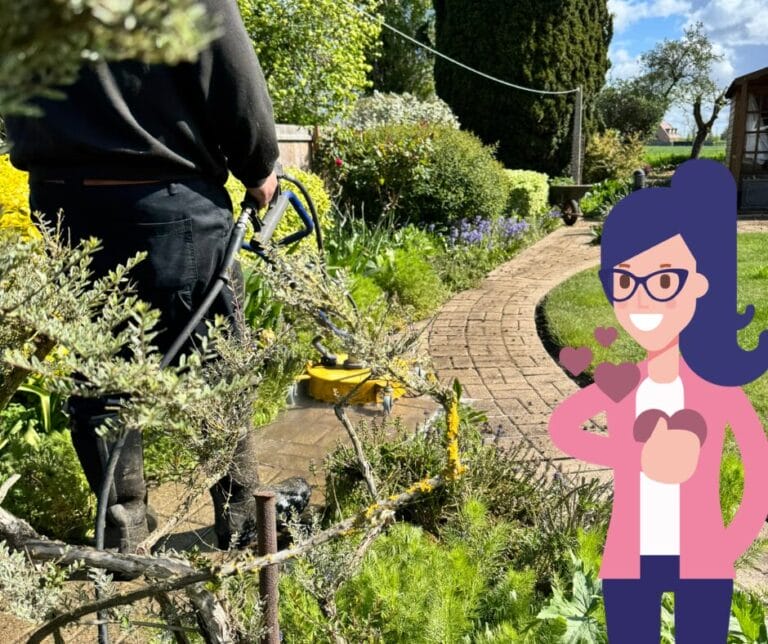
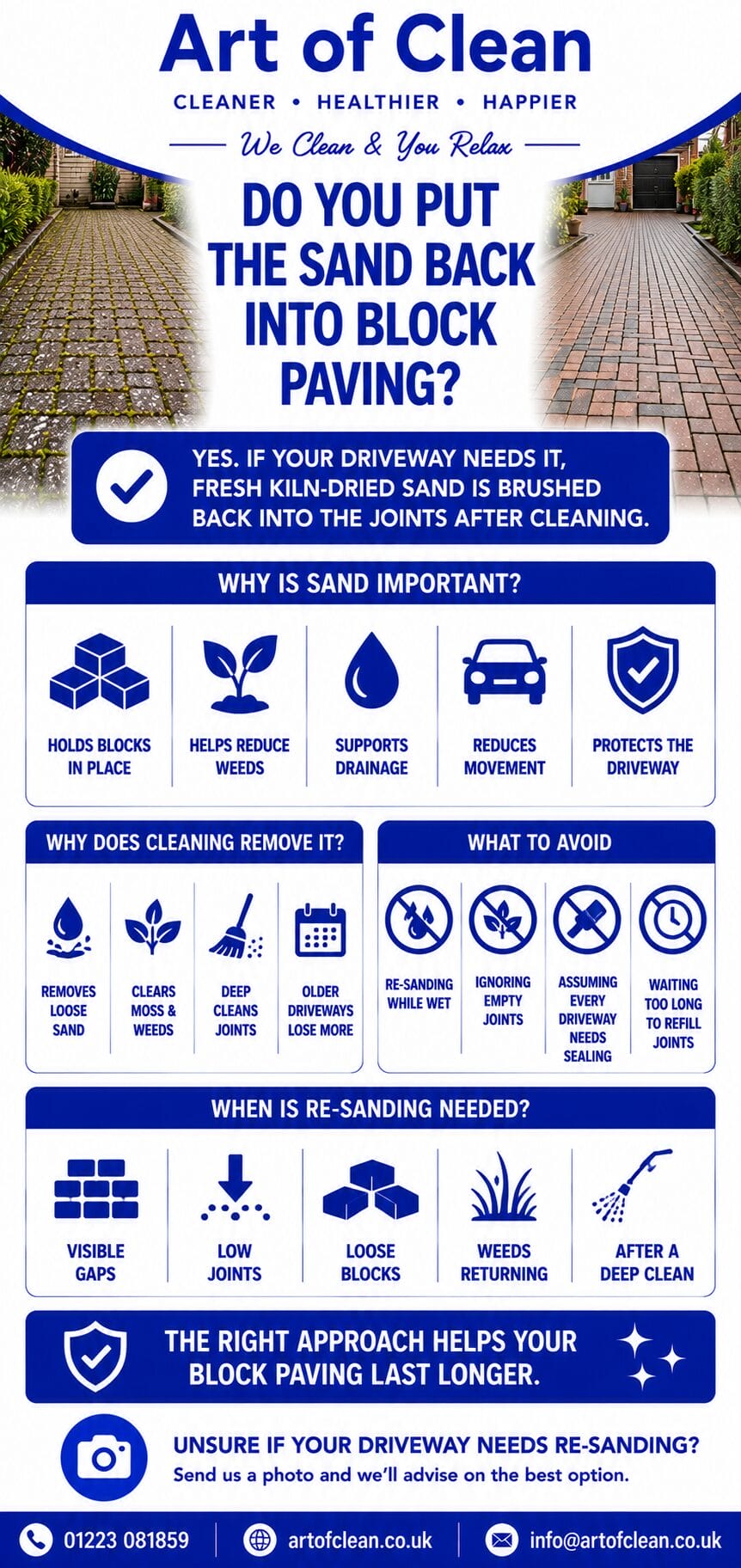
Yes, where block paving needs re-sanding after cleaning, we can put kiln-dried jointing sand back into the gaps between the blocks.
It is a very common question, and it is a sensible one. When a block paving driveway is professionally cleaned, the pressure cleaning process removes dirt, moss, algae and weeds from the surface and from the joints. In many cases, some of the old jointing sand will also come out during the clean.
That is not a mistake. It is often part of getting the driveway properly clean. The important part is checking the paving afterwards and putting fresh sand back where it is needed.
Why does block paving have sand in the joints?
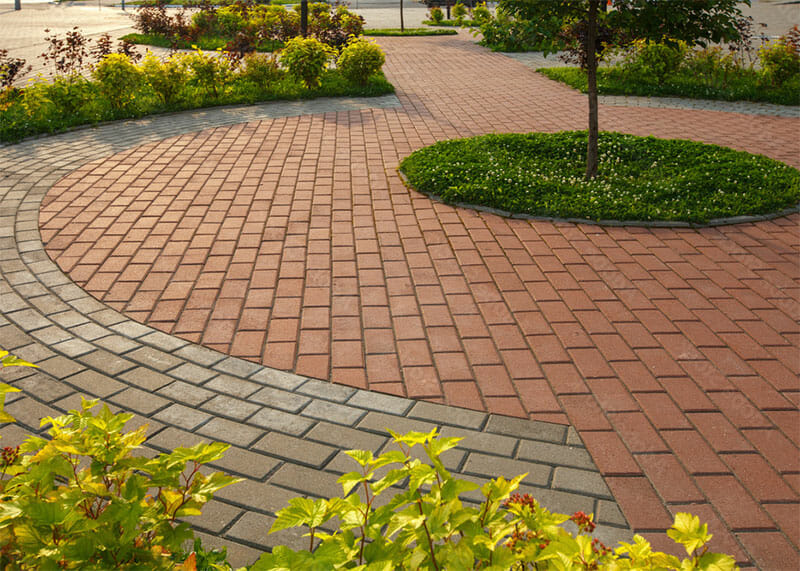
Block paving is different from a solid concrete driveway or a slabbed patio. The small blocks are laid closely together, and kiln-dried sand is brushed into the joints between them.
That sand helps the blocks sit more securely. It also helps reduce movement, supports the surface under normal use and fills the open gaps where weeds, dirt and moss can settle.
Over time, weather, vehicle use, weeds and previous cleaning can disturb the sand. If the driveway has not been maintained for a while, the joints may already be low before cleaning starts.
Why does cleaning remove some of the sand?
A proper driveway clean is designed to remove the build-up that has settled on and between the blocks. If moss and weeds have grown into the joints, or the old sand has become loose, some of it will be washed out during cleaning.
This is especially common when:
- The driveway has heavy moss or weed growth.
- The joints are already low or loose.
- The paving has not been cleaned for several years.
- The blocks have moved slightly over time.
- The surface needs a deeper clean rather than a light wash.
In those cases, simply cleaning the top of the driveway and ignoring the joints would not be the best approach.
Do all driveways need re-sanding after cleaning?
Not always, but many block paving driveways do.
After cleaning, the surface needs to dry before the joints can be checked properly. If there are visible gaps between the blocks, or the joints have lost a noticeable amount of sand, re-sanding is usually recommended.
There may be situations where only a light top-up is needed. There may also be driveways where re-sanding is not the right next step until another issue has been dealt with, such as loose blocks, damaged edges, poor drainage or failing areas of paving.
That is why we prefer to assess the surface and explain what is needed, rather than promising the same treatment for every driveway.
Why the driveway needs to dry first…
Kiln-dried sand works best when the paving is dry. If the blocks and joints are still damp, the sand can clump, sit on the surface or fail to settle properly into the gaps.
This means re-sanding may not always be completed immediately after pressure cleaning, especially if the weather is wet or the driveway takes longer to dry. Sometimes it needs to be done once the surface is properly dry.
It is better to do this at the right time than rush it and leave the joints poorly filled.
What happens if block paving is not re-sanded?
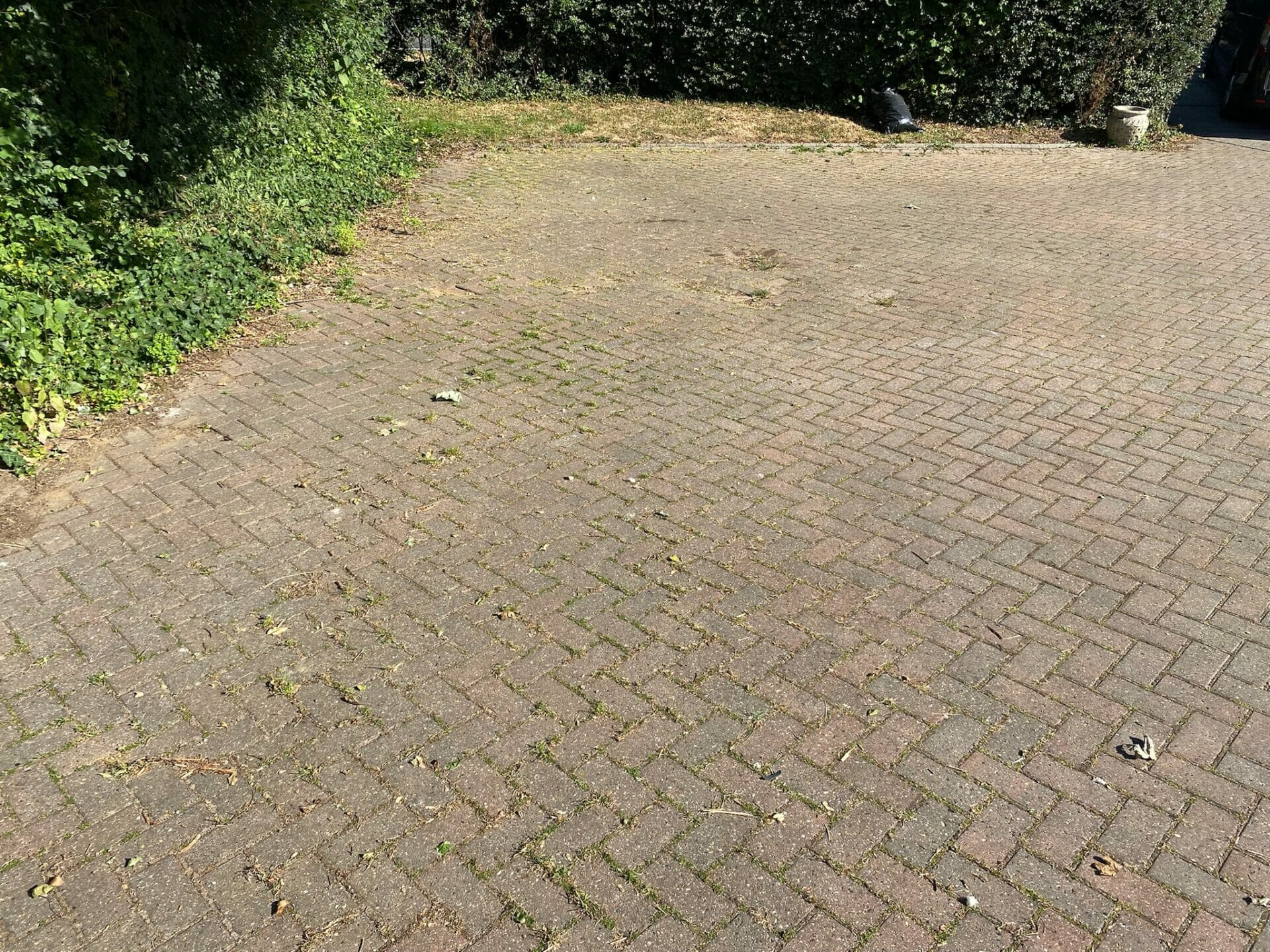
If too much jointing sand is removed and not replaced, the driveway can be left with open joints. Over time, this can allow more debris, water and weed growth to settle between the blocks.
It may also make some areas more vulnerable to movement, especially on driveways that take regular vehicle weight.
Re-sanding is not about making the surface look tidy for the day. It helps protect the clean and supports the paving after the work has been carried out.
Is sanding included in every driveway clean?
This depends on what has been quoted and agreed.
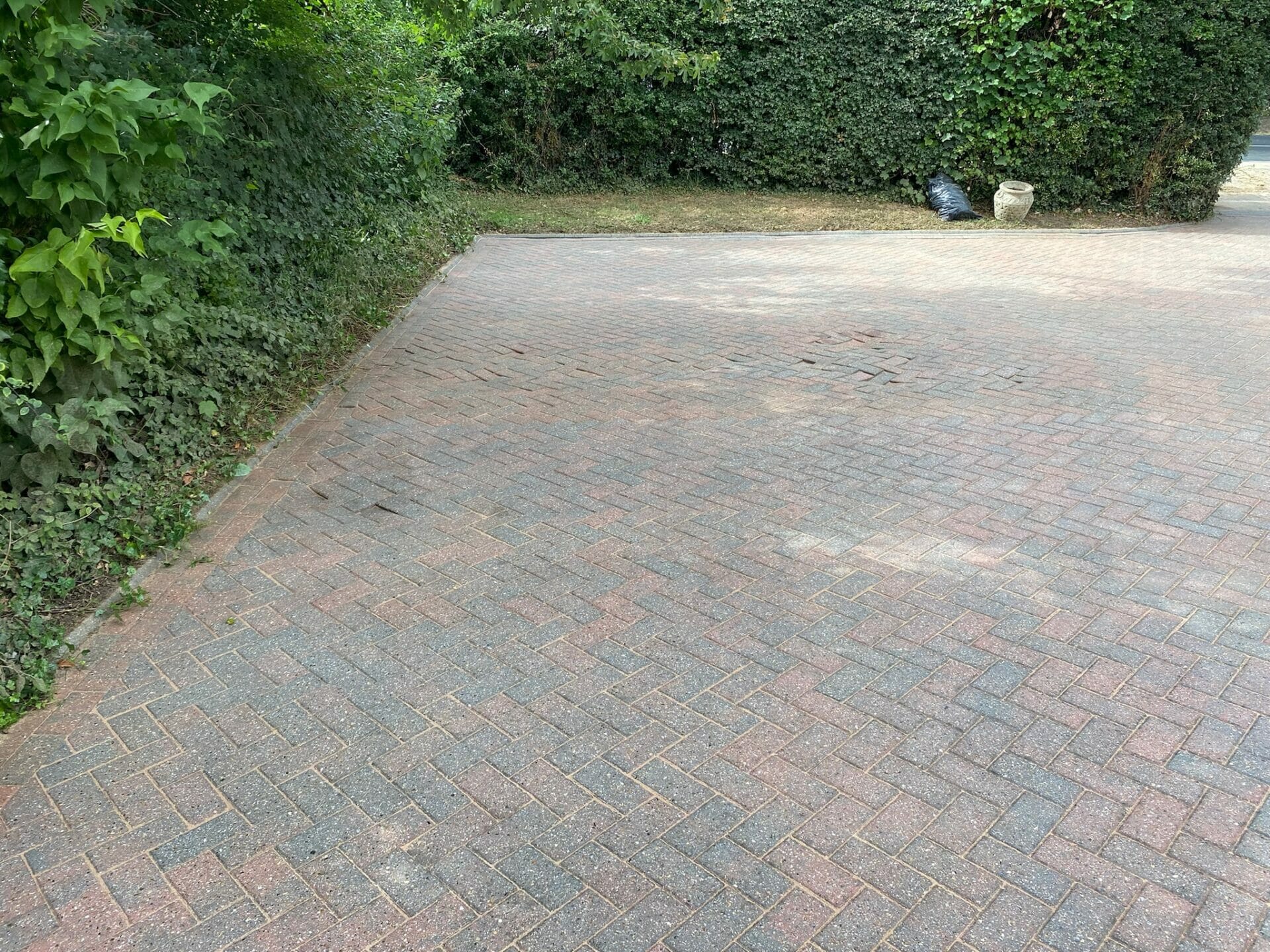
For block paving, sanding may be recommended after cleaning, but it should not be assumed that sanding, sealing or re-pointing is automatically included in every basic clean. Different surfaces need different levels of work, and not every driveway needs the same treatment.
When we look at your driveway, we will consider the surface type, the condition of the joints, drainage, access, loose or damaged areas and whether sanding or sealing is suitable after cleaning.
If sanding is needed, we can explain that clearly before the work is confirmed.
What about sealing after sanding?
Some clients also ask whether their block paving should be sealed after it has been cleaned and re-sanded.
Sealing can be useful in suitable situations, but it is not always necessary, and it is not right for every driveway. The paving condition, drainage, age of the surface and the result you want all matter.
If sealing is being considered, the driveway needs to be cleaned, dried and prepared properly first. The jointing sand also needs to be in place before sealing is applied.
We can advise whether sealing is worth considering for your driveway, or whether a clean and re-sand is enough for now.
What should I do before my driveway is cleaned?
Before we arrive, it helps if you can move cars, pots, bins and loose items away from the driveway where practical. If you know there are loose blocks, drainage problems, damaged edges or areas where the joints have opened up, please mention this when you ask for a quote.
It also helps to tell us if the driveway has been sealed before, or if another product has been used on it. That can affect how the surface responds to cleaning and what we recommend afterwards.
The simple answer…
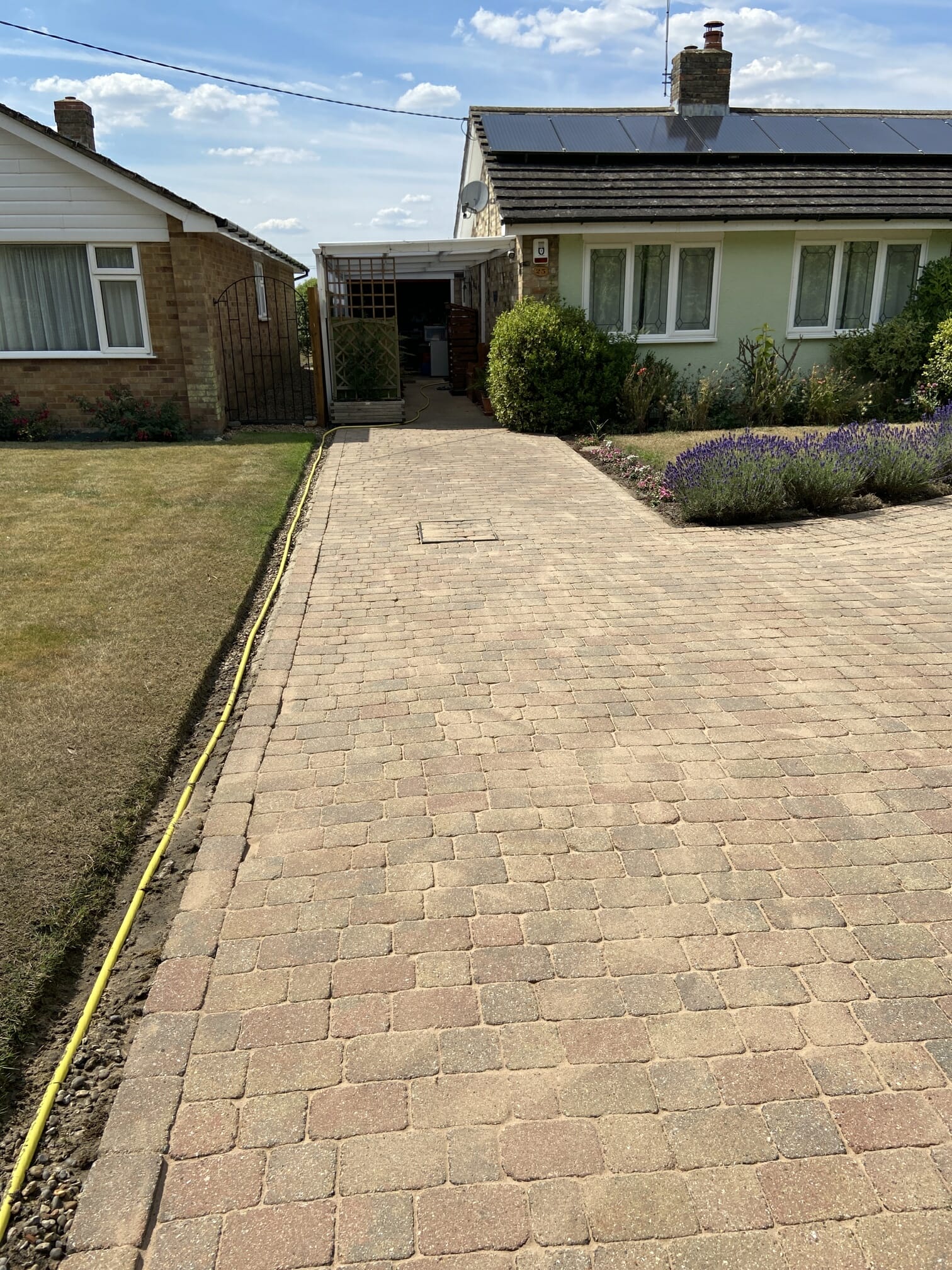
If your block paving driveway needs sand putting back after cleaning, yes, we can re-sand it with suitable kiln-dried jointing sand.
The only honest answer is that it depends on the condition of the driveway, the weather, how dry the surface is after cleaning and what has been included in your quote.
If you are not sure, send us a few photos or ask us when arranging your driveway cleaning. We can check the paving, explain what is likely to be needed and help you choose the right level of work without pressure.
FAQs about block paving re-sanding after cleaning
Do you put the sand back in after cleaning block paving?
Yes, where the block paving needs it, we can brush fresh kiln-dried jointing sand back into the gaps after cleaning. The driveway usually needs to be properly dry first so the sand can settle into the joints rather than clumping on the surface.
Why does sand come out when block paving is pressure washed?
Some sand often comes out because the cleaning removes moss, weeds, dirt and loose material from between the blocks. If the old jointing sand is already low, loose or disturbed, it may wash away during a proper clean. That is why re-sanding is often recommended afterwards.
Can block paving be re-sanded straight after cleaning?
Not always. Kiln-dried sand works best when the paving is dry. If the driveway is still damp, the sand may not brush into the joints properly. In wet weather, re-sanding may need to be done later once the surface has dried enough.
Is re-sanding included in the price of driveway cleaning?
It depends on what has been quoted and agreed. Some block paving jobs may need re-sanding, while others may only need a clean. We will explain what your driveway is likely to need before the work is confirmed, so you know whether sanding is included or quoted separately.