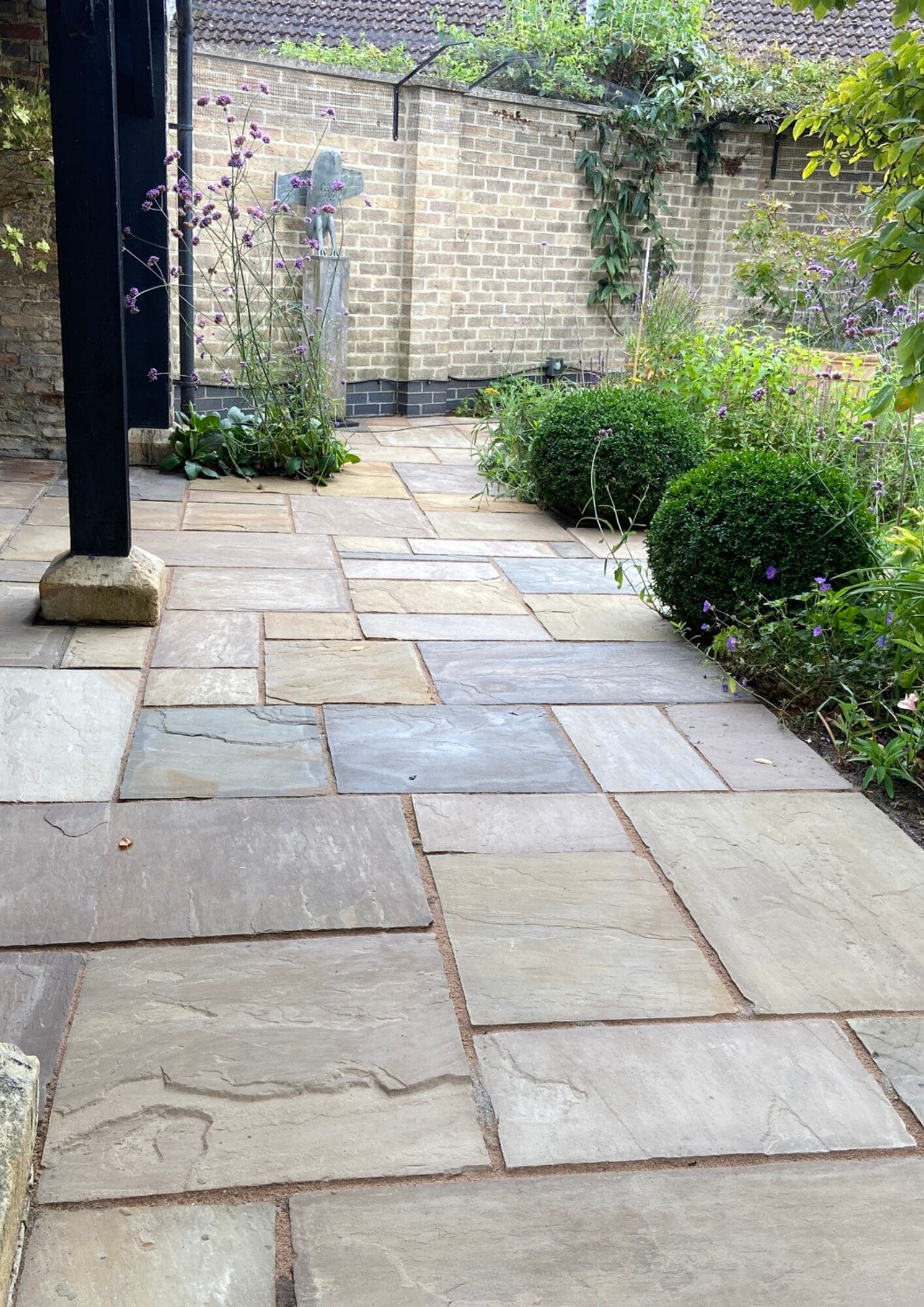
Indian sandstone can look beautiful when it is clean, but it needs the right approach. The best way to clean an Indian sandstone patio is to use controlled pressure washing, a sandstone-safe cleaning treatment where needed, careful rinsing, and then a proper check of the joints, pointing and surface condition before deciding whether sealing is right.
The important part is control. Indian sandstone is a natural stone, so aggressive pressure, harsh acidic products or rushed chemical treatment can leave marks, damage the surface or disturb the joints. A good clean should lift the dirt, algae and organic growth without treating the stone like concrete.
In this article, we’ll explain how we clean Indian sandstone patios, what you can safely do at home, and when it is better to ask a professional before adding more pressure or product.
Why Indian sandstone needs careful cleaning
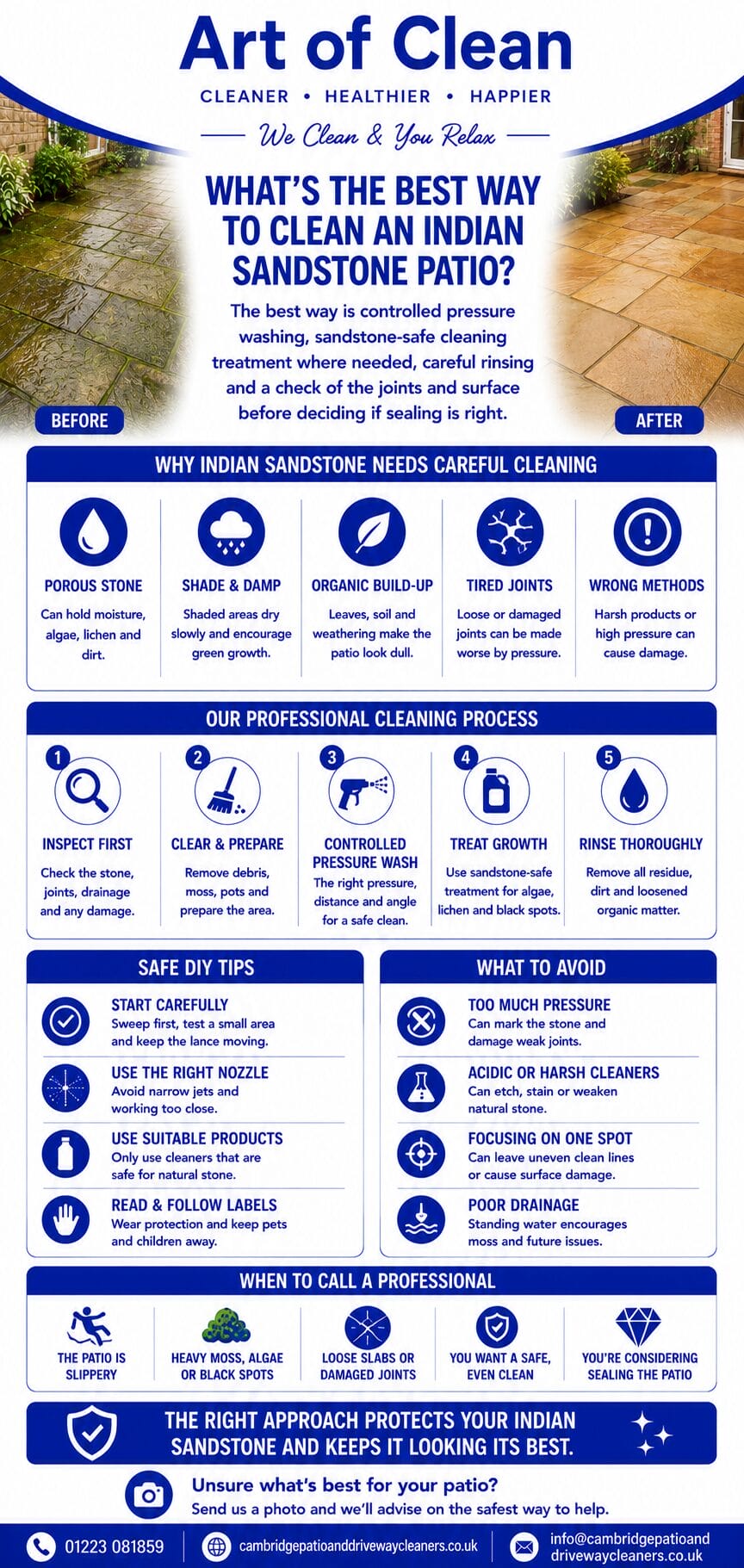
Indian sandstone is popular because it has natural colour variation, texture and character. That is also why it needs a bit of respect when cleaning.
The surface is more porous than some harder outdoor materials, so it can hold moisture, algae, lichen, black spots and general weathering. Shaded areas, poor drainage, overhanging trees and winter build-up can all make the patio look dull or slippery-looking over time.
A dirty patio does not always mean the stone is damaged. Often, it simply needs a proper clean. The caution is that the wrong method can cause problems of its own, especially if the surface is already weathered, the pointing is loose, or unknown products have been used before.
Can you pressure wash Indian sandstone?
Yes, Indian sandstone can often be pressure washed, but it should not be blasted aggressively.
The aim is to clean the surface, not cut into it. Too much pressure, a narrow jet held too close, or rushing over delicate areas can mark the stone, loosen weak joints or leave uneven clean lines. This is especially important on older patios where the pointing may already be tired.
A professional clean uses the right balance of pressure, water flow, distance, angle and cleaning treatment. That balance matters more than simply using the most powerful machine available.
If you are cleaning the patio yourself, start carefully. Clear the area first, sweep away loose debris, test a small discreet section, and avoid holding the lance too close to the stone. Work evenly rather than chasing one stubborn mark with too much force.
Our professional approach to cleaning Indian sandstone
Every patio is slightly different, so we do not treat Indian sandstone as a one-method job. Before cleaning, we look at the surface, the joints, the drainage, the level of organic growth and any delicate or damaged areas.
The usual process looks like this.
- We inspect the patio first
Before the cleaning starts, we check the condition of the sandstone and the joints. Loose slabs, damaged pointing, poor drainage and delicate edges all matter.
This is where many problems are avoided. If a patio needs repointing, sealing or a more cautious clean, it is better to know that before the pressure washer comes out.
At home, you can do the same first check. Look for loose slabs, missing jointing, cracked areas, soft mortar, areas that hold water and spots where the surface already looks worn. If you spot these, be careful with pressure washing.
- We clear loose debris and prepare the area
Leaves, soil, furniture, pots and loose moss should be removed before the main clean. This makes the job more even and stops loose debris being pushed into drains, beds or awkward corners.
If we are working at a client’s home, we also think about where the water will run and whether nearby areas need protecting.
Before a professional visit, it helps if movable items are cleared where practical. It is also useful to mention any loose slabs, damaged joints or drainage concerns before the work starts.
- We use controlled pressure washing
Pressure washing is usually the main part of the clean, but it needs to be controlled. On Indian sandstone, the goal is an even clean that removes surface dirt, algae and weathering without damaging the stone or stripping out weak joints.
Professional equipment can clean more consistently because it gives better water flow and control across larger areas. That does not mean every patio should be cleaned aggressively. The person using the equipment still needs to judge the surface.
For a homeowner using a domestic pressure washer, patience is safer than force. Keep the lance moving, avoid a very narrow jet, and do not focus too long on one mark. If a stain or black spot is not shifting, more pressure is not always the right answer.
- We treat organic growth and black spots where needed
Some marks are not just surface dirt. Black spots, algae and lichen can cling to the stone and may need a suitable treatment as well as pressure washing.
This is where care matters. Indian sandstone should not be treated with random acidic products or harsh cleaners without checking suitability. Some products can mark natural stone or affect the finish.
For professional work, we choose the treatment based on the stone, the level of growth and the condition of the area. The treatment needs time to work, and it must be rinsed properly afterwards.
If you are doing this yourself, use only a cleaner that clearly says it is suitable for natural stone or sandstone. Read the label properly, test a small area first, wear suitable protection, and keep pets and children away while the product is being used. Avoid mixing products, and avoid letting chemical runoff go into planted areas where possible.
- We rinse thoroughly
Rinsing is not the exciting part, but it is important.
Cleaner residue, loosened dirt and organic matter should be rinsed away properly so the patio is left clean rather than smeared. Poor rinsing can leave the surface patchy or allow residue to sit in the joints and low points.
A good rinse also helps show what has genuinely cleaned well and what may be a deeper stain, old mark or surface condition issue.
- We check the joints after cleaning
Indian sandstone patios often have jointing between the slabs, and those joints can change over time. Cleaning may reveal gaps, weak pointing or areas where previous jointing has failed.
This does not mean the clean has gone wrong. Sometimes the cleaning simply exposes what was already loose or missing.
After cleaning, the patio should be checked to see whether any repointing is needed. If jointing is part of the job, it should be discussed clearly beforehand rather than assumed.
- We discuss sealing if it is suitable
Sealing can help protect some sandstone patios and make future cleaning easier, but it is not always the right answer for every patio.
The stone needs to be clean and dry enough before sealing. The surface condition, drainage, previous treatments and the type of sealer all matter. Sealing too soon, sealing a damp surface, or using the wrong product can create problems.
If sealing is being considered, it should be treated as a separate decision, not just an automatic add-on. A good patio cleaner should explain what sealing may help with, what it will not do, and whether your patio is suitable.
Can you clean an Indian sandstone patio yourself?
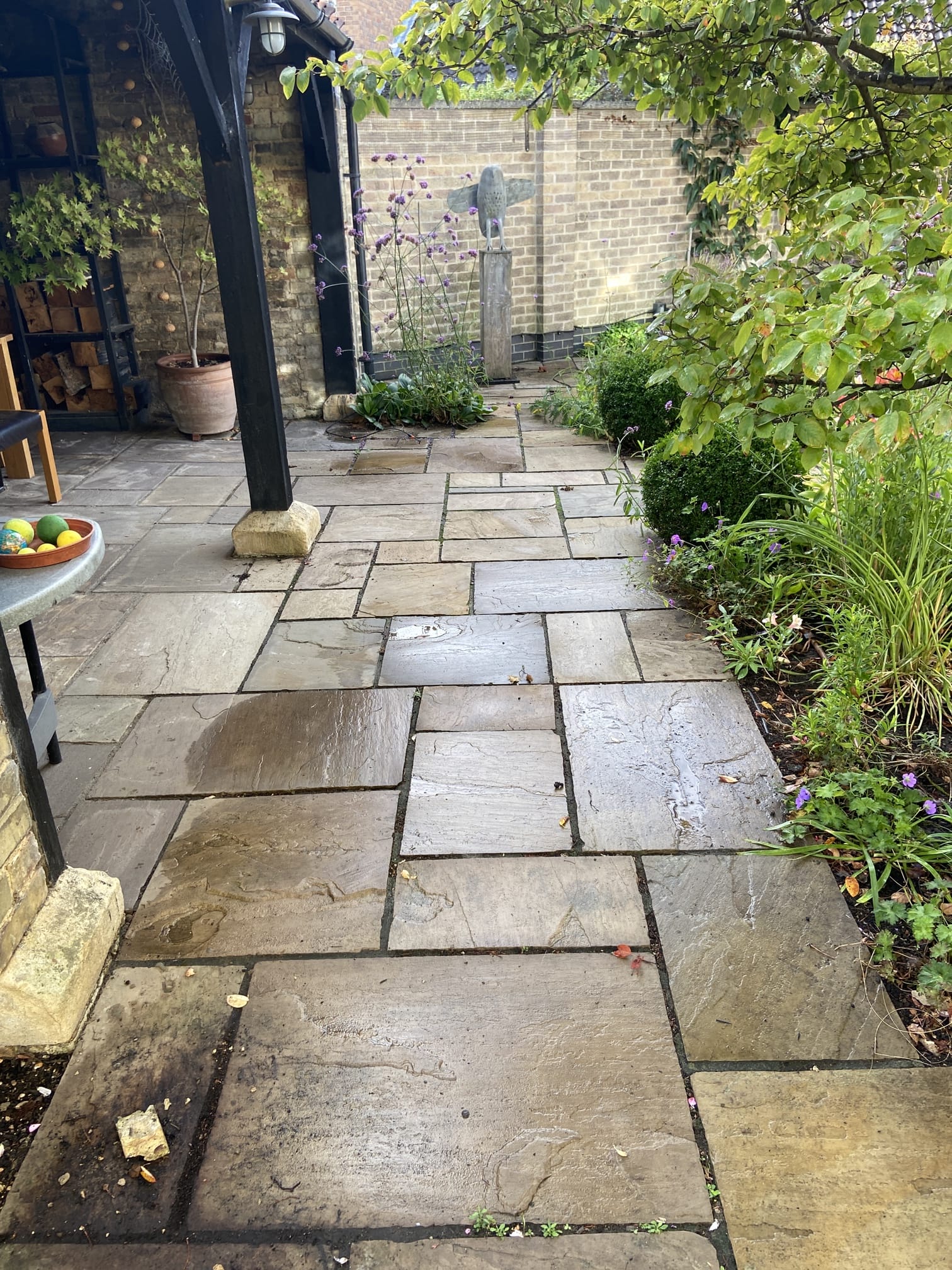
You can do a basic clean yourself if the patio is in sound condition and you are careful. Sweeping, clearing debris, using a suitable sandstone-safe cleaner and gentle pressure washing can all help.
The main risks come from using too much pressure, choosing the wrong chemical, scrubbing aggressively, or ignoring loose joints and damaged areas.
A safe home approach would be:
- Sweep and clear the patio.
- Check for loose slabs, damaged joints and drainage issues.
- Test a small area first.
- Use a sandstone-safe cleaner if needed.
- Pressure wash carefully, keeping the lance moving.
- Rinse well.
- Let the patio dry before deciding whether further work is needed.
If black spots, heavy lichen, old stains, loose pointing or delicate stone are involved, it is worth asking for advice before pushing harder.
What should you avoid using on Indian sandstone?
Avoid anything that could damage or mark the stone. Be especially cautious with acidic cleaners, random household products, very aggressive pressure washing and strong treatments used without proper dilution or testing.
Also, don’t assume that every stain can be removed. Outdoor surfaces are affected by weather, age, drainage, previous products, organic growth and the condition of the stone itself. A deep clean can often make a patio look much fresher, but it should not be sold as a promise that every mark will disappear.
What about black spots on Indian sandstone?
Black spots are a common problem on sandstone patios. They are often linked to lichen and organic growth that holds tightly to the surface.
Pressure washing alone may improve the patio, but it may not remove every black spot. In some cases, a suitable treatment is needed. The treatment must be chosen and used carefully, because Indian sandstone is not a surface for guesswork.
If the black spots are widespread, or if the patio has already been treated with unknown products, it is usually better to ask for a professional opinion before adding more chemicals.
Should Indian sandstone be sealed after cleaning?
Sometimes, yes. But not always.
Sealing may help reduce future staining and make routine cleaning easier, but the patio must be suitable. The surface needs to be properly cleaned, rinsed and dry before sealing is considered. The right sealer also depends on the stone, the finish you want and how the patio is used.
Sealing will not make a patio maintenance-free. Leaves, algae, weathering and everyday use will still need managing. Think of sealing as possible protection, not a magic shield.
How often should you clean an Indian sandstone patio?
For many homes, a proper clean once a year or every couple of years is enough, depending on shade, trees, drainage and how the space is used. Patios under trees, in damp corners or in shaded gardens often need attention more regularly.
Light maintenance helps between professional cleans. Sweep leaves away, keep drains clear, move pots occasionally, and avoid letting organic debris sit for long periods. Small habits can slow down the build-up.
When is professional cleaning the better choice?
Professional cleaning is worth considering if:
- The patio is heavily stained or covered in black spots.
- The surface is uneven, delicate or weathered.
- The pointing is loose or missing.
- The patio holds water or has drainage issues.
- You are not sure what products have been used before
- You want the clean, repointing or sealing assessed properly.
It is also a good choice if you want a more even result across a larger area. Professional equipment and judgement can make a real difference, especially when the patio has years of build-up.
So, what is the best way to clean an Indian sandstone patio?
The best way is a careful clean, not the harshest clean.
Indian sandstone should be inspected first, pressure washed with control, treated with suitable stone-safe products where needed, rinsed thoroughly, and then checked for jointing, drainage and sealing suitability.
If you are cleaning it yourself, take your time and test first. If the patio has black spots, loose joints, delicate stone or old staining, it is safer to ask before using more pressure or stronger products.
If you would like us to look at your patio, send us a few photos and tell us what you are hoping to improve. We can let you know what looks realistic and whether cleaning, repointing or sealing may be worth discussing.
🎥 See us in action!
Want to know more about Easy Joint?
We’ve got a whole blog on the stuff… including what colours we use and why.
To find your local patio and driveway cleaners, check this out:
Maybe you would like to see some reviews:
And last but not least, just because I like to help if you would like to see the cost of a professional clean, then this is perfect for you:
And that’s a wrap!… I hope I helped you with your patio-cleaning query and gave you a bit of confidence whether you’re hiring the pros or having a go yourself.
Thanks you so much for reading… and please don’t forget, we’re always here if you need a hand or a friendly nudge in the right direction. Have a fab day, and happy patio pampering! ☕🧽🌿