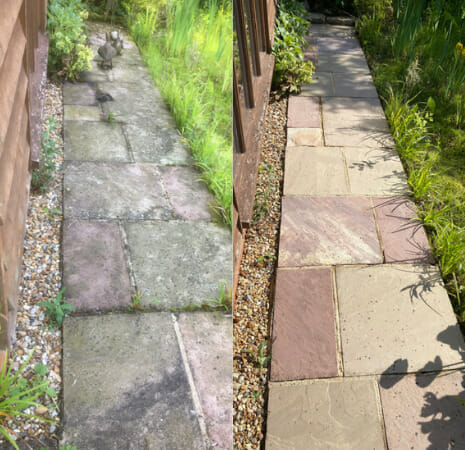
Weeds between your patio slabs can make your whole garden feel so much more untidy. They grow in ALL the joints, spread REALLY quickly in damp weather, and more often than not they come back if you leave the gaps full of soil, moss, and debris.
The best way to get rid of weeds on your patio is to remove the growth from the joints, clear away loose soil and debris, clean the surface carefully, and then reduce the damp, open gaps that help weeds return.
You can do some of this yourself with simple tools. The important part is to choose a method that suits your patio, even more so if the surface is old, loose, delicate, sealed or close to grass, plants, pets or drains.
This is what the blog will tell about how to get rid of the weeds on your patio:

1. Items you need before you even think about starting to remove the weeds from your patio…
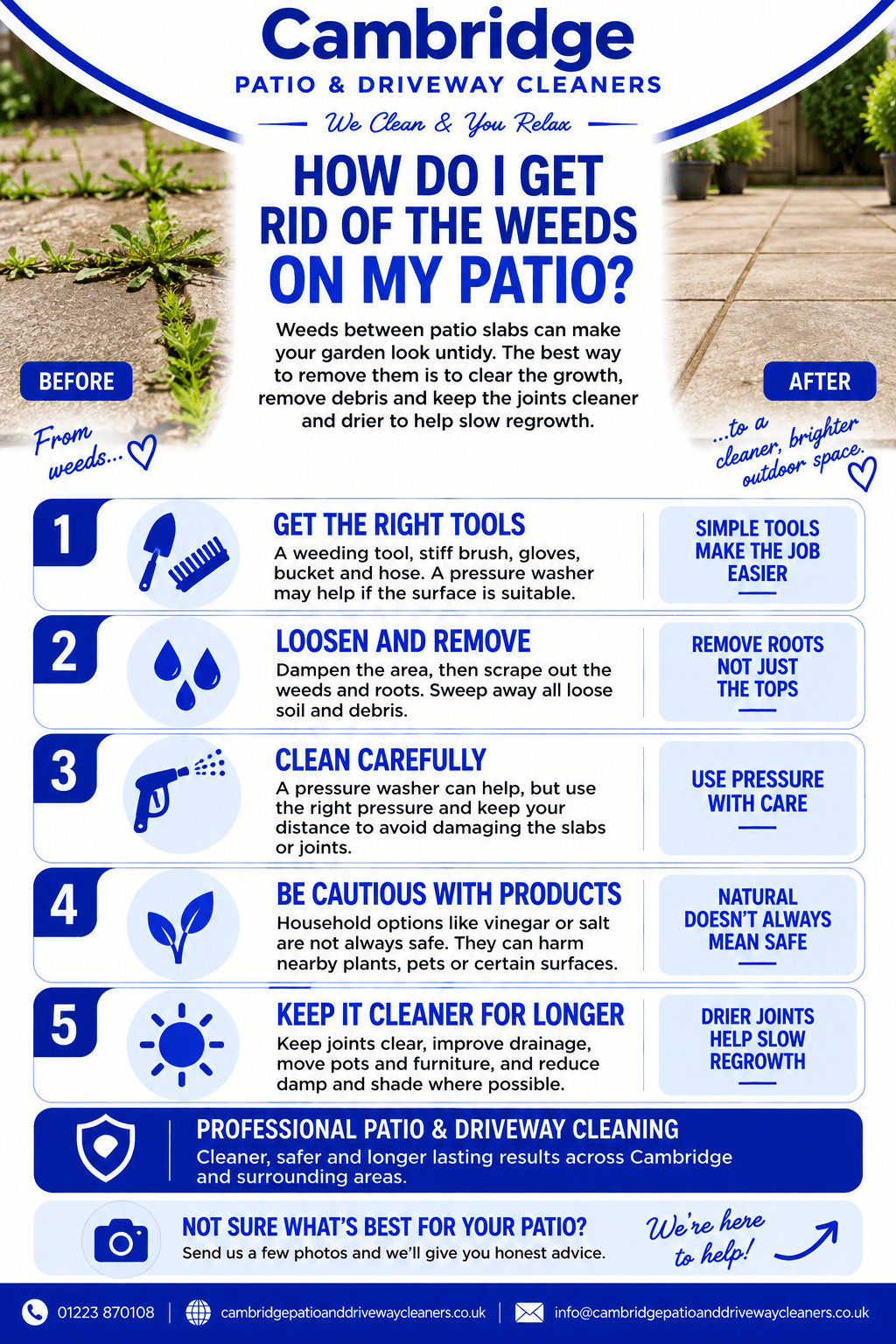
You won’t need big, complicated equipment to start removing all the weeds from your patio. For most patios, a few simple tools are all you will ever need.
And those useful items are:
- A patio weeding tool or narrow joint scraper
- A stiff outdoor brush
- Garden gloves
- A bucket or garden waste bag
- A hose or watering can
- A pressure washer, if the surface is suitable
- Kiln-dried sand, if you have block paving that needs re-sanding after cleaning
The aim is to loosen the weed growth, remove as much root as possible, and clear away the soil and debris sitting in the joints.
Start with the practical method first. You can always move to a deeper clean if your patio really needs it. Best to start small though and work up! Better safe than sorry!!
Before you think about using any product or even a pressure washer, take just a few minutes to look at the surface of your patio. Check whether any of your slabs are loose, whether the pointing is cracked or missing, and whether water sits on the patio after it’s rained.
The RHS gives useful advice on weeds on hard surfaces and explains why physical control methods are often a sensible place to start. You can read their guidance here: RHS advice on weeds on hard surfaces.
2. How to get rid of the weeds from your patio
There is no single method that suits every patio. The right approach depends on the surface, the joints, the amount of weed growth and what sits around the patio.
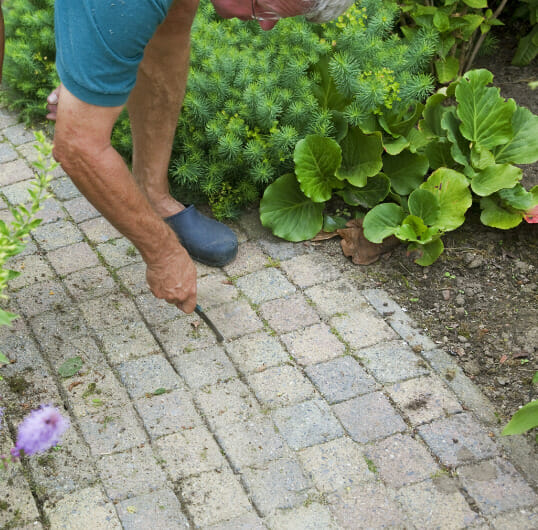
Tip 1: Use some water and a weeding tool…
A damp patio can make weeds A LOT easier to remove. Now I said damp, not soaked, so don’t do that! If it has rained, the roots should loosen more easily. If the joints are dry, lightly dampen the area with a hose or watering can before you start.
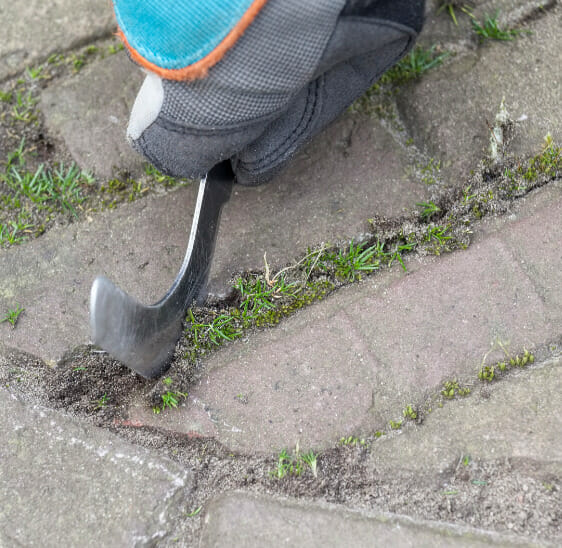
Use a patio weeding tool or joint scraper to scrape along the gaps between each of your slabs. Try to lift out as much root as you can, not just the leafy part.
This method does really take more time than spraying, but it gives ALOT you more control. It is especially useful near your lawns, flower beds, planted borders and older paving.
After pulling all the weeds up, sweep your patio really really well. Leaving any loose soil and debris in the joints can give new weed seeds somewhere to take root again… which, let’s face it, that’s not what we want at all!!
For light weed growth, hand removal and a good sweep may be enough to make the patio look much better.
Tip 2: Be careful with household weed treatments…
You will see plenty of advice online suggesting vinegar, salt or baking soda for weeds between patio slabs.
These products may be easy to find at home, but honestly they are not always the safe option. Vinegar can affect nearby plants and grass. Salt can sit in soil and damage planting areas. Homemade mixtures may also run into borders, lawns or drains.
They may not be suitable for every patio surface either, especially natural stone or surfaces that have been sealed before.
Natural does not automatically mean safe for your patio, your garden or your pets.
For most people’s patios, it is much better to remove what you can by hand first, sweep the joints well, and then decide whether the area needs that deeper clean.
Tip 3: Use your pressure washer VERY carefully…
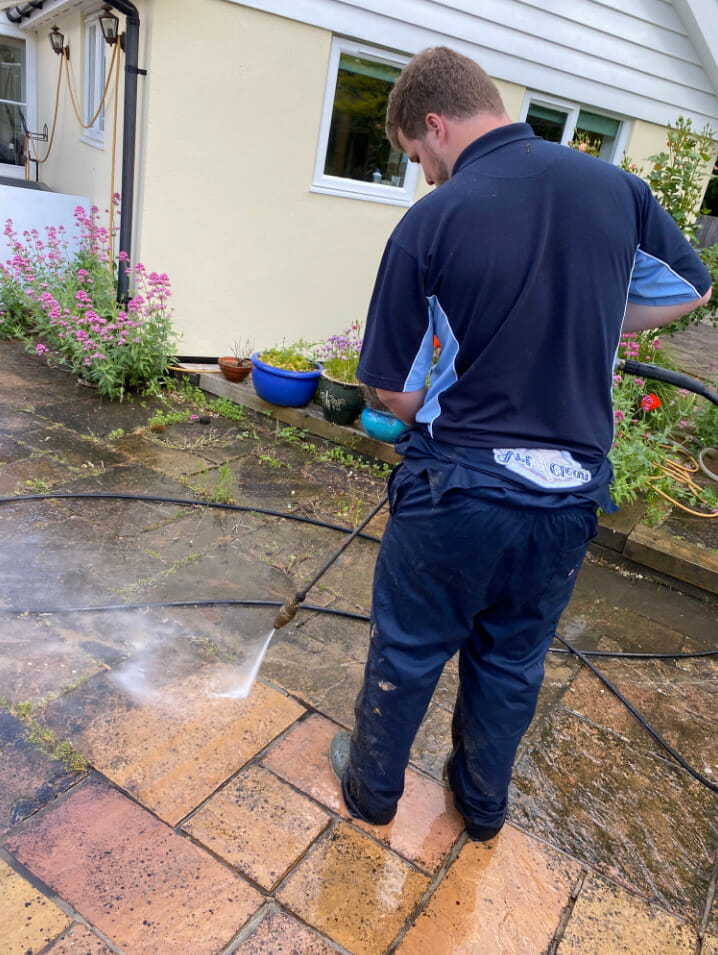
Pressure washing can help remove weeds, moss, loose dirt and debris from patio joints. It can also make the whole surface look a great deal cleaner and brighter.
But pressure needs judgement.
A pressure washer used too close to the surface can disturb pointing, remove jointing material, roughen softer paving or damage older slabs. It can also push dirty water towards walls, doors, drains, lawns and planted areas.
If you use a pressure washer, remove as much leafy growth as possible first. Wet the patio, then clean slowly and at a slight distance rather than holding the nozzle too close in one place.
More pressure is not always better… The method should suit the patio.
If your patio has loose slabs, cracked pointing, soft stone, heavy staining, previous sealer or very open joints, it is worth getting advice before pressure washing aggressively.
You can read more about professional help here: Patio Cleaning Cambridge.
3.How to prevent weeds from returning to your patio
You cannot stop patio weeds forever. Seeds arrive through wind, birds, shoes, pets, lawns, borders and normal garden use.
You can, however, make the patio less inviting for them.
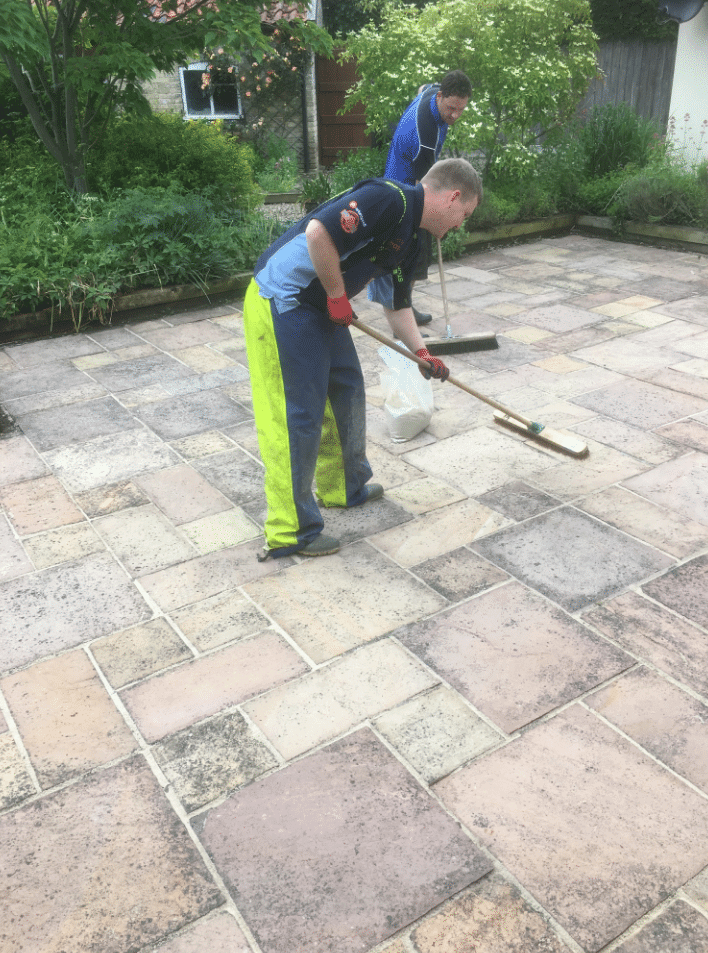
Sweep the surface regularly so soil, leaves, moss and grit do not build up in the joints. Remove small weeds before they become established. Keep drains, corners and edges clear so water does not sit for long periods.
If pots, furniture or storage boxes sit in the same place all year, move them occasionally where practical. Damp, shaded areas often encourage moss, algae and weed growth.
If you have block paving, the joints may need fresh kiln-dried sand after cleaning. This helps refill the gaps and can make the surface look neater. It may also reduce the amount of space where loose debris and seeds can collect.
If you have a slabbed patio and the joints are cracked, low or missing, re-sanding may not be the right answer. Some patios may need repointing instead.
Weeds come back more easily when joints are open, damp and full of loose debris.
If moss and algae are also part of the problem, you may find this guide useful: Guide to Removing Algae and Moss from Your Patio.
4. Important things to consider when starting the removal of weeds from your patio
Before you start removing patio weeds, think about the surface of your patio and what surrounds it.
A newer concrete slab patio may cope differently from old natural stone. Block paving has different joint care needs from a pointed slab patio. A shaded patio near planting may need more regular maintenance than an open, sunny area.
Hot water can damage young weeds, but it can also damage your nearby plants, grass and insects. It can also be risky to carry and pour outside.
Vinegar, salt and baking soda can affect plants and soil. They may also mark or react with some surfaces. Avoid using them near the edge of a patio where they can run into borders or lawns.
Pressure washing can be REALLY useful, but it can also REALLY damage a surface if the pressure is too strong or the patio is already very fragile.
The most important point is this… You DON’T treat every patio the same!
Some patios only need hand weeding and a good sweep. Some might need careful pressure cleaning. Some block paving will need re-sanding afterwards. Some older or delicate surfaces need a more gentle approach.
For more outdoor cleaning advice, visit our Knowledge Centre.
When should you ask for professional patio cleaning help?
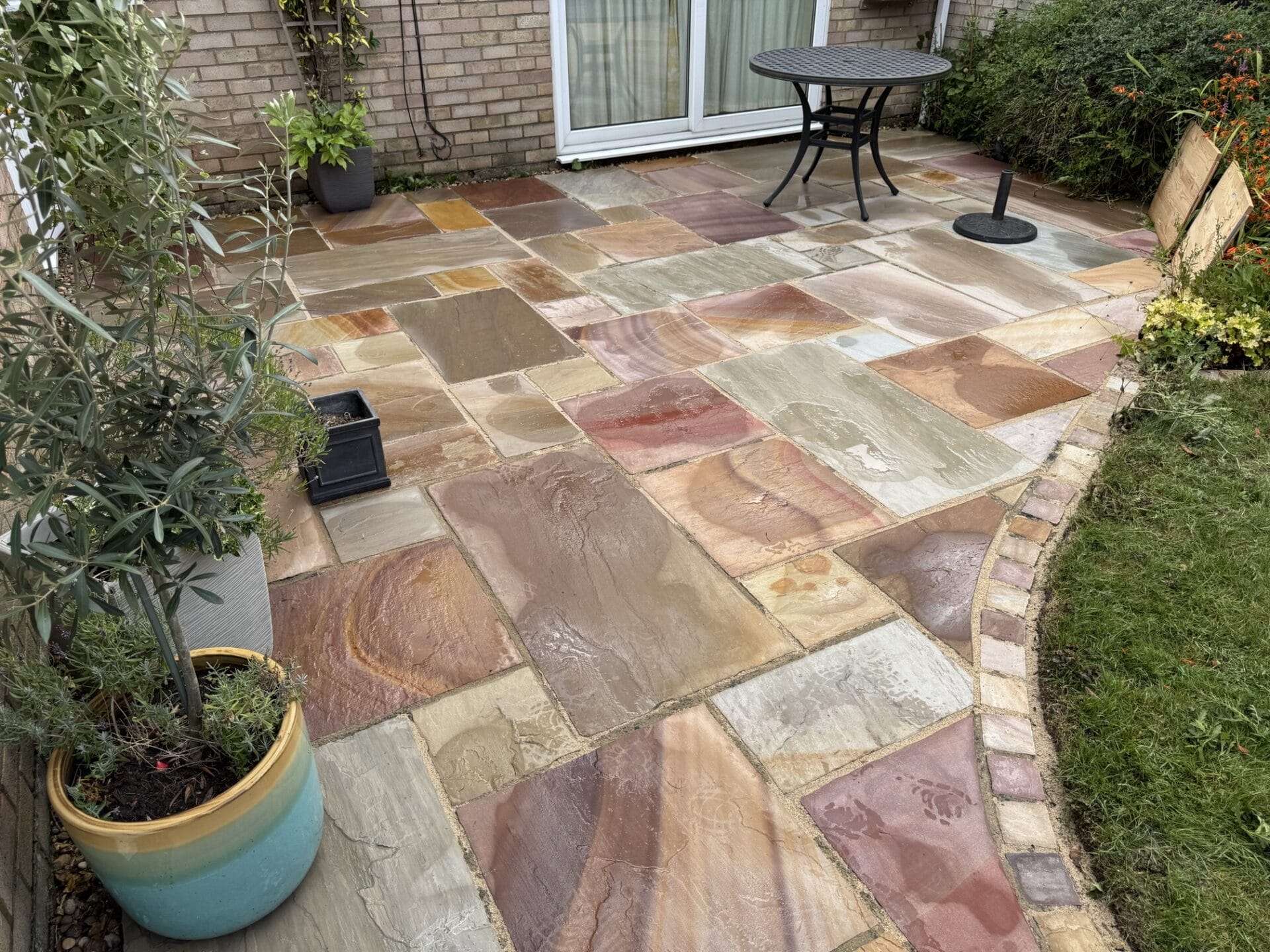
It may be time to ask for help if your patio is very weedy, slippery-looking, green, heavily soiled or difficult to clean by hand.
Professional advice is also useful if you have loose slabs, cracked or missing pointing, block paving with low joints, natural stone, unknown paving, black spots, oil marks, rust marks, drainage concerns or a surface that has been sealed before.
A good patio cleaner should look at the surface, the joints, drainage, access, nearby planting and whether sanding, sealing or repointing needs to be discussed separately.
A professional clean can make a such big difference, but it should not be presented as a guaranteed fix for every mark, stain or surface problem.
If you are comparing companies, this article may help: Patio and Driveway Cleaning Services in Cambridgeshire.
You may also find this useful if you want to understand pricing: How much does it cost to clean your patio or driveway?.
How we can help with patio weeds and cleaning
If your patio has become full of weeds, moss, algae or general outdoor build-up, Cambridge Patio and Driveway Cleaners can help you understand what is realistic.
We clean patios and driveways using suitable equipment and a method matched to the surface. Where appropriate, we can also advise whether sanding, sealing or further joint care needs to be considered.
You do not need to know exactly what your patio needs before getting in touch. A few clear photos can often help us see the surface, the joints and the level of weed growth.
You can get in touch here or read more outdoor cleaning advice in our Knowledge Centre.
FAQs
What is the easiest way to get rid of weeds on my patio?
The easiest first step is to dampen the joints slightly, then use a patio weeding tool or joint scraper to remove the weeds and as much root as possible. Sweep away loose soil and debris afterwards.
Can I use regular vinegar to kill the weeds between patio slabs?
Vinegar is often suggested online, but it should be used with caution. It can affect nearby plants, grass and soil, and it may not be suitable for every patio surface. Hand removal is usually a safer first step.
Will salt stop weeds growing on my patio?
Salt may damage weeds, but it can also damage soil, grass and nearby planting. It can create longer-term problems in garden areas, so it is not something we would recommend using freely across a patio.
Does pressure washing remove weeds from patio joints?
Pressure washing can remove weeds, moss and loose debris from patio joints, but it needs care. Too much pressure can disturb pointing, remove jointing material or damage softer surfaces.
How do I stop weeds growing back between patio slabs?
Sweep regularly, remove small weeds early, keep joints clear of soil and leaves, and check whether the joints need sanding or repointing after cleaning. You cannot stop all seeds arriving, but you can make the patio less inviting for weeds.
Should I re-sand my patio after removing weeds?
If you have block paving, re-sanding may be needed after cleaning because the joints are usually filled with kiln-dried sand. Slabbed patios may need different joint care, such as repointing, depending on their condition.
A short Video showing how we care for your patio:
These blogs will help you if you’re looking for a professional to help you when spring comes around!
Need help finding a patio and driveway cleaning company near you? Check this article out:
If you would like to compare companies or just check out our reviews, this will help:
The cost may come in handy for next spring, so check this out:
 Written by Tracey Gilbey, Marketing Coordinator