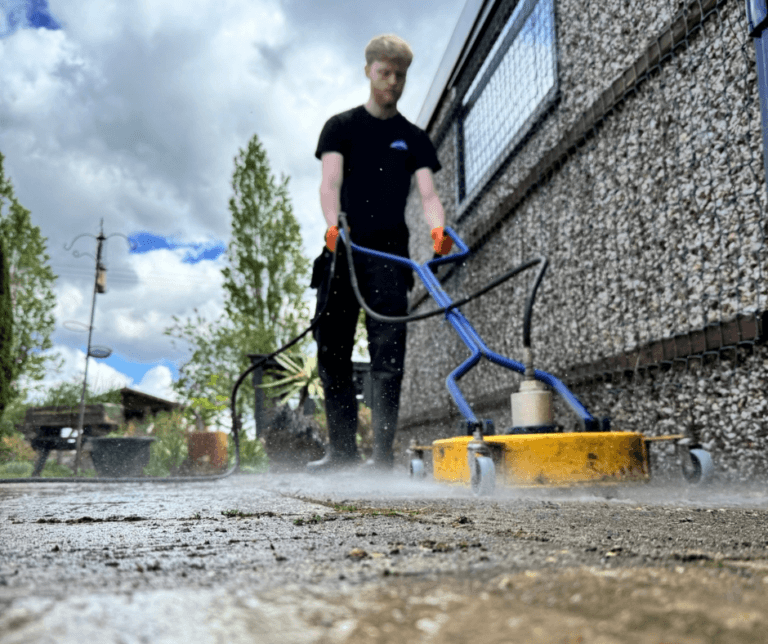
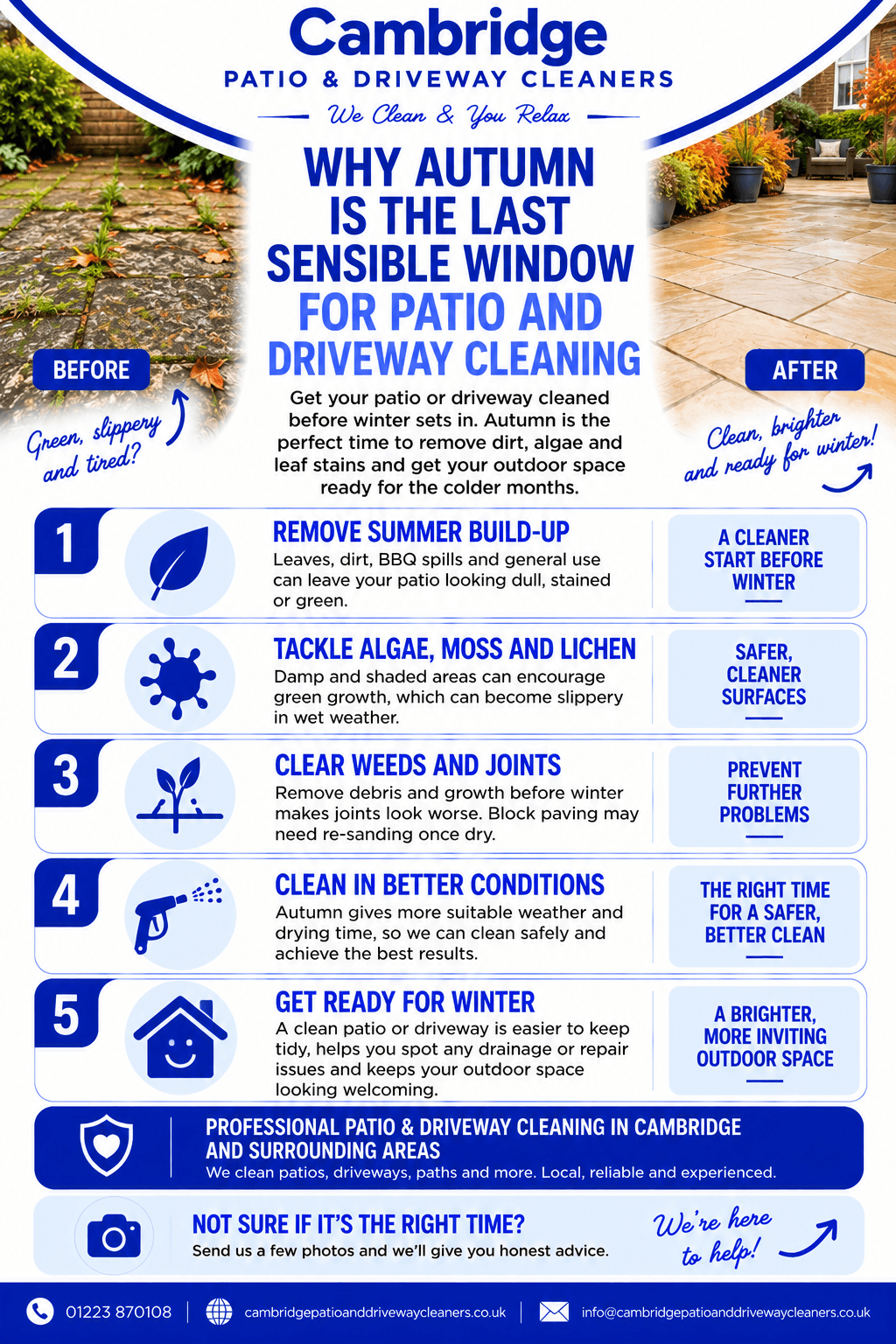
Autumn is a practical time to look at your patio, path or driveway before the wetter winter weather settles in.
By late September, outdoor surfaces often show the signs of a busy year.
Summer use, barbecues, fallen leaves, soil from pots, shade, rain and general foot traffic can all leave patios looking dull, green or slippery.
Once the weather becomes colder and wetter, it becomes harder to clean outdoor surfaces safely, effectively and at the right pace.
That is why Cambridge Patio and Driveway Cleaners will be winding down patio and driveway cleaning very soon for the season.
We usually offer patio and driveway cleaning from mid-spring to mid-autumn, because the weather, drying conditions and practical access all matter.
Once winter weather properly arrives, it is not always sensible to keep pressure cleaning outside surfaces.
Heavy rain, poor drainage, low temperatures, leaf fall and reduced drying time can all affect what is realistic.
If your patio already looks green, slippery, marked, or tired, autumn may be your last useful opportunity to clean it before winter.
Why patio cleaning is seasonal
Patio and driveway cleaning is outdoor work, so the weather plays a real part in whether the job can be carried out properly.
A good clean is not simply a case of turning up with a pressure washer and blasting the surface.
The method should suit the paving, the joints, the drainage, the access and the condition of the area.
Block paving, concrete, Indian sandstone, porcelain, natural stone and older slabs can all need different judgement.
In autumn, the weather can still give us suitable cleaning days.
The surface may still have time to dry.
Block paving can be re-sanded where appropriate once dry.
The team can see what is happening with the surface before winter build-up hides the problem.
Once the weather turns properly wet and cold, that window starts to close.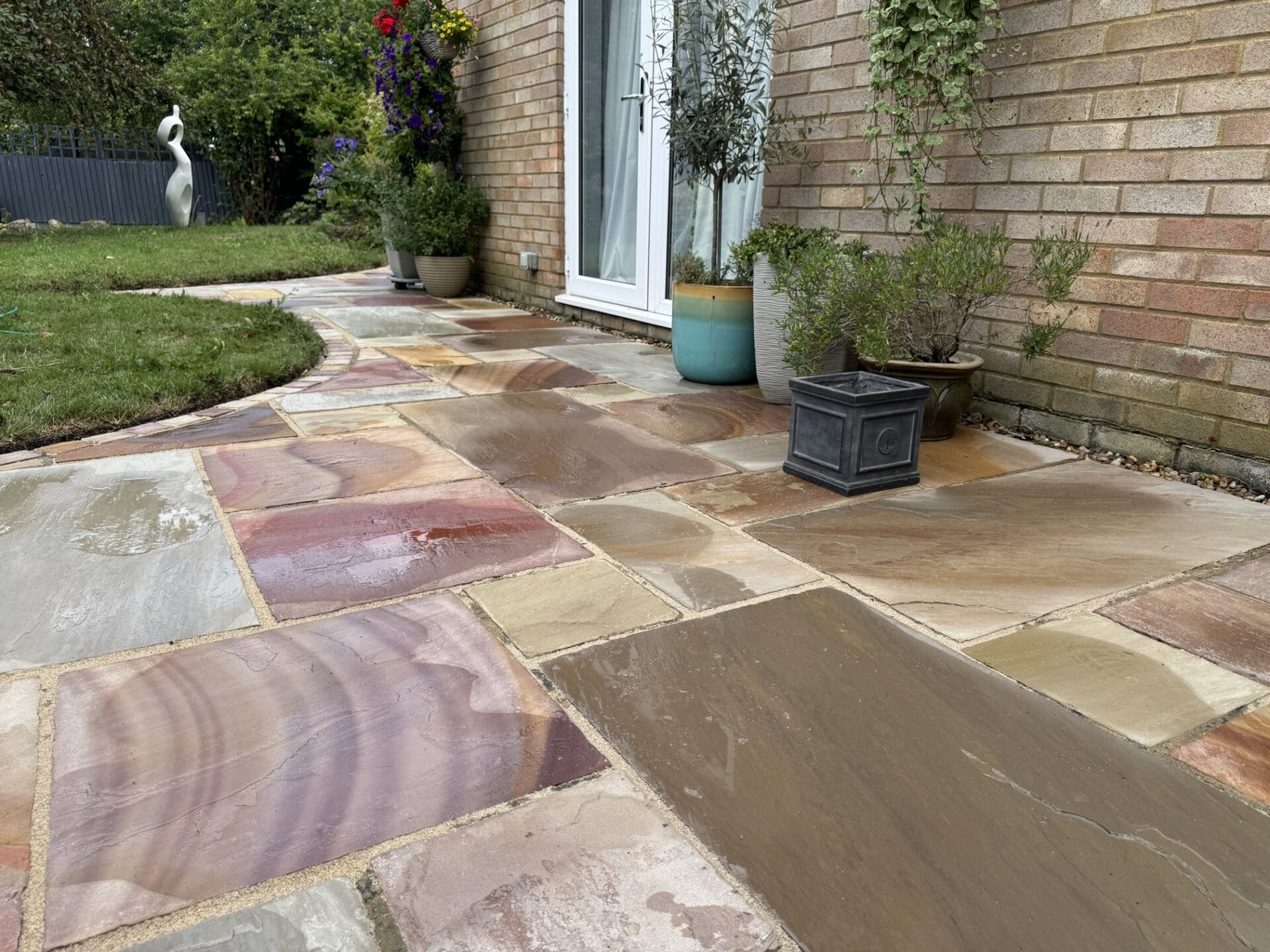
Why it is worth cleaning before winter
Winter does not usually improve a dirty patio. It often makes the problem more noticeable.
Damp conditions, shade, leaf fall and poor airflow can encourage algae, moss and similar growths on hard surfaces.
The Royal Horticultural Society explains that algae, lichens, liverworts and mosses are often found on hard surfaces, especially where conditions are damp or shaded.
You can read their guidance here: RHS advice on algae, lichens, liverworts and moss on hard surfaces.
For a homeowner, the issue is not only how the patio looks.
A green or mossy surface can become slippery after rain, especially on steps, shaded paths, north-facing areas and paving near trees.
Cleaning before winter can help remove the current build-up before the surface spends several months under wetter conditions.
It can also make the area easier to keep tidy.
A cleaner surface is easier to sweep.
Leaves are easier to clear.
Drainage issues may be easier to spot.
If joints, pointing or loose slabs need attention, you may notice them before the weather makes the area more unpleasant to use.
What autumn patio cleaning can help with
Autumn cleaning is useful because it deals with the surface before winter adds more moisture, leaf staining and organic growth.
| Autumn patio issue | Why it matters before winter | What to expect |
| Green algae or moss | Can become slippery when wet | Often improves well with suitable cleaning, but may return if shade and damp remain |
| Fallen leaves and tannin marks | Can leave brown staining or damp patches | Clearing and cleaning can reduce build-up before it settles in |
| Black spots or lichen | Often more stubborn than general dirt | May need specific treatment and may improve rather than disappear fully |
| Block paving weeds and loose joints | Winter weather can make joints look worse | Cleaning may need re-sanding once the surface is dry |
| Poor drainage or standing water | Keeps the surface damp for longer | Should be mentioned before cleaning so the method can be planned properly |
This is also why a professional assessment matters.
Pressure cleaning can make a big difference, but it should not be presented as a guaranteed fix for every mark, stain or surface problem.
Some surfaces are too fragile for aggressive pressure.
Some stains need treatment and time.
Some marks may improve rather than vanish.
Some areas need sanding, sealing or pointing, discussed separately.
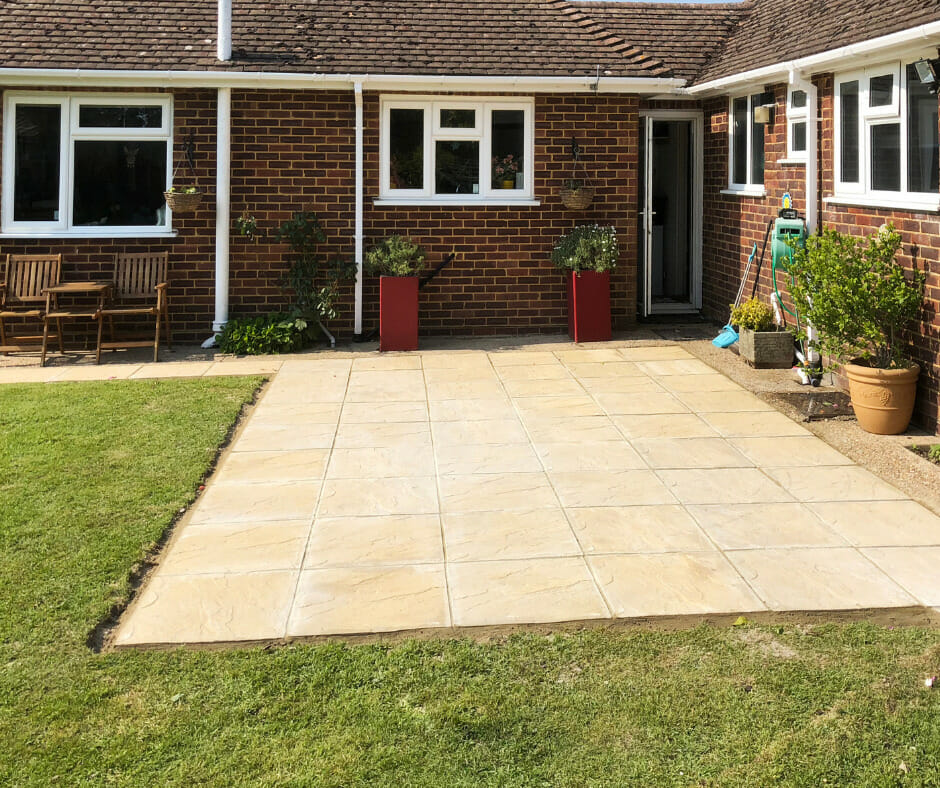
Why we stop driveway and patio cleaning as winter approaches
Stopping seasonal patio and driveway cleaning is not about being difficult. It is about doing the job responsibly.
As winter approaches, several things change:
- The surface stays wetter for longer.
- The weather becomes less predictable.
- Leaves and organic debris keep falling.
- Cold conditions can affect drying.
- Poor drainage becomes more obvious.
- Block paving may not dry well enough for re-sanding.
- Some surfaces become more slippery and awkward to work around.
For these reasons, there comes a point where it is better to pause the service rather than force outdoor cleaning into unsuitable conditions.
We would rather give honest advice than take on work when the timing is wrong.
Should you clean now or wait until spring?
There is no single answer for every patio.
If the patio is lightly dirty but safe underfoot, spring may be fine. If the area is already green, slippery, heavily shaded, covered in leaf debris or awkward to walk across, it may be better to deal with it now before winter makes it worse.
Here is a simple way to think about it.
If you still use the patio, path, or driveway regularly, and it already looks dirty or slippery, ask for advice now.
If you have block paving and the joints are low, loose or full of weeds, autumn may be a sensible time to assess whether cleaning and re-sanding are suitable.
If the patio has black spots, oil, rust marks or unknown staining, send photos before trying products yourself. It is easier to give useful advice before several treatments have already been applied.
If you are unsure what type of service you need, our guide to patio and driveway cleaning services in Cambridgeshire explains what a professional clean can involve.
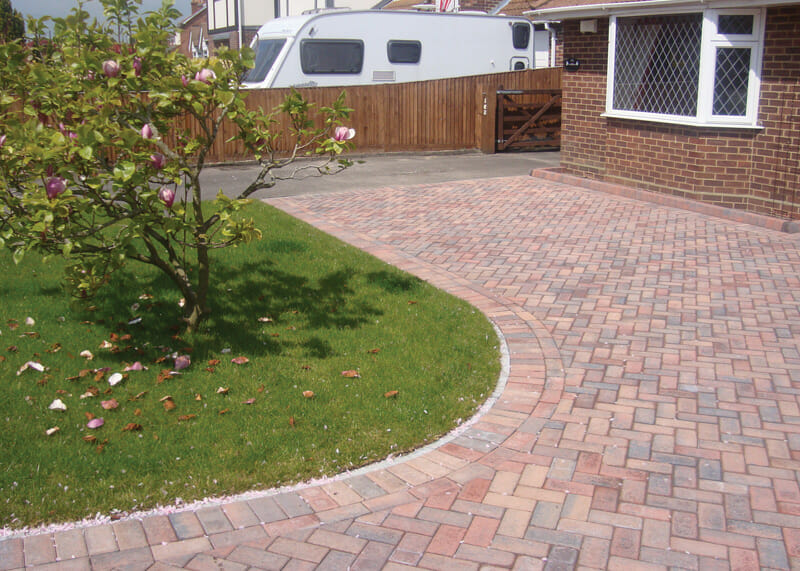
A clean patio is not just for summer.
Many people think about patio cleaning in spring, when they are getting the garden ready for warmer weather. That makes sense, but autumn cleaning has a different purpose.
It is less about preparing for garden parties and more about making the surface safer, tidier and easier to manage through the wetter months.
A clean patio can make everyday use easier. Taking the bins out, walking across a path, using steps, moving through side access or getting to a garden office can all feel more pleasant when the surface is not green and slippery.
Driveways matter too.
Dirt, moss, weeds, oil marks and leaf build-up can make the front of a home look tired.
A seasonal clean can help the entrance feel better cared for before winter.
For more detail on why green build-up happens, you may find our guide to removing algae and moss from your patio useful.
What we check before cleaning
Before cleaning a patio or driveway, it is worth looking at more than the dirt.
A good professional should consider what the surface is made from, whether there are loose slabs, the condition of joints or pointing, drainage, access for equipment, nearby planting and whether further care may be needed after cleaning.
For example, block paving may need re-sanding once it is clean and dry.
Natural stone may need a more cautious approach.
Older slabs or fragile pointing may not suit aggressive pressure.
A previously sealed surface may behave differently from an unsealed one.
This is why photos are helpful.
A clear photo of the whole area, plus close-ups of any marks or damaged sections, can make the first advice more useful.
If cost is part of your decision, our article on how much it costs to clean your patio or driveway may help you understand what can affect the quotation.
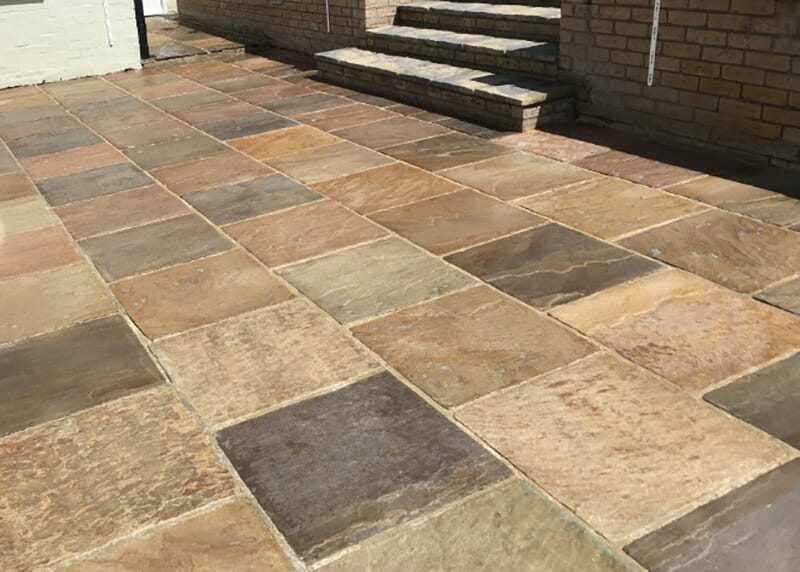
What you can do before your patio clean
A little preparation can help the visit run more smoothly.
Move small pots, garden furniture, toys and loose items where practical.
Sweep away loose leaves if you can.
Mention any loose slabs, damaged pointing, poor drainage, delicate edges or previous sealing.
If access is awkward or there is no outside tap, say so before the visit.
You do not need to diagnose every stain yourself.
You don’t need to know whether the surface is algae, moss, lichen, tannin staining, oil, or general dirt.
The safest first step is often to send a few photos and ask what is realistic.
Avoid applying unknown chemical products before asking for advice, especially on natural stone, sealed surfaces or areas close to planting.
The wrong product can sometimes make a mark harder to deal with.
Do not leave it too late.
The patio cleaning season is now coming to an end.
As of late September, we are already in the autumn window.
That means there may only be a short time left before the weather makes patio and driveway cleaning less practical.
If your patio, path or driveway is green, slippery, dull or heavily marked, now is the time to ask.
We can look at the surface, explain what may be realistic and advise whether it is worth booking before the season closes.
If it is better to wait until spring, we will say so.
For advice or a written quotation, get in touch with Cambridge Patio and Driveway Cleaners.
FAQs
When does patio and driveway cleaning usually stop for the season?
It depends on the weather, but patio and driveway cleaning is usually a mid-spring to mid-autumn service. As winter approaches, wet weather, cold conditions, poor drying and drainage can make outdoor cleaning less practical.
Is autumn a good time to clean a patio?
Yes, autumn can be a useful time to clean a patio, especially if it has become green, slippery, dull or covered with organic build-up. Cleaning before winter can remove current growth and make the surface easier to maintain through wetter months.
Can a patio be pressure washed in winter?
Sometimes it may be possible, but it is often less suitable. Cold, wet or poorly draining conditions can affect safety, drying and the final result. It is better to assess the surface and weather before agreeing to outdoor cleaning.
Will cleaning stop moss and algae coming back?
Cleaning removes current moss, algae and build-up, but it does not change the conditions that helped them grow. Shade, damp, poor airflow, leaf fall and drainage problems can all encourage regrowth over time.
What should I do if my patio is already slippery?
Avoid adding unknown products. Take a few clear photos of the area and ask for advice. If the surface is suitable, a professional clean may help remove the build-up and make the area easier to manage.