Choosing a patio is not only about the colour, pattern or how lovely it looks when it is first laid.
It is also about what happens after a few wet winters, a few muddy paws, garden furniture, fallen leaves, BBQ marks, shaded corners and the odd plant pot that never gets moved.
The easiest patio to clean is usually porcelain paving, because it is less porous than many other patio materials and does not absorb staining as easily.
But that does not mean porcelain is maintenance-free. And it does not mean concrete, brick or natural stone are poor choices. They can all be good patios when they suit the home, the garden and the way the space is used.
The honest answer is this: the easiest patio to clean is the one that matches your home, drains well, is laid properly and is looked after in the right way.
If your patio is already green, slippery-looking or marked, you may also find our patio cleaning service helpful.
The quick answer: which patio is easiest to clean?
If we are ranking common patio materials for ease of cleaning, the order usually looks like this:
- Porcelain paving
Usually the easiest to keep clean because it is dense, hard-wearing and less absorbent. - Concrete slabs
Often practical and fairly easy to clean, but they can absorb stains and may weather over time. - Brick patios
Attractive and full of character, but the joints can collect moss, weeds and dirt. - Natural stone patios
Beautiful, but more varied. Sandstone, limestone, slate and granite can all behave differently, so cleaning needs more judgement.
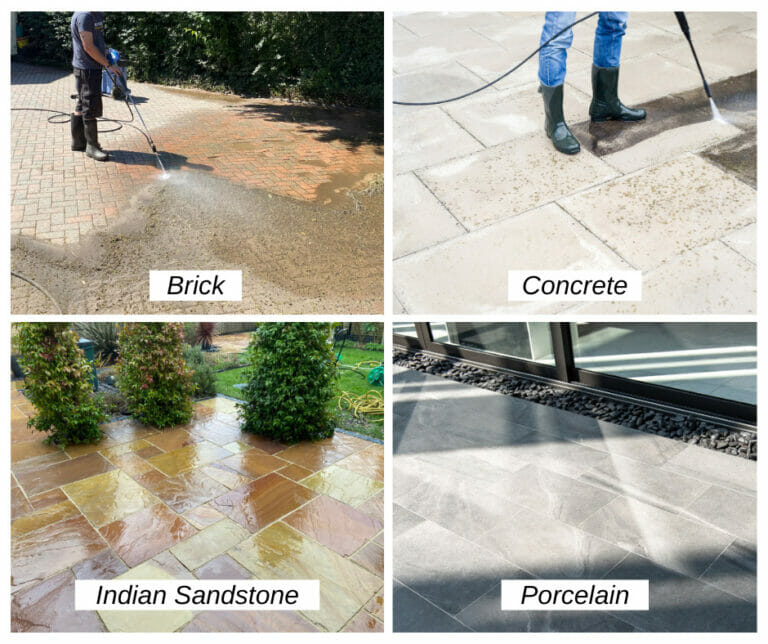
Here are the types of patios and how much it takes to clean them:
1. Porcelain patios: usually the easiest to clean
Porcelain paving is often chosen by homeowners who want a cleaner, modern look without quite as much ongoing maintenance.
It is hard, dense and usually less porous than many other patio materials. That means dirt and staining are less likely to soak in deeply. In everyday terms, that can make porcelain easier to sweep, rinse and clean.
Why porcelain is easier to clean
Porcelain is often easier because it resists moisture and staining better than more absorbent surfaces. It is a good option for busy family gardens, outdoor dining areas and modern patios where the client wants a smart finish without too much fuss.
A porcelain patio can still collect:
algae in shaded areas, leaf marks, soil from pots, BBQ residue, bird mess, muddy footprints and general outdoor grime.
The difference is that many marks are less likely to sink into the surface in the same way they can with softer or more porous materials.
The watch-out with porcelain
Porcelain can show smears, residue and streaks if it is cleaned with the wrong product or not rinsed properly. It can also become slippery if algae builds up on the surface.
So while porcelain is usually the winner for easy cleaning, it still needs sensible care.
Best for: modern homes, outdoor dining spaces, lower-maintenance gardens and clients who want a crisp, cleaner-looking finish.
Cleaning difficulty: easiest overall.
2. Concrete patios: practical, but can stain

Concrete patios are common because they are practical, durable and often more budget-friendly than some stone or porcelain options.
They can be fairly straightforward to clean, especially when the surface is sound and not too old or damaged. Regular sweeping, occasional rinsing and careful pressure cleaning can make a big difference.
Concrete is a good everyday patio choice, but it is not always as stain-resistant as people expect.
Concrete can be porous. This means oil, rust, leaf tannins, BBQ marks, algae and general dirt may soak in or cling to the surface. Older concrete can also become more weathered and rough, which gives dirt and growth more places to sit.
The watch-out with concrete
Pressure washing can improve concrete, but too much pressure or the wrong technique can roughen the surface or make weaker areas worse.
If concrete has already become very stained, a clean may improve it rather than make it look new. That is not failure. It is simply the reality of an outdoor surface that has been used, weathered and exposed for years.
Best for: practical gardens, family homes, paths, simple patio areas and clients who want a useful outdoor surface without too much design fuss.
Cleaning difficulty: fairly easy, but stains can be stubborn.
3. Brick patios: lovely character, more joints to manage
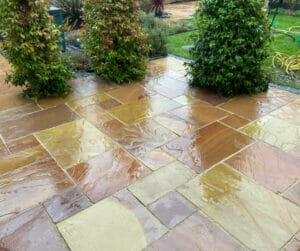
Brick patios have a warm, traditional look. They can suit older properties, cottage gardens and homes where a softer, more characterful surface feels right.
They can clean up well, but they usually need more attention than porcelain or simple concrete slabs.
The main reason is the joints.
Brick patios often collect moss, weeds and dirt between the bricks. Those small gaps can hold moisture, soil and organic growth. In damp or shaded areas, green growth can return more quickly.
Brick itself can also be porous, so staining may soak in depending on the type of brick and how the patio was laid.
The watch-out with brick
Brick can be damaged by aggressive pressure washing if the surface is soft, old or already worn. The joints can also be disturbed if they are weak.
That does not mean brick patios cannot be cleaned professionally. It just means the method needs to suit the surface. More force is not always better.
Best for: period homes, character gardens, cottage-style patios and clients who do not mind a little more upkeep.
Cleaning difficulty: moderate, mainly because of joints, moss and surface porosity.
4. Natural stone patios: beautiful, but not all stone behaves the same
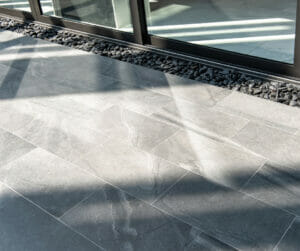
Natural stone patios can look beautiful. Indian sandstone, limestone, slate, granite and traditional flagstones all have their own character.
This is where cleaning advice needs to be careful, because natural stone is not one single material.
Some stone is dense and hard. Some is softer and more absorbent. Some marks may sit on the surface. Others may soak in. Some stones can react badly to the wrong cleaner.
That is why natural stone can be more demanding than porcelain.
Common natural stone patio materials include:
Indian sandstone
Limestone
Slate
Granite
Traditional flagstones
Indian sandstone is very popular in many homes around Cambridge, Cambridgeshire, Hertfordshire, Suffolk and Essex. It can look lovely, especially in warmer garden settings, but it can also hold algae, black spots, rust staining and leaf marks if conditions are damp or shaded.
The watch-out with natural stone
Black spots and lichen can be particularly stubborn on natural stone. Pressure washing alone may clean the surrounding surface but leave dark spots behind.
Harsh products can also cause problems, especially if the stone type is unknown or if the patio has been sealed before.
If you are dealing with dark marks, our guide to black spots on patio slabs may help you understand what you are looking at before trying a product.
Best for: homeowners who love a natural look and are happy to care for the surface properly.
Cleaning difficulty: varies from moderate to more demanding, depending on the stone.
So, which patio should you choose if easy cleaning matters most?
Choose porcelain if low maintenance is your main priority.
It is usually the easiest patio surface to clean and maintain because it is less absorbent and more resistant to staining.
Choose concrete if you want practical and cost-effective.
It can be easy to clean, but be realistic about staining and weathering.
Choose brick if you love character.
It may need more work around joints, moss and weeds.
Choose natural stone if you want beauty and variation.
It can be stunning, but the cleaning method needs to match the stone.
A patio is not just a surface. It is part of how you use your home. A family in Ely with children running in and out of the garden may need something different from a courtyard in Saffron Walden, a shaded patio near Newmarket or a large outdoor dining area in Royston.
That is why there is no perfect patio for everyone.
There is only the patio that suits your home, your garden and how much maintenance you are happy to do.
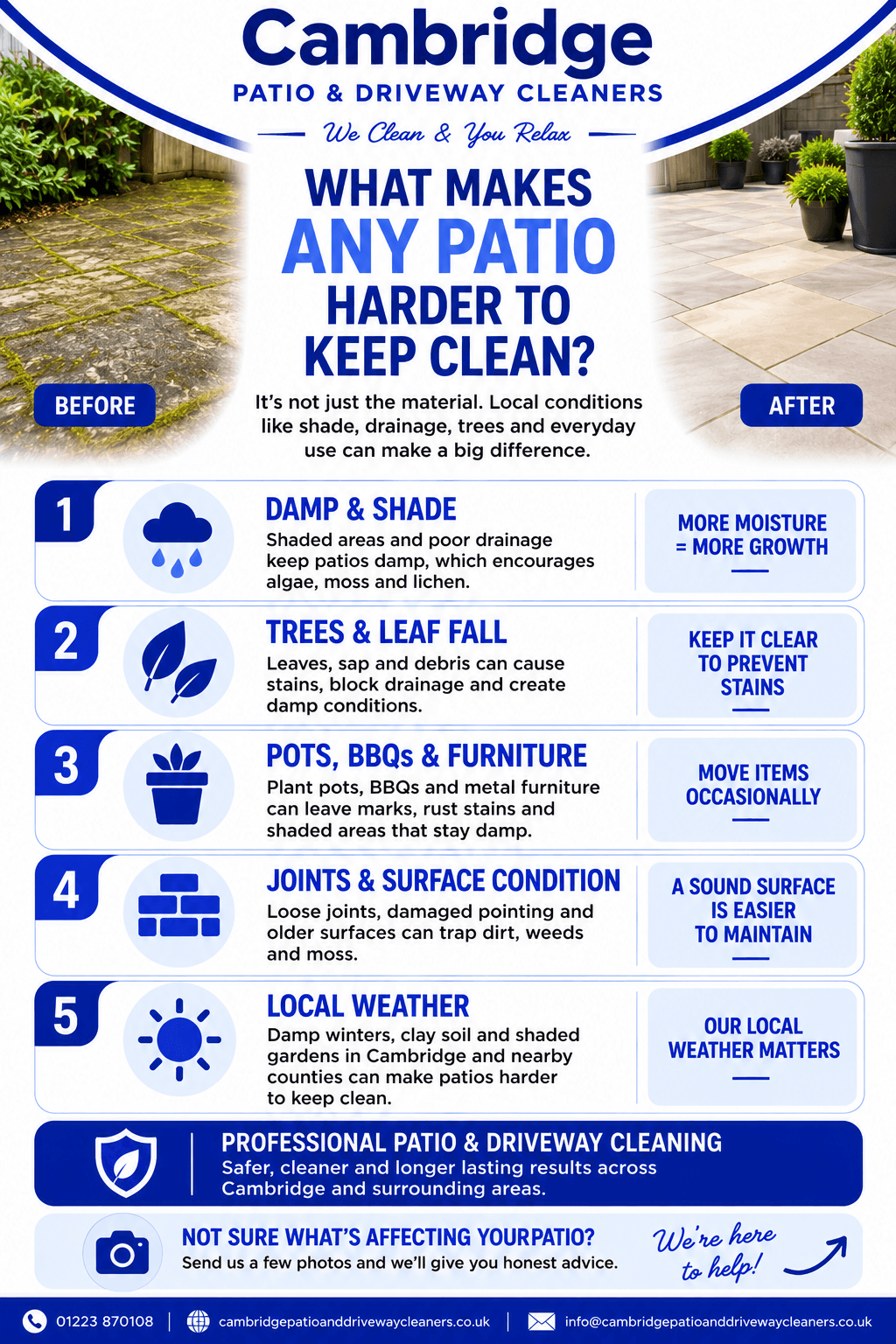
What makes any patio harder to keep clean?
The material matters, but it is not the only thing.
A porcelain patio in a damp, shaded corner may still turn green. A concrete patio under trees may collect leaf stains. A brick patio with weak joints may grow moss. A natural stone patio with poor drainage may become marked faster than expected.
The biggest cleaning problems often come from the conditions around the patio.
These include:
Shade, poor drainage, overhanging trees, leaf fall, standing water, loose joints, damaged pointing, old sealer, heavy plant pots, BBQs, rusty furniture, pets and regular muddy foot traffic.
The Royal Horticultural Society has useful advice on algae, lichens, liverworts and mosses on hard surfaces. Their guidance explains how damp, shade and surface conditions encourage growth, which is why cleaning alone does not always stop it from returning. You can read it here: RHS advice on algae, lichens, liverworts and moss on hard surfaces.
Local note: patios around Cambridge and nearby counties
Patios in our area often have to deal with damp winters, shaded gardens, clay soil, trees, rural dust, new-build landscaping and older paving that has been down for years.
We see patios and driveways across Cambridge and surrounding areas that are not “badly looked after”. They are simply living outside in British weather.
A patio in Cambridgeshire may sit damp for long periods after winter. A garden in Hertfordshire may have shaded corners under trees. Homes in Suffolk and Essex may have a mix of older stone, concrete, block paving and newer porcelain areas.
Local weather and garden layout can matter as much as the patio material itself.
If you are comparing patio types because you are planning a new outdoor space, think about where the sun falls, where water drains, whether trees overhang the area and how often you want to clean it.
If you already have a patio and are not sure what material it is, send a few photos before using strong products. It is much easier to give sensible advice before anything has been applied.
Can pressure washing damage a patio?
Yes, it can, if it is done too aggressively or with the wrong method.
Pressure washing can be very effective for patios, paths and driveways, but it needs judgement. The pressure, nozzle, distance, surface condition and drainage all matter.
A good clean should not start with maximum pressure. It should start with looking at the surface.
Before cleaning, it helps to check:
what the patio is made from, whether any slabs are loose, whether the pointing or joints are sound, whether the patio has been sealed before, where the water will drain and whether there are any stains that need separate treatment.
For a practical guide, read our article on how to pressure wash your patio.
What about driveways and block paving?
Many homes have a patio and a driveway that need cleaning at the same time.
Block paving can clean up very well, but it has its own maintenance point: the joints. When block paving is pressure washed, some old sand, weeds, moss and loose material may come out from between the blocks.
That is why re-sanding may be needed once the surface is clean and dry.
If that applies to your home, our guide on putting sand back into block paving after cleaning explains what to expect.
You can also read more about our driveway cleaning service if the front of your home needs attention as well as the garden.
How to keep any patio easier to clean
You do not need to fuss over your patio every week. Small habits help.
Sweep leaves before they break down into damp organic matter. Move pots and furniture occasionally so the paving underneath can dry. Keep drains clear. Cut back overhanging plants where sensible. Watch shaded steps and corners, because they often turn green first.
If you have a BBQ, metal furniture, plant stands or a fire pit, check underneath them now and again. Rust marks often start quietly.
A patio does not have to be perfect to be worth caring for.
Regular care can make the surface safer, nicer to use and easier to clean when it is time for a deeper clean.
For more long-term care advice, you may find our guide on whether regular cleaning can extend the life of patios and driveways useful.
When should you ask for professional patio cleaning advice?
It is worth asking for advice if:
your patio is natural stone, you do not know what the surface is, there are black spots or rust marks, the patio has been sealed before, slabs are loose, pointing is damaged, drainage is poor, pets or children use the area daily, or you have already tried a cleaner, and it has not worked.
You do not need to diagnose the problem perfectly before getting in touch.
A few clear photos can often help us understand the surface, spot any obvious risks and explain what may be realistic.
Which type of patio is easiest to clean?
Porcelain patios are usually the easiest to clean and maintain.
They are less porous than many other patio materials, so they are generally better at resisting everyday staining and moisture.
Concrete is usually next easiest, especially when it is sound and well cared for.
Brick and natural stone can look beautiful, but they usually need more attention because they are more porous, have more joints or vary more from one surface to another.
The best patio is not always the one that needs the least cleaning. It is the one that suits your home, your garden and how you actually use the space.
If your patio is already green, dull, slippery-looking or stained, Cambridge Patio and Driveway Cleaners can assess the surface and explain what is realistic before any work is agreed.
We help with patio and driveway cleaning across Cambridge and surrounding areas, including parts of Cambridgeshire, Hertfordshire, Suffolk and Essex.
You can get in touch here or send a few photos if you would like advice before booking.
FAQs
What is the easiest patio material to clean?
Porcelain paving is usually the easiest patio material to clean because it is dense, hard-wearing and less porous than many other surfaces. It still needs care, especially in shaded or damp areas where algae can build up.
Is porcelain paving maintenance-free?
No. Porcelain is lower maintenance, but it is not maintenance-free. It can still collect dirt, algae, leaf marks, BBQ residue and surface grime. It also needs suitable cleaning so it is not left streaky or slippery.
Is natural stone hard to clean?
Natural stone varies. Granite may behave differently from sandstone or limestone. Some natural stone patios clean well, while others need more careful treatment because they are porous, stained, sealed or affected by black spot lichen.
Can pressure washing clean all patio types?
Pressure washing can clean many patios, but it must be done with the right pressure and technique. Too much pressure can damage softer surfaces, disturb joints or make weak pointing worse. The surface should be assessed before cleaning.
Why does my patio keep going green?
Patios often go green because algae and moss grow in damp, shaded areas. Cleaning removes the current growth, but it does not change shade, poor drainage, leaf fall or poor airflow. Regular sweeping and keeping the area clearer can help slow regrowth.
Should I seal my patio after cleaning?
Possibly, but not always. Sealing depends on the patio material, condition, previous treatments and how the area is used. It is better to ask for advice before assuming sealing is the right next step.
Can professional cleaning make my patio look new again?
A professional clean can often make a patio look much fresher, but “like new” should not be promised without assessment. Age, staining, surface damage, drainage, previous products and the type of paving all affect the final result.
If you would like to know how to pressure wash your patio, click on the link below:
To find a company near you, click on the link below:
 Written by Tracey Gilbey, Marketing and Admin Coordinator at Art of Clean.