
A good patio has to do more than look attractive in a photo. In 2026, homeowners are thinking more carefully about how their outdoor space works day to day.
They want somewhere to sit with a coffee, eat outside, entertain friends, cool down in summer, manage family life and make the garden feel like a proper part of the home.
The best patio designs now balance style with practicality.
Large-format paving, natural stone, porcelain slabs, warm tones, outdoor living zones and smarter lighting are all popular choices. But the part that often gets missed is maintenance.
A patio only stays enjoyable if it is safe underfoot, easy to clean and looked after in a way that suits the surface.
Here are the patio design trends worth paying attention to in 2026… and how to keep them looking good after installation.
-
Outdoor living spaces that feel like an extra room
One of the biggest patio trends is the move towards outdoor living.
People are no longer treating the patio as a plain paved area at the back of the house. They are using it as a sitting room, dining space or evening area.
This might include comfortable seating, a dining table, an outdoor rug, planters, a pergola, lighting, a fire pit or a simple cooking area.
The aim is not always a full outdoor kitchen. For many homes, it is about making the patio more useful, more often and more comfortable to spend time in.
The maintenance point is simple: the more furniture, pots and features you add, the more hidden damp patches you may create.
Algae and moss often start under planters, behind furniture and in shaded corners where the paving does not dry quickly.
To keep this type of patio looking cared for, move pots and furniture occasionally, sweep underneath them, and watch the areas that stay damp after rain.
-
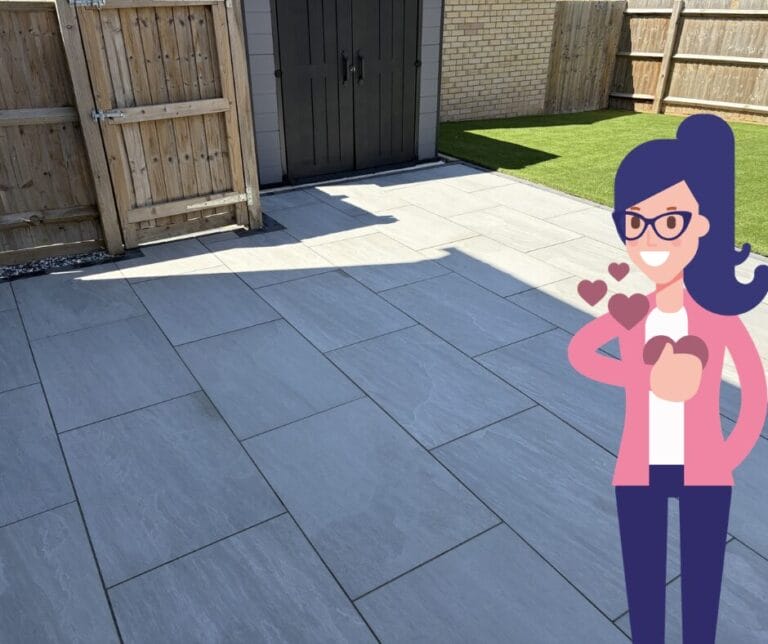
Large-format porcelain paving
Porcelain paving is still a strong choice for modern patios in 2026.
Large-format slabs, clean lines and neutral colours can make a garden feel more open and contemporary. Fewer joints can also give the patio a smoother, calmer look.
Porcelain is often chosen because it can be lower maintenance than some traditional surfaces, but lower maintenance does not mean no maintenance.
Dirt, algae, leaf marks and general outdoor build-up can still sit on the surface, especially in shaded or damp areas.
Porcelain can also show smears, residue, and streaks if it is cleaned with the wrong products or not rinsed properly.
If the patio is new, recently sealed nearby, or has grout haze or installation residue, it may need a different approach from a standard pressure wash.
A good maintenance routine is to sweep regularly, rinse off loose dirt when appropriate, and avoid strong, unknown products… If marks remain, ask for advice before using harsh chemicals or aggressive pressure.
-
Natural stone with warmer, softer tones
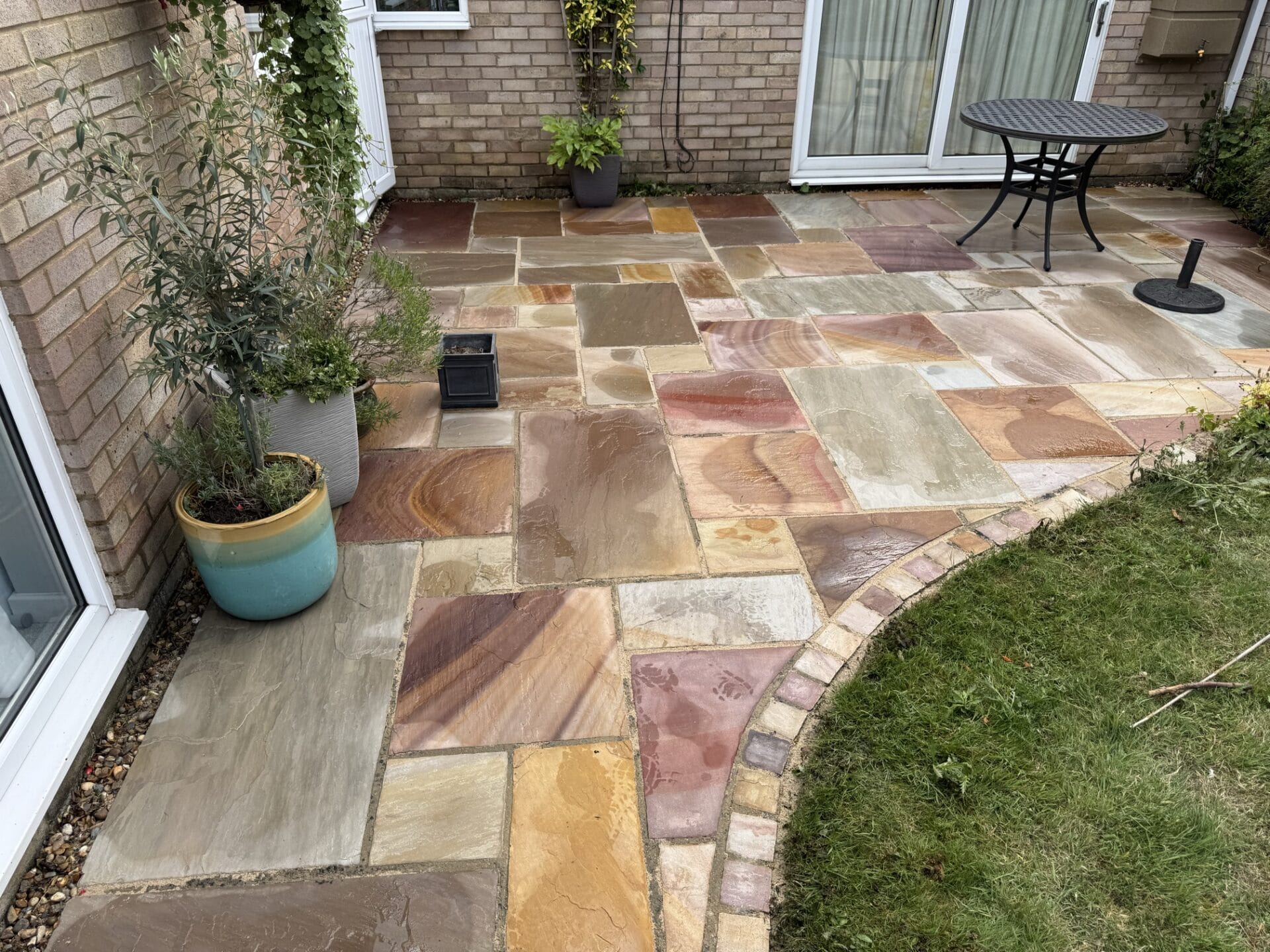
Natural stone remains popular because it has character.
Limestone, sandstone, slate and granite can give a patio a more settled, textured and natural feel than a very uniform surface.
In 2026, warmer tones are becoming more attractive again, especially for older homes, cottage gardens and properties where cool grey paving can feel a little harsh.
Indian sandstone, limestone and warm buff tones can sit beautifully with planting, timber, brick and traditional walls.
The trade-off is that natural stone needs sensible care.
Some stones are more porous than porcelain, and the surface can respond differently to pressure, staining, algae, black spots, and cleaning products.
For natural stone patios, avoid assuming that stronger cleaning is always better.
A careful clean should take account of the stone type, the condition of the joints, any previous sealing, drainage and whether there are delicate edges or loose slabs.
Sealing may be worth discussing for some natural stone patios, but it should not be treated as automatic.
The right choice depends on the surface, condition, use of the patio and the finish the homeowner wants.
-
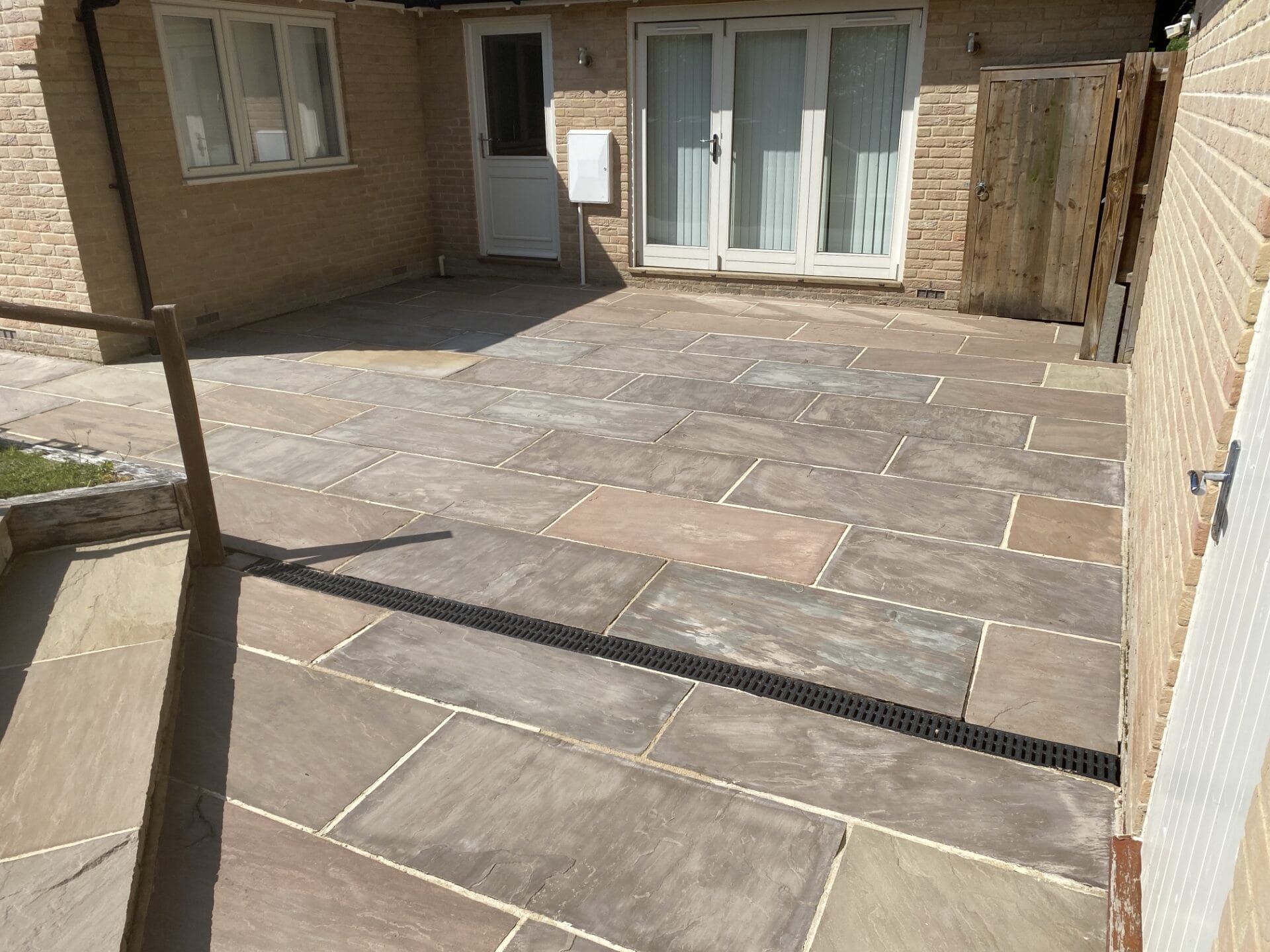
Mixed-material garden design
Another 2026 trend is mixing materials rather than using a single surface throughout.
A garden might have porcelain near the house, gravel around planting, natural stone for a path, brick edging, setts around borders, or timber features for warmth.
This can make a garden feel more interesting and personal.
It can also help with zoning. For example, one area may be for dining, one for sitting, one for planting, and one for access.
The takeaway is that each material may require different care.
Block paving, porcelain, concrete, natural stone, brick edging, and gravel should not all be treated in the same way.
If a patio uses mixed materials, it is useful to tell the cleaning team what each surface is, if you know.
It also helps to mention previous sealing, weak pointing, loose edges, or areas where water sits. That allows the clean to be planned around the surface, not just the visible dirt.
-
Garden zoning for smaller and busier spaces
Many people now want their garden to do several jobs.
A patio might need to accommodate children, pets, dining, quiet sitting, working-from-home breaks, guests, and everyday family use.
Garden zoning helps with this.
It may be as simple as using planters to define a seating area, placing a rug beneath a table, using a path to separate a dining space, or changing paving direction to make a small area feel more intentional.
For maintenance, zones can create different wear patterns.
The dining area may collect food spills.
The route from the back door may get the most foot traffic.
Shaded seating areas may turn green first.
Areas under trees may collect sap, leaves, and tannins.
A useful habit is to look at the patio after rain… The places that stay wet longest are usually the places where algae, moss, and staining become more noticeable.
-
Outdoor kitchens, BBQ areas and fire pits
Outdoor cooking areas are still popular, but they bring a different type of maintenance.
Grease, food spills, rust marks from BBQs, ash, smoke residue and furniture marks can all affect paving.
If you are planning a BBQ area or outdoor kitchen, think about the surface underneath it.
Some materials cope better with staining than others. It is also worth using mats, trays or protective feet where suitable, especially beneath metal furniture, BBQ wheels and fire pits.
They may come from plant stands, BBQs, furniture feet, fire pits, tools or even iron-rich lawn products that have been walked or washed onto the paving.
Pressure washing may clean the dirt around a rust mark, but rust often needs more specific treatment.
If an orange or brown mark appears, take a clear photo and ask before applying strong products. The wrong product can make some surfaces harder to treat.
-
Shade, comfort, and cooler patios
With hotter summer days becoming a bigger part of how people use their gardens, comfort is now part of patio design.
Pergolas, awnings, sail shades, parasols, planting, and outdoor rugs can all make a patio feel easier to use.
Outdoor rugs are popular because they can soften a seating area, add colour and make the space feel more like a room.
They can also make a hot paved area more comfortable underfoot.
But rugs and shade can also hold moisture against the surface if they are left in place for long periods, especially after rain.
To look after the patio beneath, lift outdoor rugs occasionally, allow the surface to dry, and clean away trapped leaves or grit. The same applies to large planters and storage boxes.
-
Smart lighting and evening use
Garden lighting is another trend that has moved from luxury to everyday practicality.
Low-level lights, step lighting, wall lights, solar lights, and warm garden lighting can make a patio safer and more inviting in the evening.
Lighting also changes what you notice. A patio that looks fine in daylight may show algae, uneven colour, stains or splash marks under low-angled light.
If lighting is being added, it is a good time to check the surface too.
Steps, edges, and paths should be kept clear of slippery growth, especially where people walk in and out of the house at night.
-
Low-maintenance does not mean maintenance-free
A lot of 2026 patio choices are described as low-maintenance. That can be helpful, but it can also create the wrong expectation.
All outdoor surfaces are exposed to rain, shade, soil, leaves, pets, trees, furniture, food, foot traffic, and changing weather.
Even a well-designed patio will need sweeping, occasional cleaning, and some attention to drainage.
The best low-maintenance patio is not the one that never needs care. It is the one where the material, layout, and maintenance routine suit the home.
Simple habits make a difference:
- Sweep leaves before they break down into damp organic matter.
- Keep drains and channels clear where safe to do so.
- Move pots and furniture now and then.
- Watch shaded corners, steps and edges.
- Ask about re-sanding if you have block paving.
- Ask whether sealing is suitable rather than assuming it is needed.
- Avoid applying unknown products before checking the surface.
-
Sustainable and permeable choices
Sustainability is becoming more important in garden design.
For patios, this often means choosing durable materials, avoiding unnecessary replacement, thinking about drainage, using planting well, and limiting hard paving where it is not needed.
Permeable paving, gravel edges, planting beds, and better drainage can help water move away rather than sit on the surface. This matters because damp, shaded areas often encourage algae and moss.
If you are planning a new patio, think about where water will go.
If you already have a patio, look for puddles, green patches and areas that stay wet long after the rest has dried.
Cleaning can remove current growth, but if the conditions stay the same, moss and algae can return.
How to keep a patio looking newer for longer
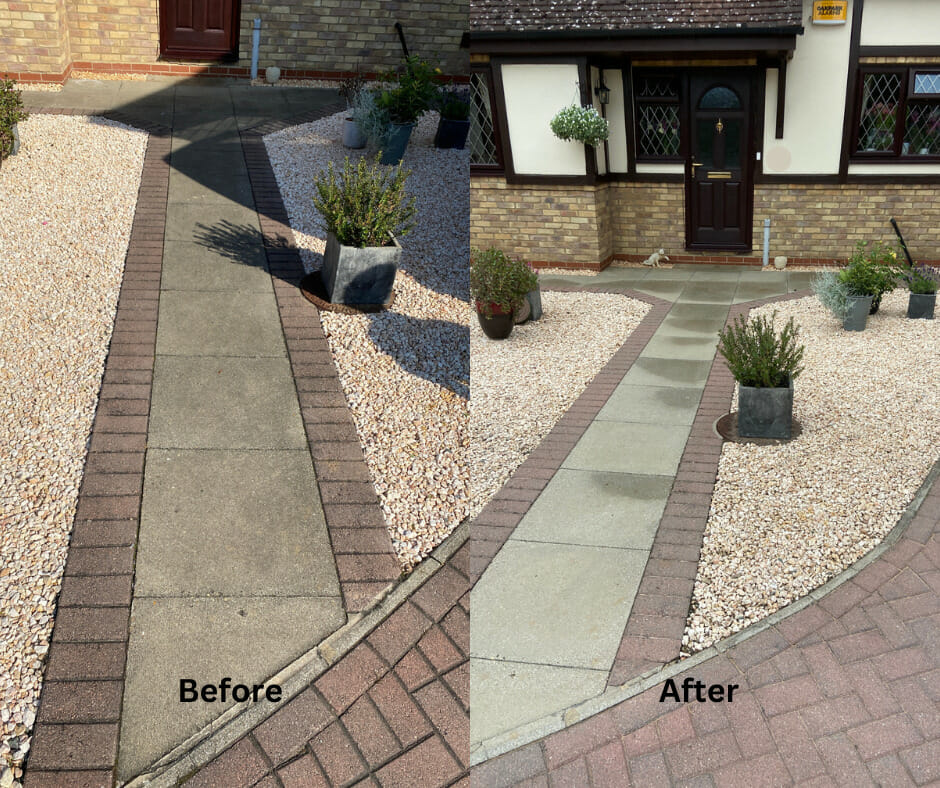
The best way to keep a patio looking good is to combine regular light maintenance with the right deeper clean when it is needed.
Regular sweeping helps stop leaves, soil and grit from building up.
This is especially useful in autumn and after windy weather. If you have trees nearby, pay attention to sap, leaf tannins and shaded areas.
Pressure washing can remove a lot of surface dirt, algae and moss, but it should be used with care.
Too much pressure, the wrong nozzle or working too close to the surface can damage some materials, disturb joints or remove sand from block paving.
A professional clean should start with assessment, not maximum pressure.
The surface type, joints, drainage, access, staining, previous sealing and fragile areas all matter.
What about black spots, lichen and stubborn staining?
Not every mark is normal dirt. Black spots, lichen, rust, oil, leaf stains, BBQ marks and old staining can behave differently.
Some marks may improve with cleaning but not disappear completely.
Some need specific treatment.
Some are linked to the condition of the surface or what has already been used on it.
This is where honest expectations matter. It is better to look at the patio first and explain what is realistic than to promise that every mark will vanish.
If you are unsure what a mark is, take a clear photo in daylight before using products.
This can help the team advise whether a professional patio clean is likely to help and whether any specialist treatment may be needed.
When is the best time to clean a patio?
Spring, summer, and autumn are usually the most practical times to clean a patio.
Spring cleaning clears winter build-up before the garden is used more. Summer cleaning can help before family visits, BBQs, or outdoor plans. Autumn cleaning can remove slippery build-up before wetter weather settles in.
The right timing also depends on weather, access, and surface conditions.
Heavy rain, freezing conditions, poor drainage, or fragile pointing can affect what is sensible on the day.
How to prepare before a professional patio clean
A little preparation helps the visit run smoothly.
Move small pots, furniture, toys, bins and loose items where practical. If something is too heavy or awkward to move, mention it before the visit.
It also helps to tell the team about:
- loose slabs
- damaged pointing
- poor drainage
- previous sealing
- delicate surfaces
- rust or oil marks
- areas that stay slippery
- lack of outside tap access
- anything already tried on stains
You do not need to diagnose the patio yourself. The aim is simply to make sure the surface can be assessed properly before work begins.
Should you seal your patio after cleaning?
Sealing can be useful for some patios, but it is not the right answer for every surface.
A sealer may help protect suitable paving from staining and make future maintenance easier, but the surface must be appropriate and properly prepared.
Some patios may need to dry fully first. Some surfaces may not need sealing. Some may already have an old coating that affects the next step.
Block paving may need re-sanding after cleaning.
Some natural stone may benefit from sealing.
Porcelain may need different advice.
Older or damaged patios may need repair or re-pointing before any protective treatment is considered.
The safest approach is to ask after the patio has been assessed.
A 2026 patio should be practical as well as stylish.
Trends are useful for inspiration, but the best patio is one that works for your home.
A large-format porcelain patio may suit a modern extension.
Warm natural stone may suit an older property.
Mixed materials may help a garden feel more personal.
Outdoor rugs, lighting, shade, and planting can make the area more comfortable.
Whatever style you choose, the surface still needs sensible care.
Keep it clear where possible, manage damp and shade, avoid harsh unknown products, and clean it in a way that suits the material.
If your patio is green, slippery, dull, or marked, Cambridge Patio and Driveway Cleaners can assess the surface and explain what is realistic before any work is agreed.
Send a photo or ask for a quotation, and we can help you decide whether your patio needs a simple clean, a deeper clean, re-sanding, sealing advice, or further surface care.

FAQs
What patio materials are popular in 2026?
Porcelain paving, natural stone, Indian sandstone, limestone, decorative concrete and mixed-material designs are all popular choices. Large-format slabs, warmer tones, outdoor living zones and low-maintenance finishes are especially common in current patio design.
Is porcelain paving easy to maintain?
Porcelain is often chosen as a lower-maintenance patio material, but it still needs care. Dirt, algae, leaf marks and residue can still build up, especially in shaded areas. It should be cleaned with suitable methods so the surface is not left streaky or damaged.
How often should a patio be cleaned?
This depends on shade, drainage, trees, use and surface type. Many patios benefit from regular sweeping and a deeper clean when they become green, slippery or dull. Spring and autumn are common times to deal with seasonal build-up.
Will pressure washing damage my patio?
Pressure washing can clean patios effectively, but it needs the right pressure, nozzle and technique. Some surfaces, weak joints, loose slabs, natural stone and block paving can be damaged or disturbed if the cleaning is too aggressive.
Can moss and algae come back after cleaning?
Yes. Cleaning removes current growth, but it does not change the conditions that encourage it, such as shade, poor drainage, standing water, leaf fall and damp corners. Regular sweeping, better airflow and keeping drains clear can help slow the return.
Should I seal my patio after cleaning?
Possibly, but not always. Sealing depends on the surface, condition, previous treatment and how the patio is used. Block paving may need re-sanding, natural stone may need assessment, and porcelain often needs different advice. Ask before assuming sealing is needed.
What should I do about black spots or lichen on my patio?
Black spots and lichen can be more stubborn than general dirt or algae. Some marks need specific treatment and may not disappear completely. Take a clear photo before applying products so you can get advice on the safest next step.
How do I keep an outdoor living patio looking good?
Move furniture and pots occasionally, sweep underneath them, lift outdoor rugs to let the surface dry, keep leaves away from corners and watch shaded areas. These small habits help reduce damp build-up and keep the patio easier to maintain.
 Written by Tracey Gilbey, Marketing and Admin Coordinator at Art of Clean.
Pease do not hesitate to contact us for advice or information on our carpet and soft furnishing care. You can contact us at: Art of Clean team at 01223 901551 in Cambridge. Our services include Carpet Cleaning, Upholstery Cleaning, oriental and area Rug Cleaning. It also includes Curtain Cleaning, Patio, and Driveway Pressure washing, Leather Cleaning, Stone and Tile Floor Cleaning, and Wood Floor Sanding and Restoration. We also supply new flooring and carpets through our sister company Art of Flooring. Farthings Cambridge provides our Dry-Cleaning service