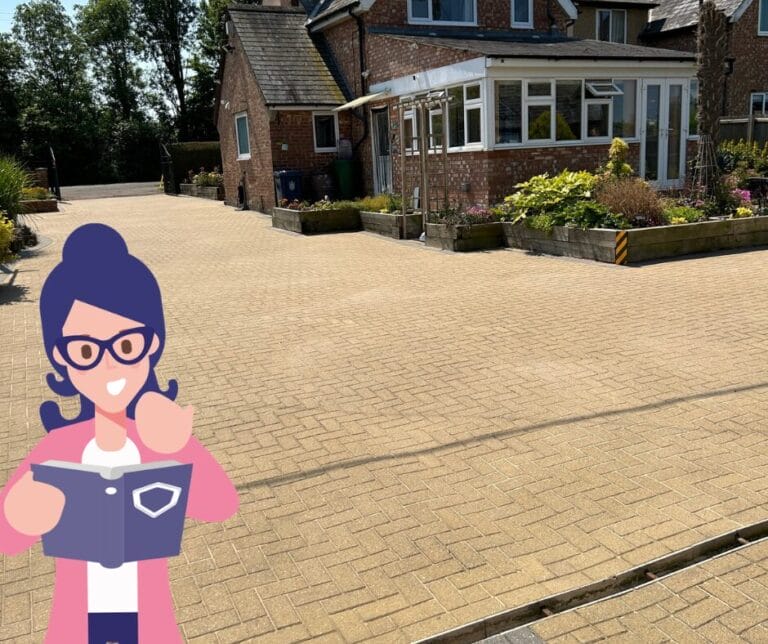
An oil stain on your driveway can make the whole entrance to your home feel neglected, even when the rest of the space is clean and cared for. Whether it comes from a leaking car, a delivery van, or a one-off spill, oil quickly soaks into many driveway surfaces and becomes harder to remove the longer it sits.
The good news is that most oil stains can be improved significantly, and in many cases removed completely, if the right method is used for the surface and the age of the stain.
Key takeaways
- Fresh oil stains are so much easier to remove before they soak into porous driveway surfaces.
- Block paving, concrete, and tarmac all need different cleaning approaches.
- Pressure washing alone often does not remove deep oil contamination properly.
- Harsh DIY chemicals can damage surfaces or spread the stain further.
- Professional driveway cleaning can safely and more evenly remove older stains.
- Sealing a driveway afterwards can help reduce future staining and make maintenance easier.
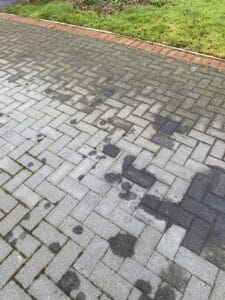
Why do oil stains soak into driveways so quickly?
Many driveway materials are porous… Block paving, concrete, sandstone, and even some resin finishes contain tiny gaps that absorb oil beneath the surface. Once the oil settles into those pores, standard washing often only cleans the top layer while the darker mark remains underneath.
Fresh stains are normally easier to treat because the oil has not fully bonded with the surface yet. Older stains behave differently. Heat, rain, and foot traffic gradually push the contamination deeper, which is why some marks seem to “come back” after cleaning.
This is also why aggressive DIY scrubbing can sometimes spread the stain rather than remove it.
Which driveway surfaces are hardest to clean?
Different surfaces react very differently to oil contamination.
Block paving
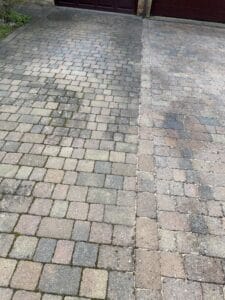
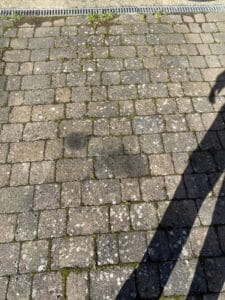
Oil stains on block paving are particularly common because the joints and porous blocks absorb liquid quickly. The stain often spreads beneath the surface layer and into the kiln-dried sand between the joints.
Removing oil from block paving usually requires a combination of degreasing treatment, dwell time, agitation, and careful pressure washing. Once cleaned, the joints often need re-sanding to stabilise the surface again.
Concrete driveways
Concrete absorbs oil very deeply, especially your older concrete that hasn’t ever been sealed. Dark patches can remain visible even after surface cleaning because the contamination sits below the visible layer.
Professional concrete degreasing often works better than repeated domestic washing because specialist products break down the oil rather than simply moving it around.
Tarmac driveways
Tarmac really does need a lot more caution. Strong chemicals and excessive pressure might soften or damage the surface. Some DIY oil removers are simply too harsh for older tarmac driveways.
This is one of the situations where professional advice can prevent accidental surface damage.
Resin and natural stone
Resin-bound driveways and natural stone surfaces can stain unevenly depending on the type of sealant used. Some cleaning products may also affect the finish if they are too acidic or solvent-heavy.
The safest approach is usually a surface-specific treatment rather than a generic degreaser from a supermarket shelf.
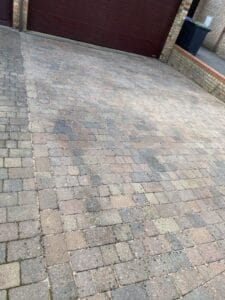
Do DIY oil stain removers actually work?
Honestly, yes, some do, especially on fresh spills.
Absorbent materials like cat litter or granules can sometimes help soak up the excess oil before it penetrates further. MILD driveway degreasers might make smaller stains better if you use them carefully and rinse them through thoroughly.
The problem comes when people move too quickly to harsh chemicals or aggressive pressure washing.
Bleach is rarely the right solution for oil contamination. It may lighten the appearance temporarily but often fails to remove the oil itself. Strong solvents can also damage surrounding surfaces, nearby planting, or protective sealants.
Pressure washing can help, but it is not always enough on its own. In some cases, it can actually spread the stain wider by pushing oil deeper into porous surfaces.
When pressure washing can make oil stains worse
This surprises many homeowners.
If the oil has not been treated properly first, high-pressure cleaning may force contamination further into the surface rather than extracting it. This is especially common with block paving and concrete.
The result is often a lighter surface with a dark shadow still visible underneath.
Professional driveway cleaning usually involves several stages:
- absorbent treatment
- specialist degreasing
- controlled dwell time
- agitation
- surface rinsing
- pressure cleaning at the correct level
- optional sealing afterwards
The process matters just as much as the equipment.
Eco-friendly oil stain removal options…
Many homeowners are understandably cautious about strong chemicals around pets, children, drainage channels, and garden borders.
Biodegradable driveway cleaners and eco-friendly degreasers are now far more effective than they once were. Now they may require longer dwell times, they can often reduce staining without harsh runoff or damage to surrounding areas.
This matters even more where surface water drains into nearby planting or public drainage systems.
A responsible cleaning approach should improve the driveway without creating another problem elsewhere.
Why do some stains never fully disappear
Some older oil stains permanently alter the appearance of porous materials, especially untreated concrete and older block paving.
That does not necessarily mean the cleaning has failed.
In most cases, professional treatment can dramatically reduce the stain’s visibility, restore the surrounding surface, and may improve the overall appearance enough that the mark no longer draws attention.
Trying to chase complete perfection with repeated harsh cleaning can sometimes create patchiness or surface wear that looks worse than the original stain.
A good professional will explain this honestly before work begins.
How to protect your driveway after stain removal
Once the driveway is clean, prevention becomes much easier.
Driveway sealants can help reduce future staining by creating a more resistant surface layer. They do not make the driveway stain-proof, but they slow absorption and make future cleaning easier.
It also helps to:
- deal with fresh spills quickly
- Check for leaking vehicles.
- Rinse contaminated areas before the oil settles.
- avoid harsh DIY chemicals
- Maintain the driveway periodically rather than waiting for heavy buildup.
Small maintenance steps usually cost far less than deep restoration later.
Is professional driveway cleaning worth it?
That depends on the age of the stain, the surface type, and how visible the damage has become.
For light, fresh marks, a very careful DIY approach may be enough.
For older stains, larger affected areas, or delicate surfaces, professional driveway cleaning often saves time, stops damage, and achieves a more even finish.
Most importantly, it removes the uncertainty around which chemicals and methods are actually safe for your driveway.
If you are comparing quotes, it helps to check what is included, whether re-sanding is part of the process for block paving, and whether sealing or aftercare advice is offered afterwards.
Frequently asked questions
Can oil stains be completely removed from a driveway?
Fresh stains often can. Older stains may leave some shadowing depending on the surface material and how deeply the oil has penetrated.
Does pressure washing remove oil stains?
Pressure washing helps, but it usually works best alongside proper degreasing treatment. Pressure alone often leaves residue behind.
What is the best driveway degreaser?
The best option depends on the driveway surface. Some products are suitable for concrete but too harsh for tarmac or resin-bound surfaces.
Can bleach remove oil stains?
Bleach is generally not recommended for oil contamination. It may affect appearance temporarily without fully removing the oil itself.
Should a driveway be sealed after cleaning?
Sealing can help reduce future staining and make ongoing maintenance easier, especially on porous surfaces like block paving and concrete.
What usually works best in the long run
Oil stains can make an otherwise well-kept driveway feel tired and neglected, but the right approach usually improves the situation far more than people expect.
The key is understanding the surface, treating the contamination properly, and avoiding methods that cause more harm than good.
If you are unsure which option is safest for your driveway, it is worth asking before experimenting with strong chemicals or excessive pressure.
We are always happy to talk through the options calmly, with no pressure.