Rust stains on a patio or driveway can be frustrating because they often look worse than ordinary dirt. You may clean the surface, remove the moss and brighten the paving, but the orange or brown mark is still there.
That is because rust is not always simple surface dirt. It is often a stain caused by metal, water, iron-rich materials or garden products reacting with the paving. In some cases, pressure washing may improve the area around it, but the rust mark itself may need a different approach.
The right answer depends on the surface, what caused the stain, how long it has been there and what has already been tried.
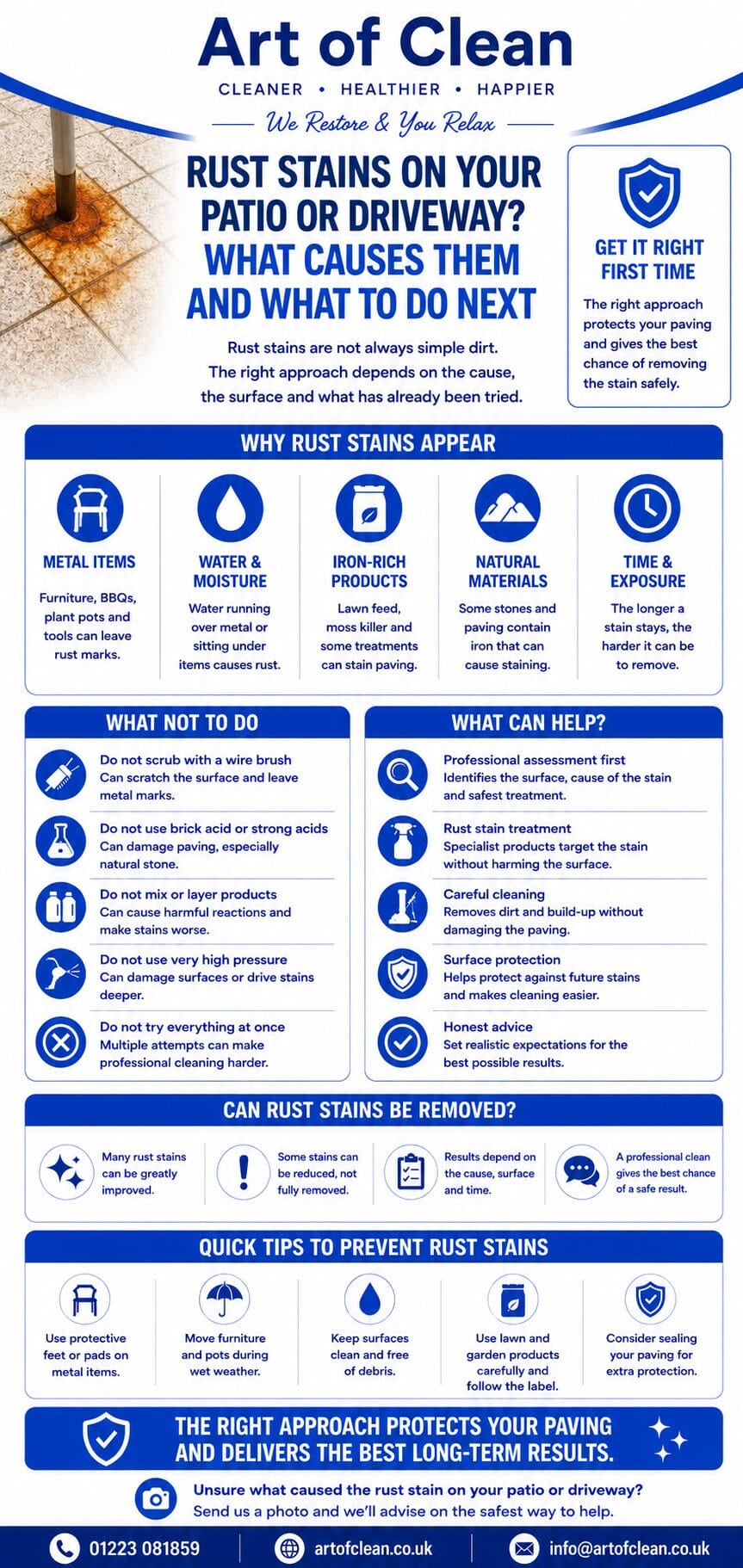
Why rust stains appear on patios and driveways
Rust stains are common on patios, paths and driveways because outdoor surfaces are exposed to water, metal, soil, garden products and weather.
Some of the most common causes include:
- metal garden furniture legs
- BBQs and fire pits
- rusty umbrella stands
- metal plant pots or plant stands
- garden tools left on paving
- water running over metal fixtures
- iron-rich lawn feed or moss killer
- some natural stone or paving materials with iron content
A small metal chair leg can leave a clear orange ring. A BBQ that sits in one place through wet weather can mark the surface underneath. Plant pots can trap moisture, and if there is metal involved, rust can transfer to the paving.
Sometimes the cause is not obvious straight away. The mark may appear after rain, after a garden treatment, or once the surrounding paving has been cleaned and the stain becomes more visible.
Why pressure washing alone may not remove rust
Pressure washing is useful for many outdoor cleaning jobs. It can lift dirt, algae, moss and general surface build-up. It can make a tired patio or driveway look much fresher.
Rust is different.
A rust stain is often a chemical mark rather than loose dirt sitting on top of the paving. That means pressure may clean around it without fully removing the stain itself. In some cases, pushing too much pressure onto the mark can also risk damaging the surface, especially on softer stone or older paving.
This is why a good patio clean starts with a look at the surface, not just the machine. The question is not only “can it be cleaned?” It is also “what is this surface, what caused the stain, and what is safe to use here?”
The type of paving matters
Not all patios and driveways respond the same way to rust stain treatment.
Concrete, block paving, sandstone, limestone, porcelain and natural stone can all behave differently. Some surfaces are tougher. Some are more porous. Some can be sensitive to strong products. Some may already be worn, loose, weathered or previously treated.
Natural stone needs particular care. A product that seems to work on one surface may mark, lighten or damage another. Strong acid products can be risky on certain stones, especially if the surface has not been identified properly.
This is one of the reasons we are careful about giving blanket advice. A rust stain on concrete is not the same job as a rust stain on a sandstone patio. The safer route is to understand the surface before choosing the treatment.
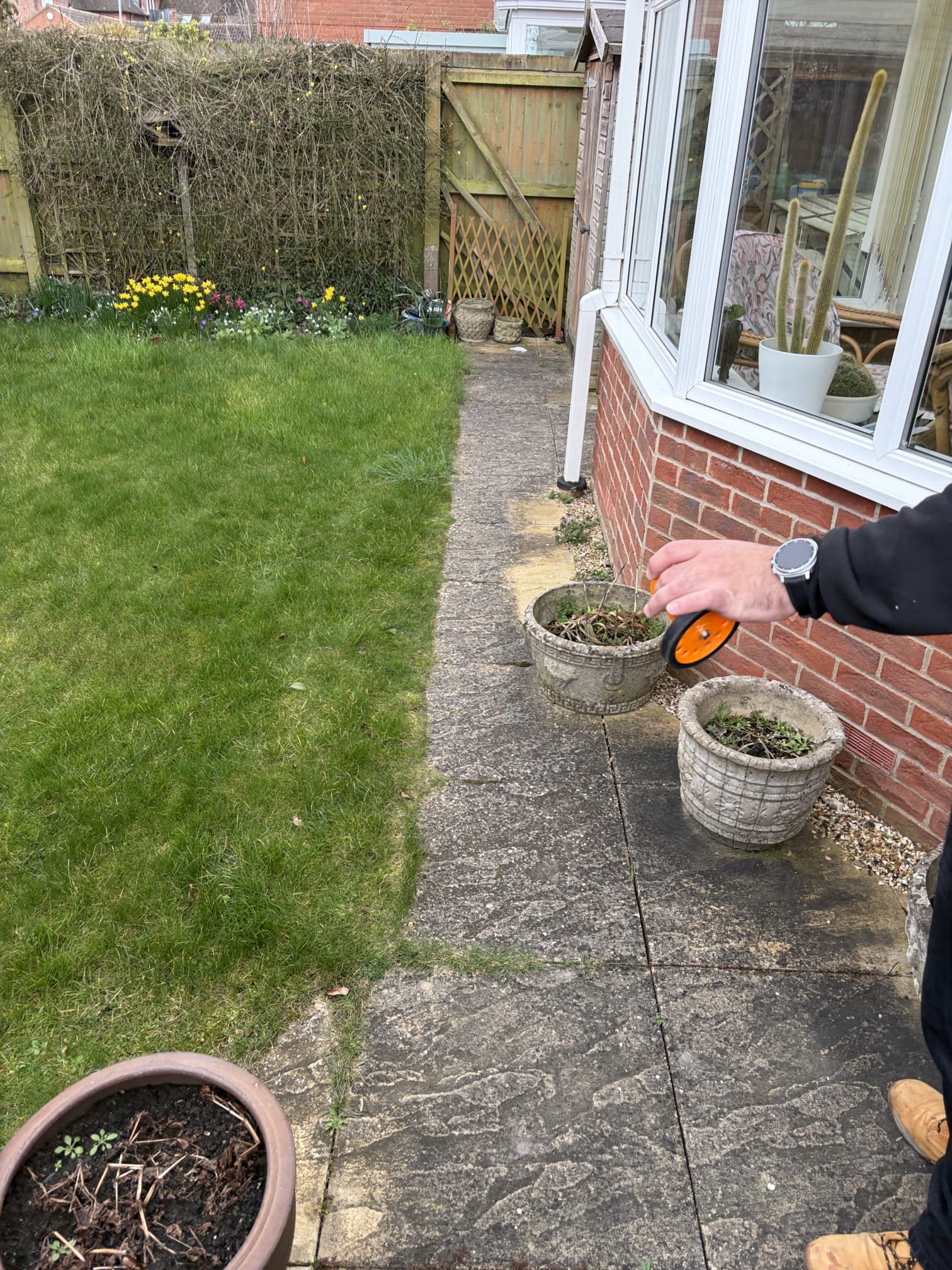
What not to do first
It is understandable to want to try something straight away, especially if the stain is in a visible spot. The problem is that rust stains can become harder to treat once several products have been used.
Try to avoid:
- scrubbing with a wire brush
- using brick acid without knowing the surface
- mixing cleaning products
- applying several stain removers one after another
- using strong products on natural stone without checking suitability
- attacking the area with very high pressure
- Leaving metal items in the same place after cleaning
A wire brush can scratch or leave its own metal marks. Strong products may react badly with some paving. Too much pressure can roughen the surface or make an older slab look patchy.
If the stain is on a new patio, a natural stone surface or a large visible area, it is worth pausing before trying different products.
Can rust stains be removed completely?
Sometimes rust stains improve very well. Sometimes they can be reduced rather than fully removed. Occasionally, the staining may have affected the surface in a way that cannot be completely reversed.
It depends on several things:
- What caused the rust
- How long has the stain been there
- What type of paving is it on
- whether the surface is porous
- whether any products have already been used
- whether the stain is on the surface or coming from within the material
This is why it would not be honest to promise that every rust stain will disappear. A professional clean can often improve the look of the area, but the expected result should be discussed before work starts.
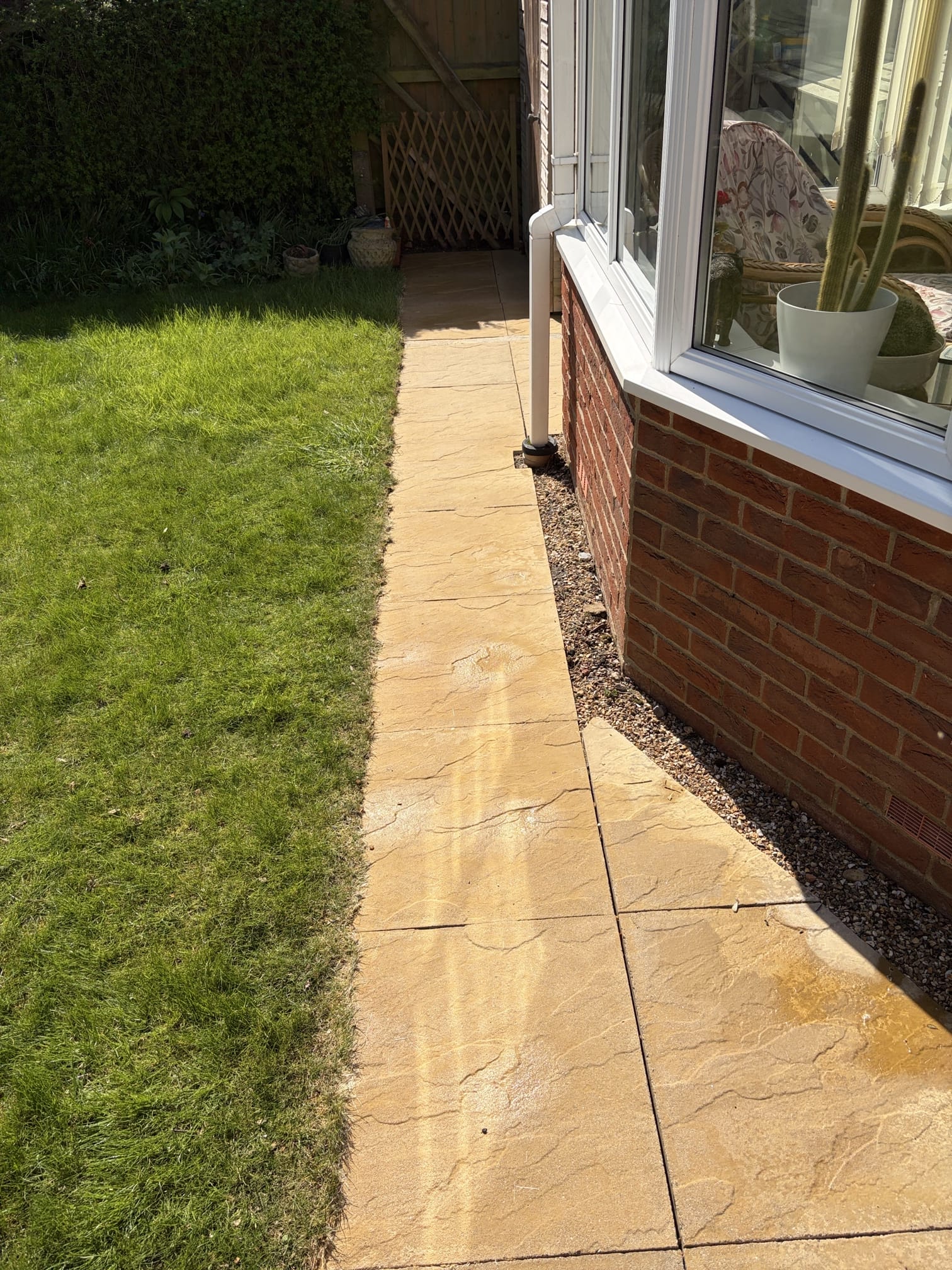
Rust from garden furniture, BBQs and plant pots
Some rust marks are caused by everyday garden items. This is especially common where metal sits directly on paving in wet weather.
Garden furniture feet can leave small, round stains. BBQs and fire pits can leave larger marks. Plant stands, metal pots and decorative garden items can also cause staining if water sits underneath them.
After cleaning, it is worth checking the source. If the same rusty item goes back in the same place, the stain may return. Simple changes can help, such as using protective feet, moving items during wet months or replacing badly rusted fittings.
Rust from lawn feed, moss killer or garden products
Not every orange stain comes from furniture. Some lawn feeds, moss killers and garden treatments contain iron compounds. If these spill, drift or wash onto paving, they can leave orange or brown marks.
These stains can catch people out because the product may have been used carefully on the lawn, but a small amount reaches the patio, path or driveway. The mark may then appear after rain or once the product has reacted.
This is useful to know before cleaning because the treatment route may be different from a simple furniture rust mark. It also helps prevent the same problem from happening again.
What information helps before asking for advice
A clear photo can make the first conversation much easier. Before booking a clean or stain treatment, it helps to know:
- What the surface is, if you know
- When the rust mark appeared
- What was sitting on or near the area
- whether lawn feed, moss killer or fertiliser has been used nearby
- What has already been tried
- whether the paving is natural stone, concrete, block paving or porcelain
- whether the surface is damaged, loose or recently laid
You do not need to know all the answers. Even a couple of photos in daylight can help us give more realistic guidance.
How to reduce the chance of rust stains coming back
Removing or improving the stain is only part of the job. The source matters too.
After the surface has been cleaned, check anything that sits on the patio or driveway for rusting metal. Look underneath furniture feet, BBQ wheels, fire pits, plant stands, hanging basket bases and metal garden ornaments.
It can also help to keep garden chemicals away from paving where possible, especially iron-rich lawn products. If they are used nearby, sweeping or rinsing stray granules before they react with water may reduce the risk of staining.
With patios, prevention is often simpler than correction.
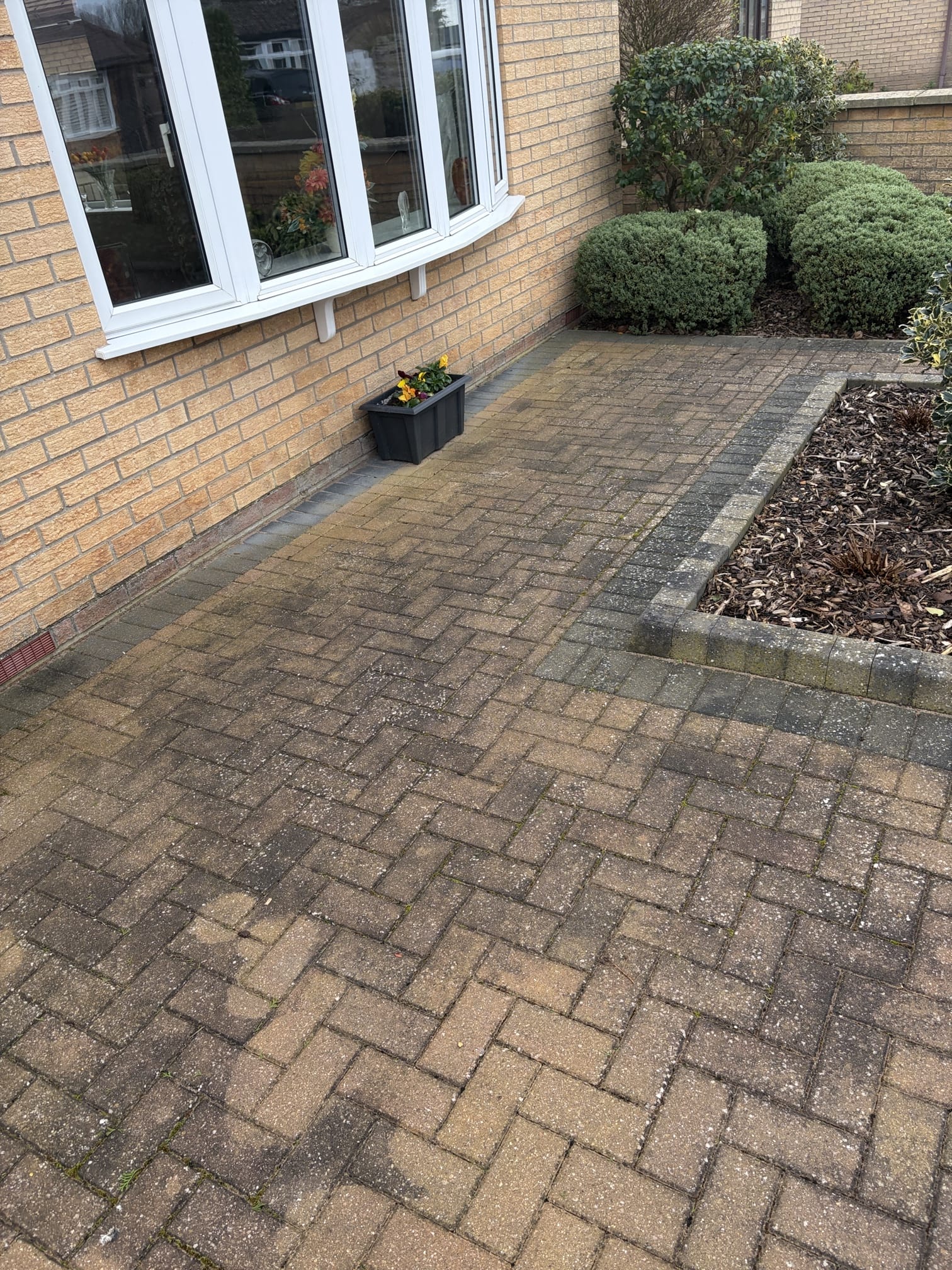
When professional patio or driveway cleaning is worth asking about
It is sensible to ask for help when the stain is large, old, on natural stone, or in a very visible place. It is also worth asking before using strong products if you are not sure what the paving is made from.
Professional cleaning may help when:
- Pressure washing has not removed the rust mark.
- The stain is on sandstone, limestone or natural stone.
- a BBQ, a plant pot or metal furniture has left a clear mark
- Lawn feed or moss killer may have caused the staining.
- Previous products have already been tried.
- You want the wider patio or driveway cleaned at the same time.
- You want a realistic view before spending money.
A careful approach should include looking at the surface, discussing what caused the stain and being clear about what improvement is realistic.
Rust stains on patios and driveways in Cambridge
Patios and driveways around Cambridge see plenty of weather, shade, garden use and seasonal build-up. Rust stains can show up more once a patio has been cleared, furniture has been moved, or a driveway has been washed, and the remaining marks stand out.
If you are unsure what has caused an orange or brown mark, send us a photo. We can tell you what it looks like, what may have caused it and whether professional patio or driveway cleaning is likely to help.
There is no pressure to book from a photo. It is simply a useful first step, especially if the surface is natural stone or if you are worried about making the stain worse.
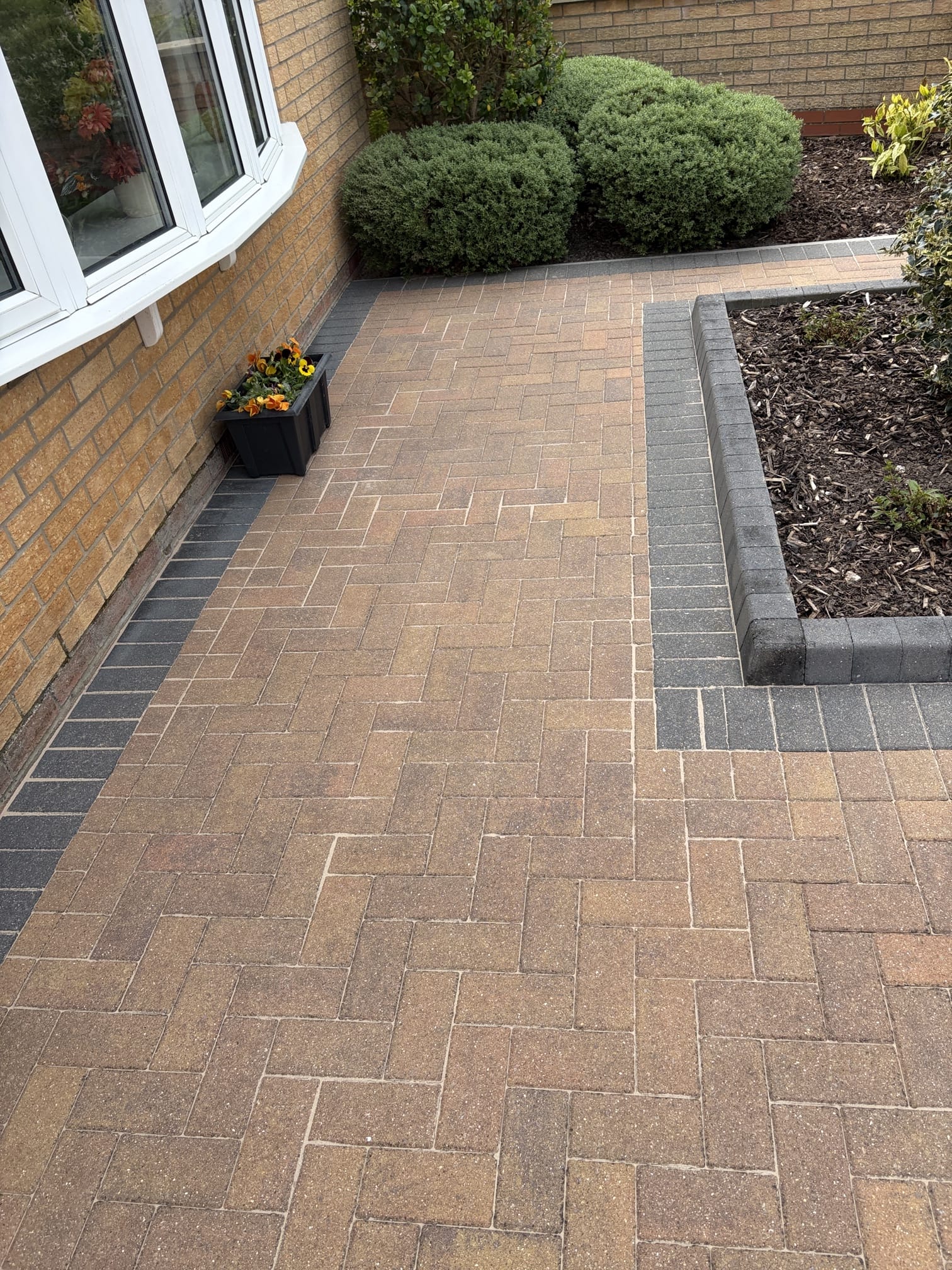
FAQs
Can pressure washing remove rust stains from your patio?
Pressure washing may clean the dirt and algae around the stain, but rust often needs a more specific treatment. The result depends on the paving, the cause of the stain and how long it has been there.
Why has my patio gone orange in places?
Orange marks are often linked to rust or iron. They may come from metal furniture, BBQs, plant pots, tools, lawn feed, moss killer or iron within some paving materials.
Is brick acid safe for rust stains on paving?
Not always. Some paving, especially certain natural stones, can be damaged or discoloured by strong acid products. It is safer to identify the surface before using anything harsh.
Will rust stains disappear completely?
Some rust stains can improve well, but full removal should not be promised without seeing the surface. The result depends on the material, stain age, cause and any previous treatment.
How do I stop rust stains from coming back?
Look for the source. Check furniture feet, BBQ stands, metal plant pots, fire pits, tools and garden products. If the source stays in place, the rust mark may return after cleaning.