
Patio and driveway stains can make the whole outside of a home feel tired, even when the garden, front door or driveway is otherwise well looked after.
Some marks are simple surface dirt. Others are algae, moss, black spot, oil, rust, leaf staining, efflorescence or old residue from something that has already been tried. The difficult part is that different stains behave in different ways, and different surfaces need different care.
The safest starting point is to identify the stain and the surface before applying any cleaner. A pressure washer can make a big difference to many patios and driveways, especially where there is general dirt, moss or algae. But pressure alone will not remove every stain. In some cases, the wrong product or too much pressure can make the problem worse.
This guide explains the most common patio and driveway stains, what may help, what to avoid, and when it is safer to ask for advice before adding anything else.
Now the interview where I got all my information is below for those who would rather watch it or listen to it:
Start by working out what kind of stain you have
Before reaching for a cleaner, take a proper look at the stain.
Ask yourself:
- Is it green, black, orange, brown, white or greasy-looking?
- Is it sitting on the surface, or does it look as if it has soaked in?
- Is it in one patch, under furniture, around a plant pot, near a car or across the whole area?
- Has the patio or driveway been sealed before?
- Have you already used a cleaner, bleach, acid, weedkiller, moss killer or washing-up liquid?
- Is the surface concrete, block paving, sandstone, limestone, porcelain, brick, tarmac or something else?
Do not treat all patio stains the same. A rust stain on sandstone needs a different approach from oil on block paving. Black spot lichen is different from surface algae. White efflorescence is different from bird mess, cement residue or faded sealer.
Guessing can be expensive. The wrong chemical can mark natural stone, affect plants, leave residue, react with previous treatments or make the stain harder to deal with later.
General dirt, dullness and weathering
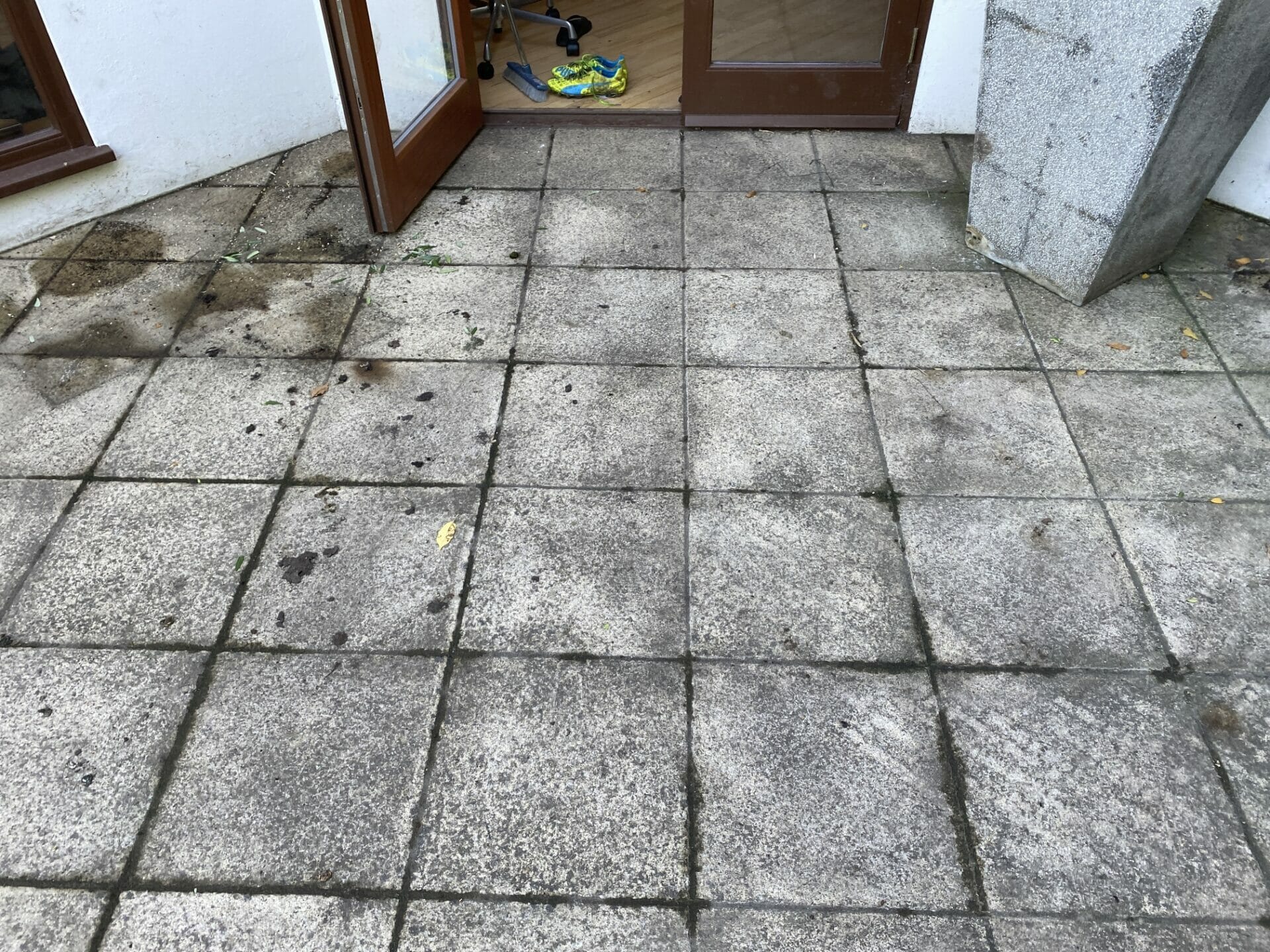
Many patios and driveways do not have one obvious stain. They simply become dull, dirty or weathered over time.
This is common after winter and early spring, when damp weather, leaf fall, mud, shade and general use all build up. Paths, steps and areas near garden furniture often show it first.
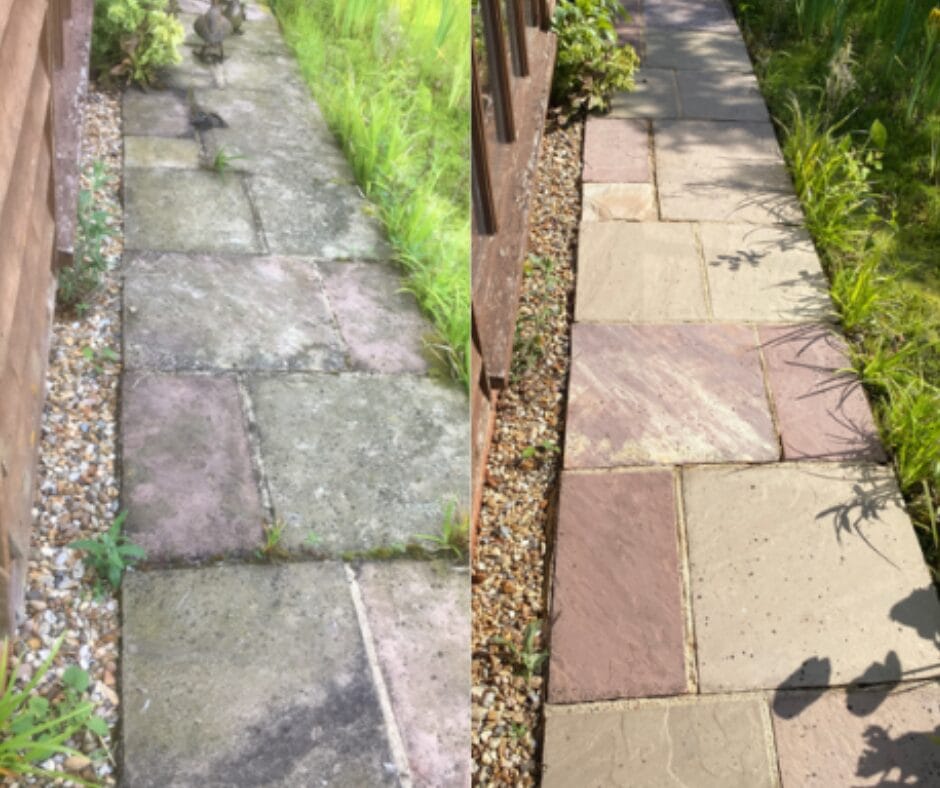
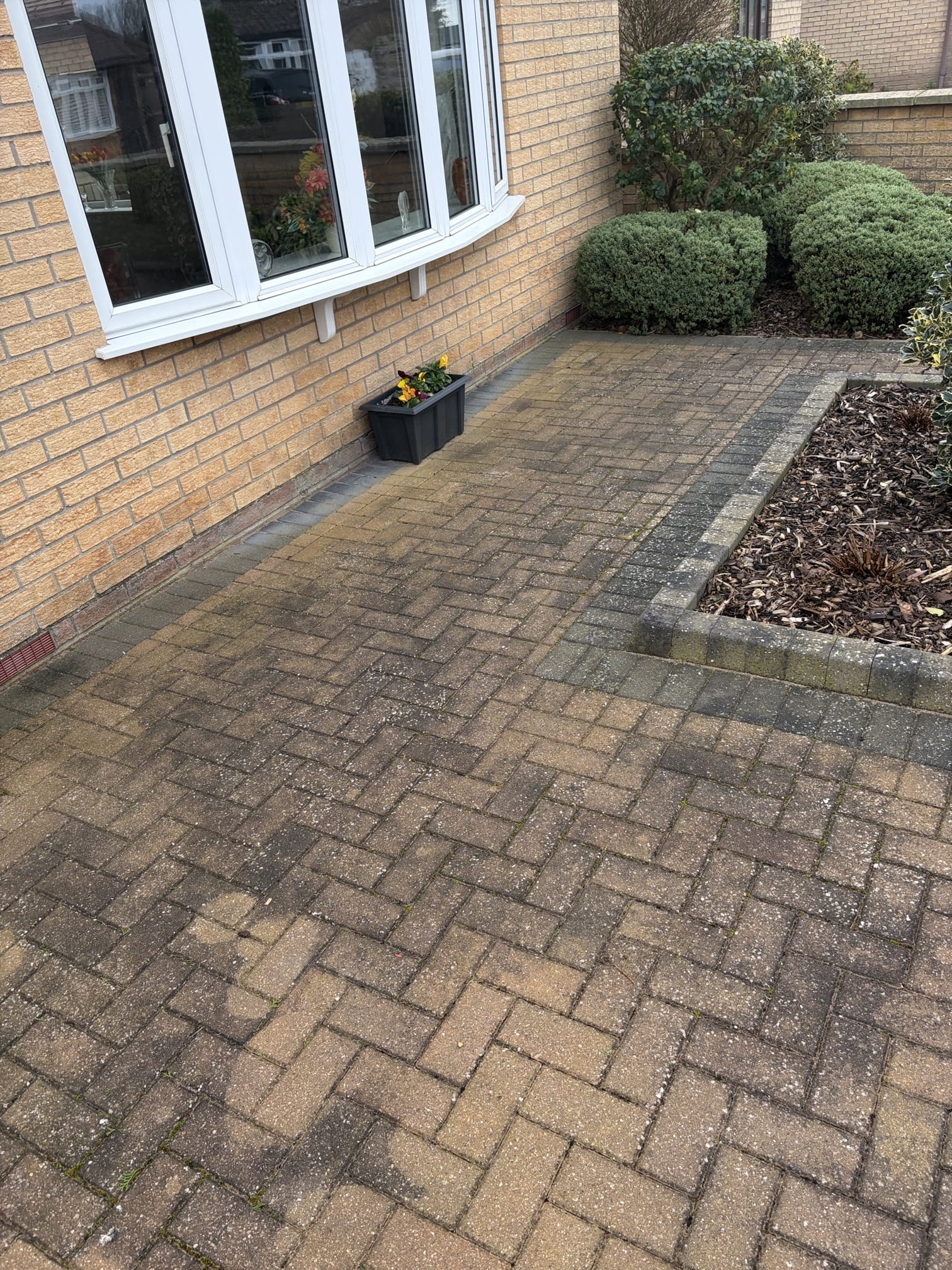
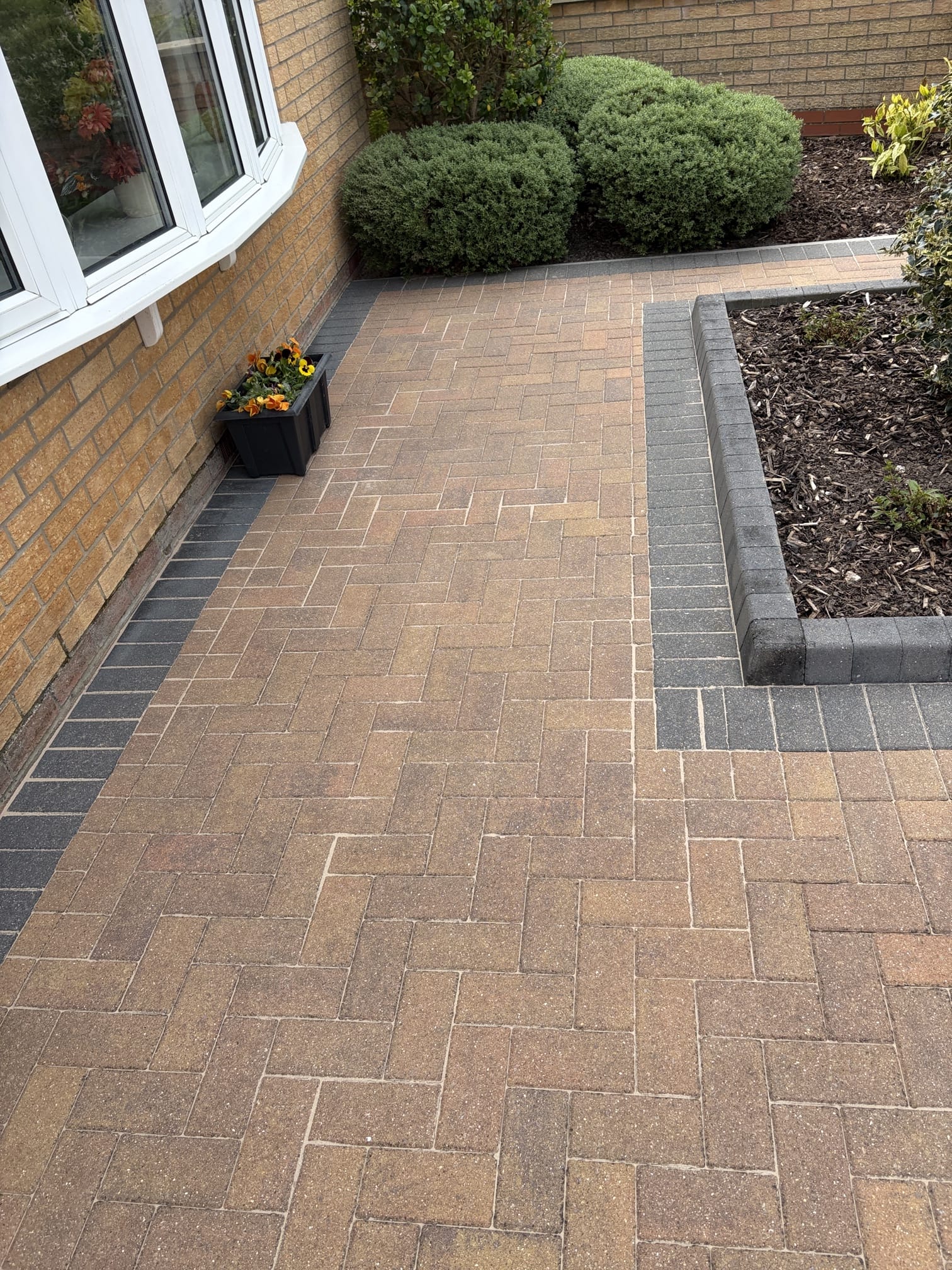
A careful professional clean can often improve this type of build-up well. It can remove loose dirt, algae, moss and general surface grime. On driveways, it can also reveal the original colour of the paving more clearly.
The important point is that pressure washing should be controlled. More force is not always better. Too much pressure, the wrong nozzle or cleaning too close to the surface can roughen softer paving, disturb pointing, remove jointing sand from block paving or make damaged areas worse.
If the patio is older, uneven, loose, natural stone or previously sealed, it is worth getting advice before using aggressive pressure or strong cleaners. You can read more about what a proper clean involves in this guide to professional patio and driveway cleaning in Cambridgeshire.
Green algae and moss
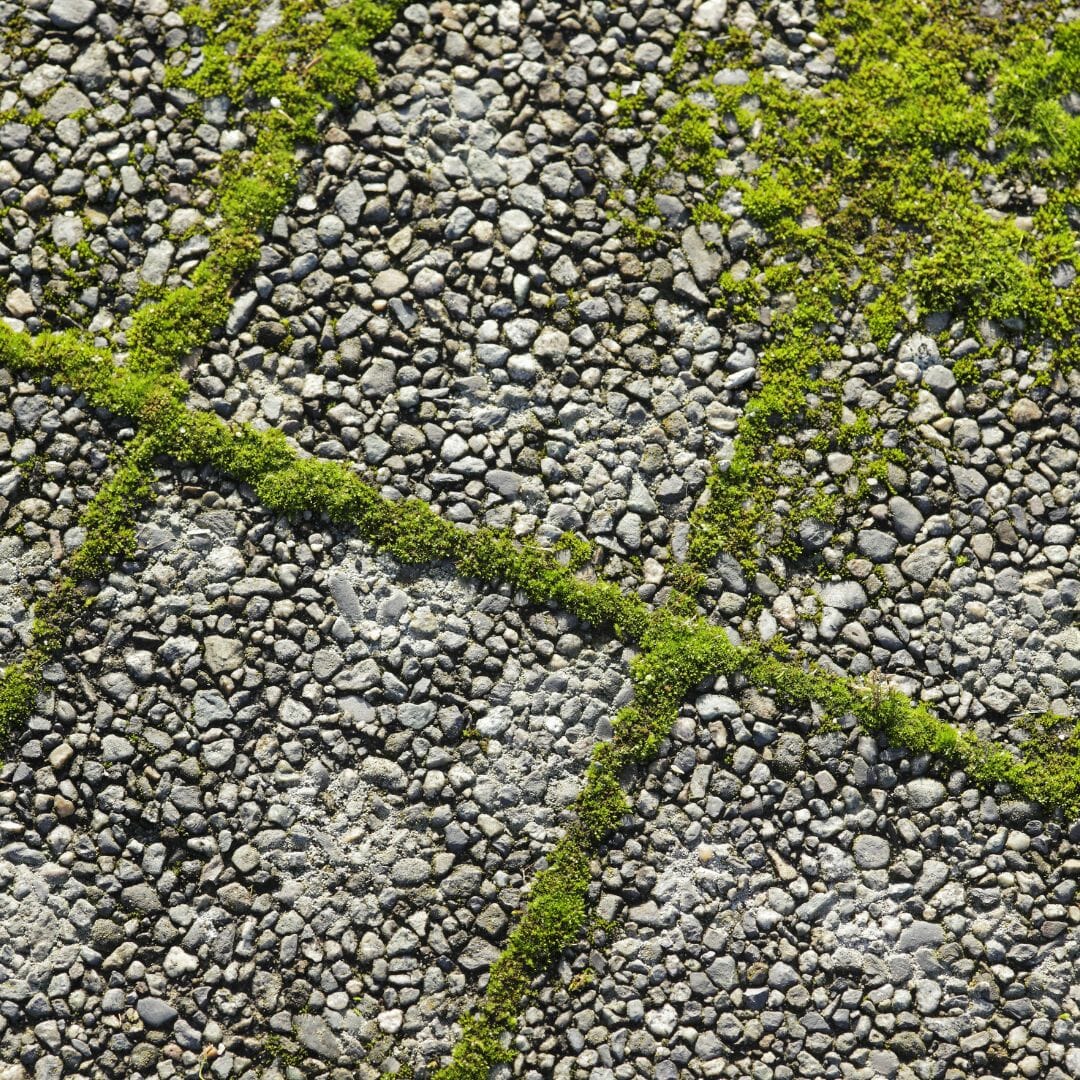
Algae, moss or damp organic growth often cause green staining. You may see it on shaded patios, paths that do not dry quickly, steps, north-facing areas, driveways under trees or corners where leaves collect.
Algae and moss can make paving look neglected, but the bigger concern is often safety. A green patio or path can become slippery, especially when wet.
For light growth, brushing away loose material and keeping the area clearer may help. For heavier growth, professional pressure cleaning can often make a noticeable difference. The result will depend on the surface, the depth of growth and the condition of the joints.
The Royal Horticultural Society guidance on algae, lichens, liverworts and mosses on hard surfaces is useful if you want to understand why damp, shaded outdoor surfaces encourage this kind of growth.
The most useful thing to remember is that cleaning removes the current growth. It does not change the conditions that helped it grow in the first place.
If a patio is shaded, damp, poorly drained or covered by leaves for much of the year, algae and moss can return. Regular sweeping, better airflow, cutting back overhanging plants where sensible and keeping drains clear can all help slow the return.
For more detail on this specific problem, you may also find our guide to removing algae and moss from your patio helpful.
Black spots and lichen
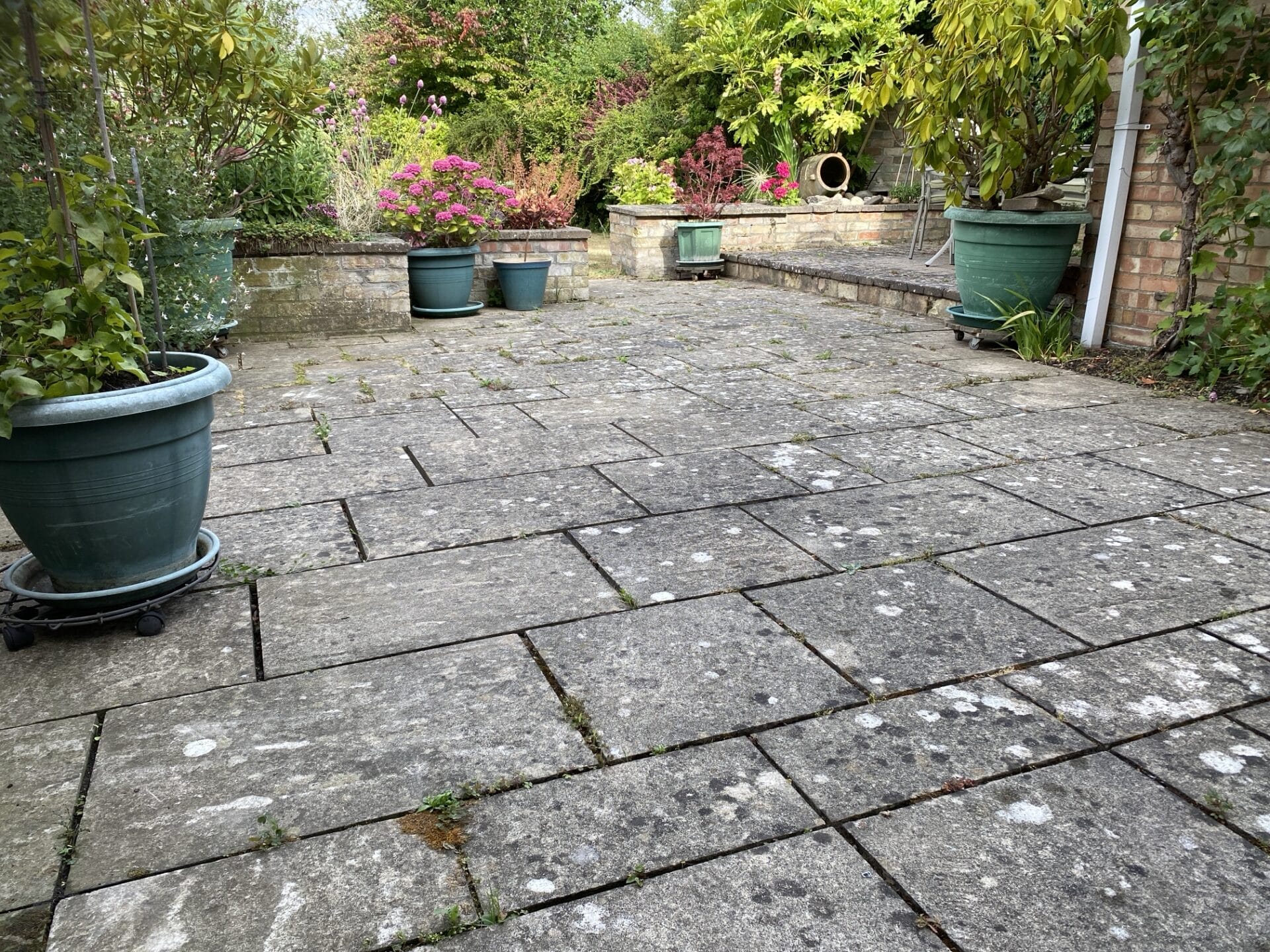
Small black spots on patio slabs are often linked to lichen. These can be much more stubborn than general dirt or algae.
Black spots often sit tightly on or into the surface. They can remain even after a patio has been pressure washed, which is why many homeowners feel frustrated. The area looks cleaner overall, but the black dots are still visible.
Pressure washing may improve the surrounding surface, but it may not fully remove black spot lichen. Some cases need a specific treatment and time to work. Some marks may improve rather than disappear completely.
Be careful before applying strong products yourself. Some online advice suggests harsh cleaners or neat chemical use, but the surface type, nearby planting, drainage, pets and previous treatments all matter.
If you are unsure whether the marks are black spot, lichen, mould, soot, oil splashes or something else, take a photo before adding anything. It is much easier to give sensible advice before you’ve tried several products.
Rust stains on patios and driveways
Rust stains often appear as orange, brown or reddish marks. Garden furniture, BBQs, fire pits, plant pots, metal ornaments, tools, gates, railings or old metal fittings can cause them.
Some lawn feeds, moss killers and garden products can also leave orange or brown marks because they contain iron. These stains can catch people out because the product may have been used on the lawn, but a small amount has reached the paving and reacted after rain.
Rust is not always surface dirt. Pressure washing may clean the area around the rust stain and make the mark stand out even more. Some rust stains need a specific rust treatment. Others may be reduced but not fully removed.
Natural stone needs particular care. Sandstone, limestone and some porous surfaces can react badly to the wrong acid or harsh cleaner. A product that works on one surface may mark another.
Before treating rust, try to work out the cause. Look underneath metal furniture feet, BBQ wheels, plant stands and fire pits. If the source of the rust stays in place, the mark may return after cleaning.
Professional advice is sensible when the stain is large, old, on natural stone, in a very visible area or where previous products have already been tried.
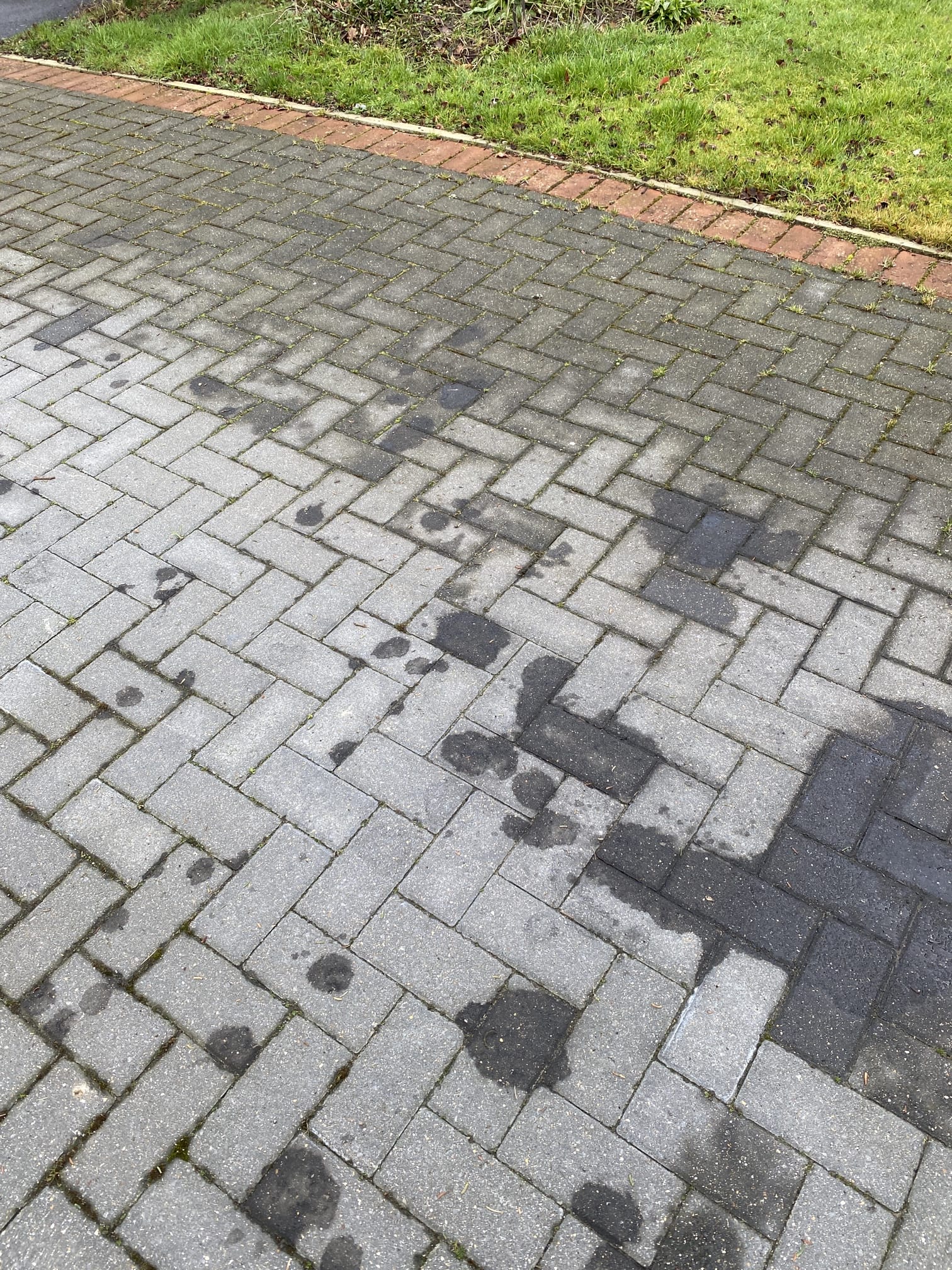
Oil stains on block paving and driveways
Oil stains are common on driveways, especially where cars, motorbikes or garden machinery are parked. They can also appear near bins, tools, BBQs or outdoor equipment.
Fresh oil is usually easier to deal with than old oil. If the spill has only just happened, absorb what you can from the surface without scrubbing it deeper into the paving. Do not spread it around with lots of water straight away.
Older oil stains can soak into porous paving. On block paving, oil may sit in the face of the blocks and collect in the joints. Pressure washing may improve the surrounding driveway, but oil often needs more than water pressure alone.
Some degreasing products can help, but they need to be suitable for the surface and rinsed properly. Strong products can leave residue or affect surrounding areas if used carelessly.
If the driveway is block paving, it may also need re-sanding after a proper clean. Cleaning can remove moss, weeds, loose material and old jointing sand from between the blocks. Fresh kiln-dried sand may then be brushed back into the joints once the surface is dry enough, where this has been included or agreed as part of the work.
If your main concern is the driveway rather than the patio, our driveway cleaning service explains how we look at the area, assess what needs doing and provide a written quotation before work goes ahead.
Leaf stains and tannin marks
Leaves, berries, seed pods, flower heads and garden debris can leave brown or yellowish marks on patios and paths, especially when they sit on the surface while damp.
Tannins or natural pigments often cause these marks. They are common in autumn and in shaded areas where leaves are not cleared quickly.
Some leaf marks fade with weather and cleaning. Others can be more stubborn. This is especially true on porous natural stone. A general clean may improve the area, but individual tannin marks can behave differently from mud or algae.
The best prevention is simple. Sweep leaves away regularly, especially after windy or wet weather. Move pots and garden furniture occasionally so damp organic matter does not sit underneath them for long periods.
If leaf stains are on a pale natural stone patio, avoid experimenting with strong household products. Ask for advice before applying anything that could bleach, etch or discolour the surface.
White powdery marks and efflorescence
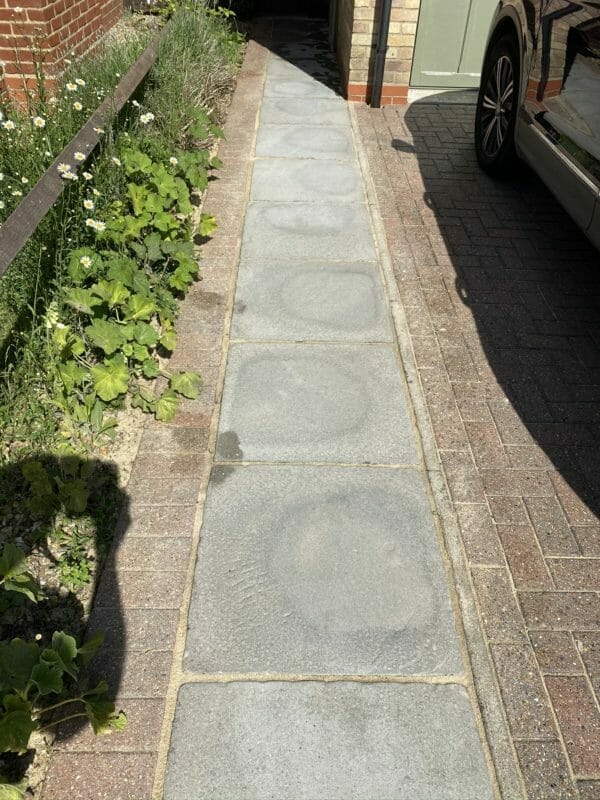
White powdery marks on paving, brickwork or concrete may be efflorescence. This happens when salts move through the material and appear on the surface as moisture evaporates.
Efflorescence can look worrying, especially on newer paving or brickwork, but it is not the same as dirt or algae. It may fade naturally over time, depending on the surface and moisture movement.
Don’t treat efflorescence like ordinary dirt. Brushing may remove some surface powder, but repeated moisture can bring more salts to the surface. Some cleaners may help in suitable situations, but the right approach depends on the material.
Do not assume that strong acid is the answer. On some surfaces, harsh acid products can cause damage or discolouration. If the white staining is heavy, recurring or on natural stone, it is worth asking for advice before treating it.
Bird mess, food spills and BBQ marks
Patios often pick up everyday marks from outdoor living. Bird mess, food spills, grease from BBQs, drink spills and sauces can all leave visible staining.
Remove fresh marks carefully as soon as practical. Avoid scrubbing aggressively into porous stone. If you use water, use it sensibly and avoid spreading greasy residue across a larger area.
BBQ grease and food oils can soak into paving, especially if the surface is porous or unsealed. A general patio clean may improve the wider area, but old grease marks may need a more targeted treatment.
If the mark is near outdoor dining furniture, it is also worth checking whether chair feet, metal table legs or plant pots are creating rust marks at the same time. Patios often have more than one type of stain in the same area.
Paint, cement, mortar and building residue
Paint, cement splashes, mortar residue and building marks are different from normal outdoor dirt.
These stains often need specialist advice because removal depends on what the material is, what the patio is made from and how long the residue has been there. Some products that remove cement or paint can also damage paving if used incorrectly.
Do not use aggressive removers on a new patio without checking the surface first. Be especially careful with natural stone, porcelain, decorative concrete and recently laid patios. A new patio can still be vulnerable to damage, and using the wrong cleaner may create a bigger problem than the original mark.
If a stain has appeared after building work, try to find out what caused it. Was it cement, grout, paint, sealant, adhesive, render, metal dust or something else? That information can make the advice much more accurate.
Pet stains and outdoor odours
Outdoor pet mess should be handled carefully, especially if the patio or driveway is used daily by dogs, cats or children.
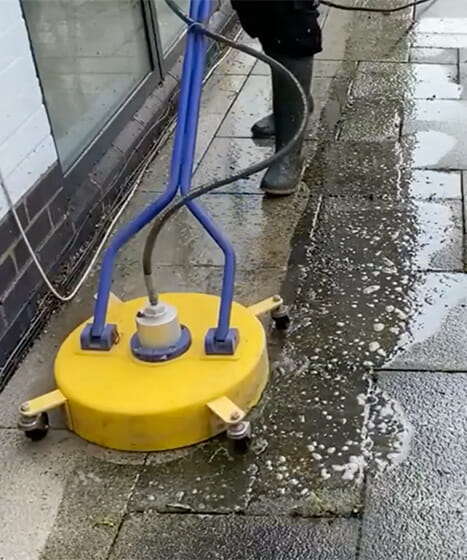
A professional clean can often improve the appearance and freshness of an area, particularly where dirt, algae and general build-up have gathered. But odour, staining and residue can depend on the surface type, how long the issue has been there and what has already been used.
Porous surfaces may hold residue more than harder, sealed or less absorbent materials. Repeated soiling in one area may need more careful expectation setting.
If pets use the area every day, mention this before the clean. It helps the team think about access, drying, rinsing, product choice, run-off and when pets can safely use the area again.
Avoid applying strong cleaners where pets may walk, sniff, lick or lie before you understand what residue could remain.
Different surfaces need different care.
The right stain-removal method depends heavily on the surface.
Concrete can often tolerate more robust cleaning than some natural stone, but old, cracked or rough concrete can still be damaged by aggressive pressure.
Block paving can clean well, but the joints matter. Pressure washing may remove loose sand, moss and weeds from between the blocks. Re-sanding may be needed after cleaning once the surface is dry.
Sandstone is porous and can hold staining. It may also react badly to unsuitable products, especially strong acidic cleaners or harsh treatments.
Limestone can be sensitive to acid and needs careful product choice.
Porcelain is often chosen because it is lower maintenance, but it can still hold dirt, algae, residue and streaking. It may need a different approach from older concrete or natural stone.
Brick can hold dirt and moss in texture and joints. Older brick areas may have weaker pointing or damage that needs care.
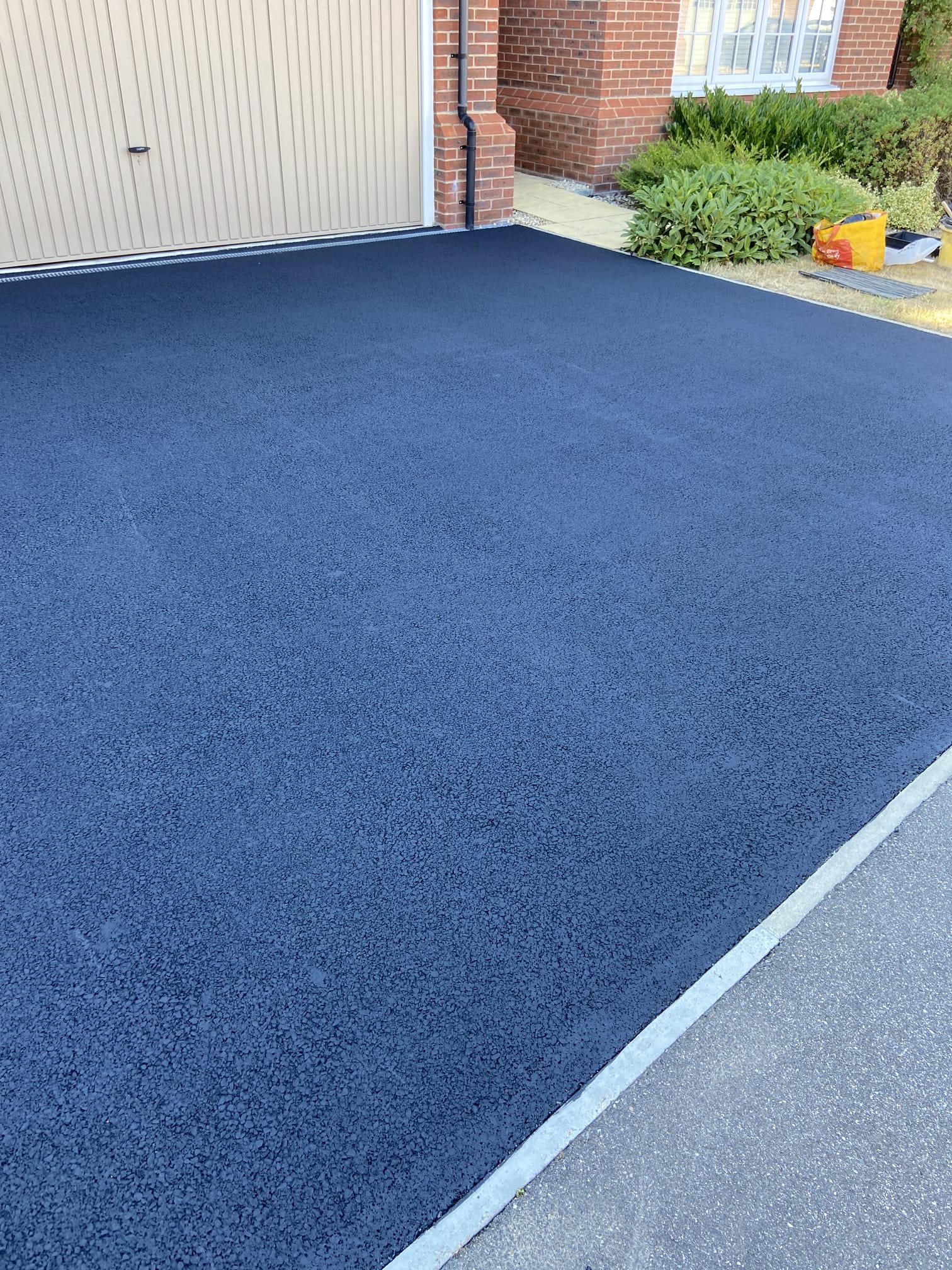
Tarmac is different again. It should not be treated like block paving or stone. Harsh pressure or unsuitable products can affect the surface.
The surface matters as much as the stain. This is why a good clean should not start with maximum pressure or the strongest chemical. It should start with identifying the material and checking its condition.
What not to do first
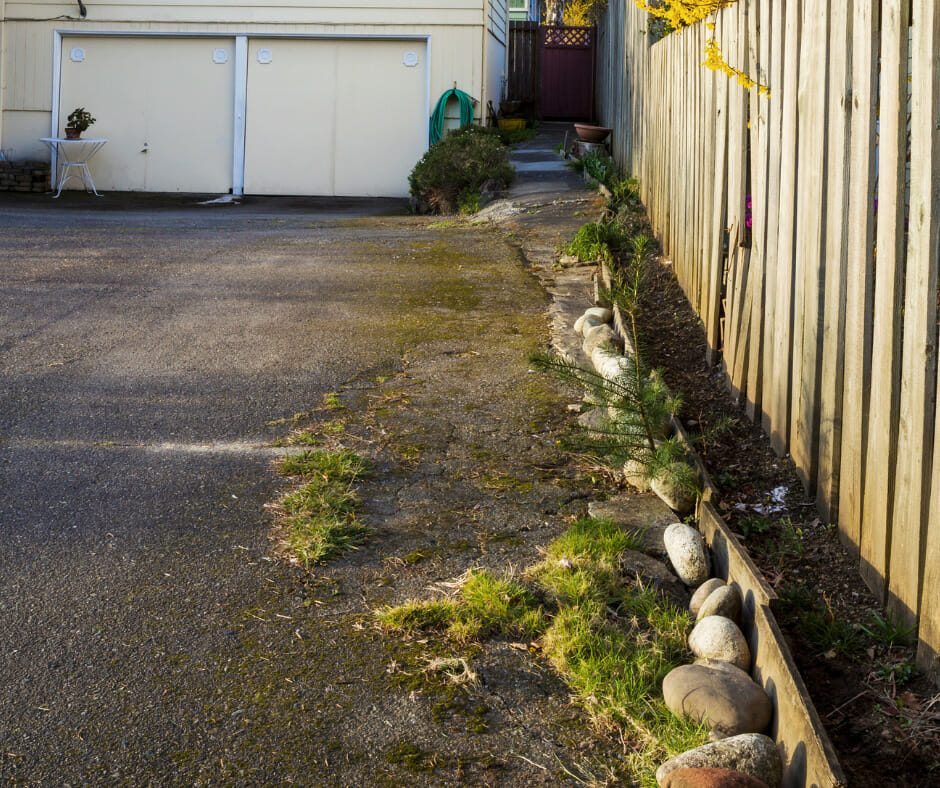
It is understandable to want to fix a stain quickly, especially if visitors are coming or the patio looks bad in photos. But rushing can make some stains harder to remove.
Avoid applying several products one after another. If the first product does not work, adding another may create residue, reaction or discolouration.
Avoid strong bleach, acid or unknown patio cleaners on natural stone unless you know they are suitable.
Avoid using a pressure washer too close to the surface. This can leave lines, roughen paving, disturb joints or create patchy results.
Avoid scrubbing aggressively on delicate, porous or damaged surfaces.
Avoid assuming that every stain is removable. Some marks may improve, some may reduce, and some may remain because the surface has been chemically changed or deeply affected.
The safest first step is often to pause, take photos and ask for advice before adding anything else.
What a professional checks before cleaning
A professional patio or driveway clean should begin with a proper look at the area.
This usually means checking:
- the surface type
- the condition of pointing, joints and edges
- loose slabs, cracks or damaged areas
- where rinse water will drain
- access for equipment
- nearby plants, lawns, ponds, drains and delicate areas
- whether the patio or driveway has been sealed before
- whether staining needs a specific treatment
- whether re-sanding, sealing or re-pointing may be needed afterwards
- whether the weather is suitable for the work
Outdoor cleaning is affected by more than dirt. Weather, drainage, access, surface condition and previous treatments all influence what can be achieved.
For example, a shaded patio with poor drainage may take longer to dry and may become green again sooner. A block paving driveway may look much better after cleaning but still need fresh jointing sand. A natural stone patio may need caution around strong products.
Can all patio and driveway stains be removed?
No. It would not be honest to promise that every patio or driveway stain can be removed completely.
Many stains can be improved. Some can be removed very well. Others may reduce but still leave a shadow, especially if they are old, deep, chemical, oily or on a porous surface.
The result can depend on:
- what caused the stain
- how long it has been there
- what the surface is made from
- whether the surface is porous
- whether any products have already been used
- whether the area is sealed
- whether the stain is on the surface or has soaked in
- the condition of the paving
- the weather and drainage
A good cleaning company should explain what is realistic before promising a result. If they need to inspect the stain or test a small area first, that is usually a sign of care rather than uncertainty.
How to prepare before professional patio or driveway cleaning
A little preparation can make the visit so much smoother.
Move small pots, furniture, toys, garden tools, bins and loose items where practical. Sweep away loose leaves if you can. Make a note of any areas you are worried about, such as loose slabs, damaged joints, poor drainage, old sealer or a stain where you have already tried a product.
If there is no outside tap, awkward access, locked gates or limited parking, mention this before the visit. Outdoor cleaning often uses equipment that needs sensible access.
If pets use the garden, plan where they will go while the work is being done and while the surface dries.
If the stain was caused by a specific item, such as a rusty BBQ, plant pot, car leak or lawn product, tell the team. That information may affect the treatment advice.
If you are not sure what caused the stain, you can get in touch and send us a photo before applying another product. It is much easier to give sensible advice before several cleaners have been tried.
How to reduce stains coming back
Cleaning is only part of looking after a patio or driveway. Prevention matters too.
Sweep leaves regularly so they do not break down into damp organic matter. Move pots and furniture occasionally so the surface underneath can dry. Keep drains clear. Cut back overhanging plants where sensible to improve airflow and sunlight. Check metal furniture feet, BBQs, fire pits and plant stands for rust.
If your driveway has oil staining, keep an eye on the source. A car leak will keep causing marks until it is dealt with.
If your block paving has been cleaned, ask whether re-sanding is needed. If a surface may benefit from sealing, ask for advice rather than assuming it is automatically the right choice. Sealing depends on the surface, condition, previous treatment and how the area is used.
A patio does not need to be perfect to be worth caring for. Small habits can keep it safer, cleaner-looking and easier to maintain between deeper cleans.
For a wider look at long-term care, our article on whether regular cleaning can extend the life of your patio and driveway explains why build-up, weeds, algae and standing water are worth dealing with before they become harder to manage.
When should you ask for professional advice?
It is worth asking for help before using strong products if:
- the stain is on natural stone
- you do not know what the surface is
- the patio or driveway has been sealed before
- the stain is old, dark, oily or rusty
- pressure washing has not removed the mark
- you have already tried one or more products
- the area is large or very visible
- the surface is loose, cracked or damaged
- drainage is poor
- pets or children use the area regularly
- you want the wider patio or driveway cleaned at the same time
You do not need to diagnose the stain perfectly before getting in touch. A few clear photos can often help the team understand the surface and explain what may be realistic.
Professional patio and driveway stain advice in Cambridge
Cambridge Patio and Driveway Cleaners can help with patios, paths and driveways that have become dirty, slippery-looking, stained or weathered.
The right approach depends on the surface and the stain. Some areas may need a deep pressure clean. Some may need a more specific treatment. Block paving may need re-sanding once dry. Some surfaces may need sealing advice, re-pointing discussion or a more cautious cleaning method.
If you are worried about black spots, rust, oil, algae, moss or unknown staining, send a photo or ask for a quotation. The team can look at what is realistic before any work is agreed.
That is often the safest way forward: understand the surface, understand the stain, then choose the right method.
FAQs about removing stains from patios and driveways
What is the best way to remove stains from a patio?
The best method depends on the stain and the surface. General dirt, algae and moss may improve with careful pressure cleaning. Rust, oil, black spot and efflorescence may need more specific advice. Avoid strong products until you know what the patio is made from.
Can pressure washing remove all patio stains?
No. Pressure washing can remove a lot of dirt, algae, moss and loose build-up, but it may not remove every stain. Rust, oil, black spot lichen, tannin marks and old staining can need different treatment. Some marks may improve rather than disappear fully.
How do I remove black spots from patio slabs?
Black spots are often linked to lichen and can be stubborn. Pressure washing alone may not remove them. Some cases need specific treatment, but the safest route depends on the paving material and surrounding area. Test carefully and ask for advice if the surface is natural stone or previously sealed.
Can rust stains be removed from sandstone?
Rust stains on sandstone can sometimes be improved, but the result depends on the cause, age of the stain, surface condition and any previous treatment. Sandstone can be sensitive, so avoid harsh acids or unknown products unless you know they are suitable.
What removes oil from block paving?
Fresh oil should be absorbed carefully before it spreads. Older oil may need a suitable degreasing treatment and careful rinsing. Pressure washing may improve the area but may not remove deep oil by itself. Block paving may also need re-sanding after cleaning once dry.
Why does my patio keep going green?
Patios often go green because algae and moss grow in damp, shaded areas. Cleaning removes current growth, but shade, poor drainage, leaf fall and lack of airflow can allow it to return. Regular sweeping and keeping the area clearer and drier can help slow regrowth.
Is bleach safe to use on a patio?
Bleach is sometimes mentioned in patio cleaning advice, but it is not suitable for every surface or situation. It can affect plants, pets, drainage routes, natural stone and previous treatments. If you are unsure what the surface is or where the rinse water will go, ask for advice first.
What is the white powder on my patio?
White powdery marks may be efflorescence, which is salt coming to the surface as moisture moves through the material. It can sometimes fade over time. Do not assume acid is the right answer, especially on natural stone or sensitive surfaces.
Should I seal my patio after stain removal?
Possibly, but not always. Sealing depends on the surface type, condition, previous treatments and how the patio is used. Some surfaces may benefit from sealing, while others may not need it or may need more preparation first.
Can professional cleaning make my patio look new again?
A professional clean can often make a patio or driveway look much fresher, but “like new” should not be promised without assessment. Older surfaces, deep staining, worn areas, damaged pointing and previous treatments can all affect the final result.
To see how we can help you with your tarmac driveway, check out this blog:
To find a patio and driveway cleaning company near you, check out this blog:
 Written by Tracey Gilbey, Marketing and Admin Coordinator at Art of Clean.