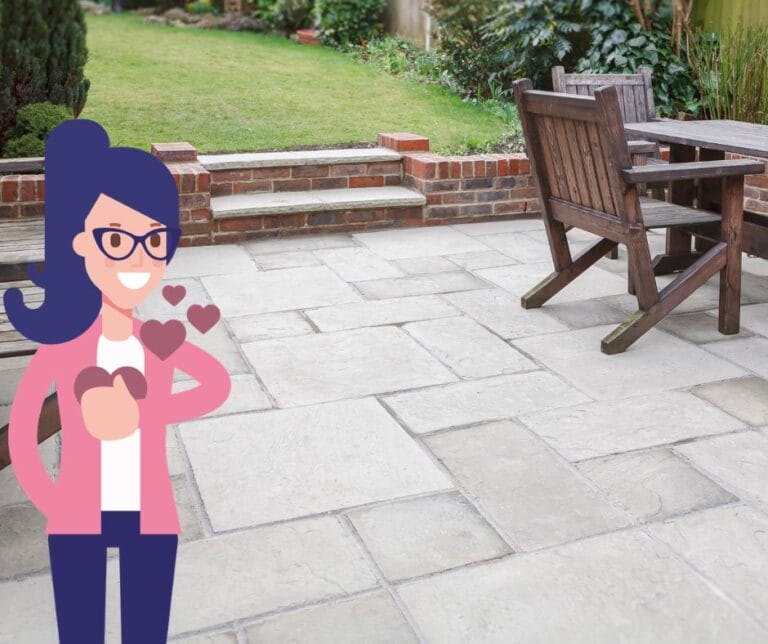
Yes, regular cleaning can help your patio and driveway last longer, but the honest answer is that it depends on the surface, the condition it is already in, and how the area is cleaned.
A patio or driveway does not usually fail overnight. More often, dirt, moss, algae, weeds, leaf matter and standing water build up slowly. At first the surface just looks dull. Then it may start to feel slippery, joints may open up, weeds may settle into gaps, and stains may become harder to remove.
Regular cleaning helps because it removes the build-up before it has time to make the surface harder to look after. It can also help you spot small issues before they become bigger, such as loose slabs, low jointing sand, damaged pointing, drainage problems or staining that needs more than a quick rinse.
If you are looking for help with a tired outside space, our patio cleaning in Cambridge and driveway cleaning in Cambridge pages explain what we can look at before quoting.
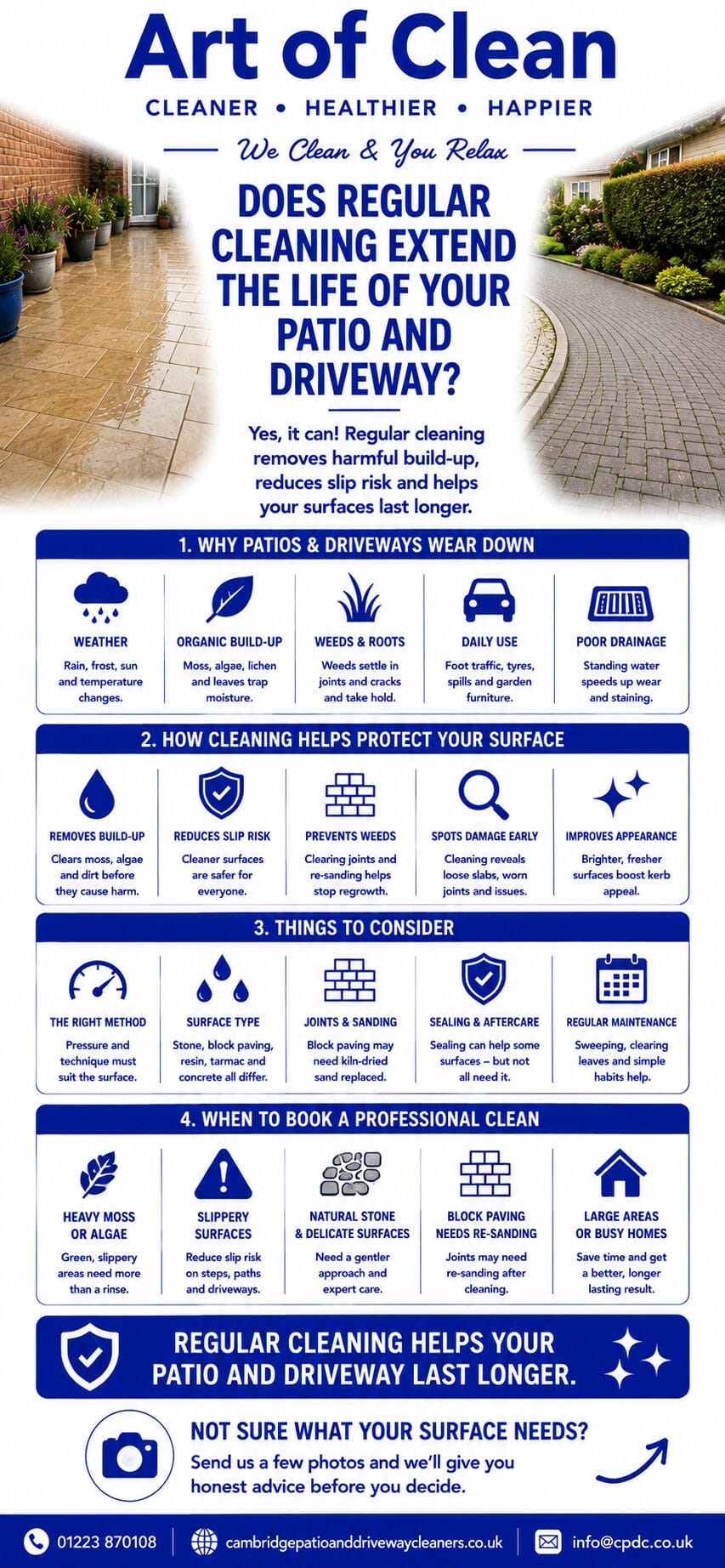
Why patios and driveways wear down over time
Outdoor surfaces deal with a lot. Rain, shade, frost, soil, leaves, car tyres, foot traffic, garden furniture, plant pots and general weather all leave their mark.
On patios, the most common problem is organic growth. Algae can appear as a green film. Moss often gathers in joints, corners and shaded areas. Lichen and black spots can cling more stubbornly to stone and paving. On driveways, you may also see tyre marks, oil stains, weeds in block paving joints and darker areas where water sits.
The Royal Horticultural Society explains that algae and similar growths thrive in wet conditions, especially where shade and poor air circulation stop the surface drying properly. It also notes that hard surfaces can become slippery where these growths are present. You can read their guidance here: RHS advice on algae, lichens, liverworts and moss on hard surfaces.
Cleaning does not change the weather, shade or drainage around your home, but it can remove the current build-up and make the surface easier to maintain.
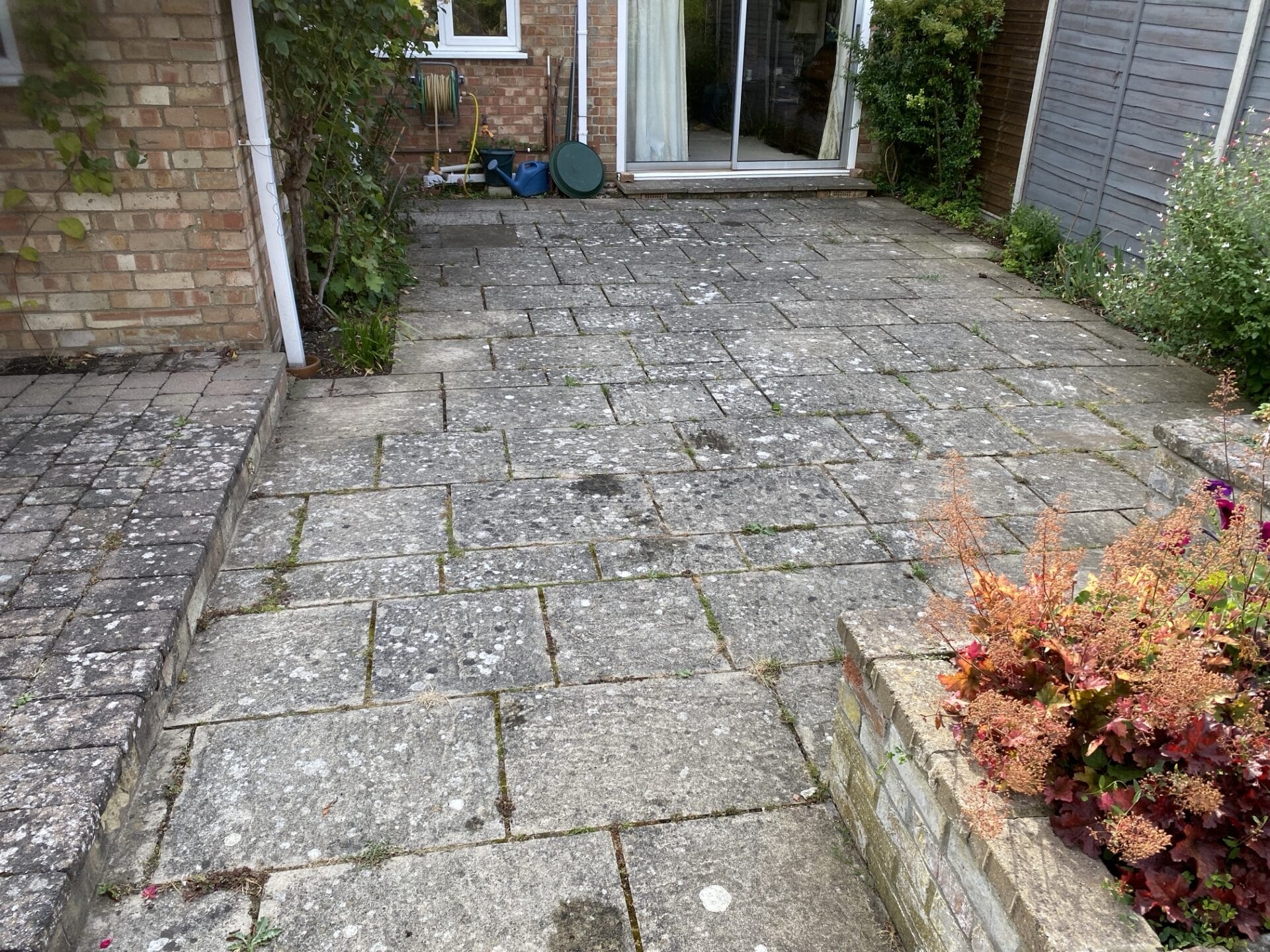
How cleaning helps protect the surface
A careful clean removes the layer of dirt and organic growth that holds moisture against the surface. This matters because damp areas tend to attract more algae, moss and grime. The longer it is left, the more established the growth becomes.
For block paving, cleaning can remove weeds, moss and loose debris from between the blocks. After cleaning, some driveways may need fresh kiln-dried sand brushed back into the joints. This helps support the paving and reduces the open gaps where debris and weeds can settle again. We explain this in more detail here: Do you put the sand back in on my block paving driveway?
For slabbed patios, cleaning helps clear algae, moss and general soiling from the surface and joints. If the pointing is weak or slabs are loose, that needs to be known before cleaning starts. A good clean should not be about using the highest pressure possible. It should be about choosing the right method for the surface.
For tarmac, resin, concrete, porcelain, Indian sandstone and natural stone, the same principle applies. The right approach depends on the material and condition. Some surfaces can take more pressure than others. Some need a gentler method. Some stains may need specific treatment.
Cleaning can reduce slip risk.
A green patio may not just be unattractive. It can become slippery, especially after rain.
This matters on steps, paths, driveways, garden routes, side passages and areas used by children, older visitors or anyone carrying shopping, tools or garden items. Regular cleaning helps remove the moss and algae that make surfaces feel slick underfoot.
It is also worth watching the areas that go green first. These are usually shaded corners, north-facing paths, places under trees, areas near pots and spaces where water does not drain away quickly. If those areas keep turning green, the cleaning is only part of the answer. Better airflow, regular sweeping, clearing leaves and keeping drains clear can all help slow the return.
For a fuller guide, see our article on removing algae and moss from your patio.
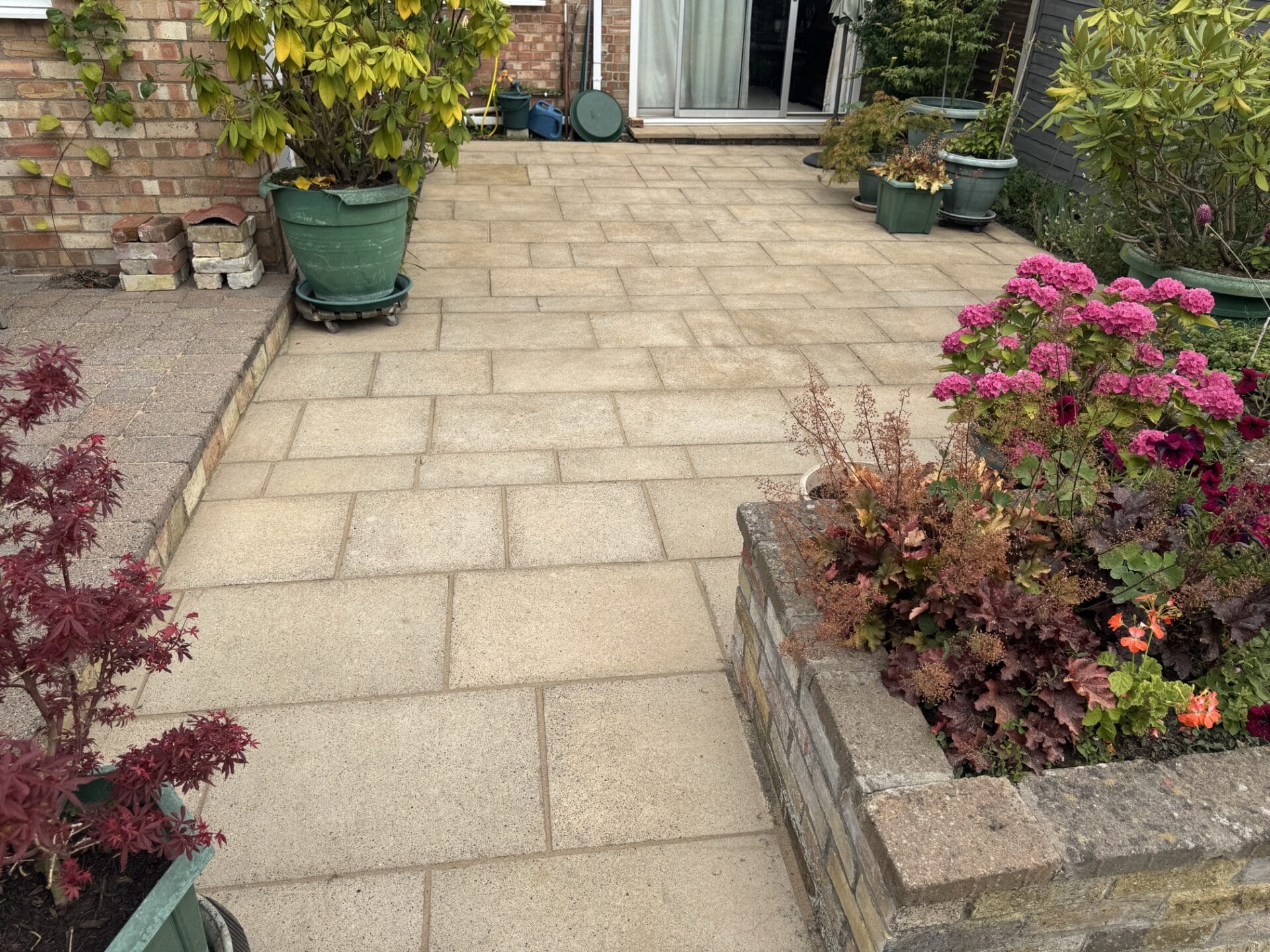
It can help prevent weeds becoming established.
Weeds often take hold where there is soil, sand, leaf matter or debris in joints and cracks. Once they are established, roots can push into small gaps and make the area look neglected.
Regular sweeping and periodic cleaning help reduce the material weeds grow in. On block paving, re-sanding after cleaning may also be important where the old jointing sand has washed out or become low.
This doesn’t mean a driveway will become weed-free forever. We’d love to say it does, but your outdoor surfaces need ongoing care. But it does mean you are less likely to face heavy growth that takes more time and effort to remove later.
Cleaning helps you spot damage early.
One of the overlooked benefits of cleaning is that it shows you what is really going on.
When a patio or driveway is covered in dirt, moss or black marks, it is harder to see the condition of the surface underneath. Once cleaned, you may notice open joints, loose blocks, cracked slabs, worn pointing, drainage issues or staining that needs separate attention.
This is useful. It gives you a chance to decide what is worth doing next. Sometimes a clean is enough. Sometimes re-sanding, sealing, re-pointing or repair advice may be sensible. Sometimes an older surface has simply reached a point where cleaning will improve it, but not make it look new.
That honest distinction matters. A professional clean can often make a patio or driveway look much fresher, but it cannot reverse every stain, repair cracked paving or fix poor drainage.
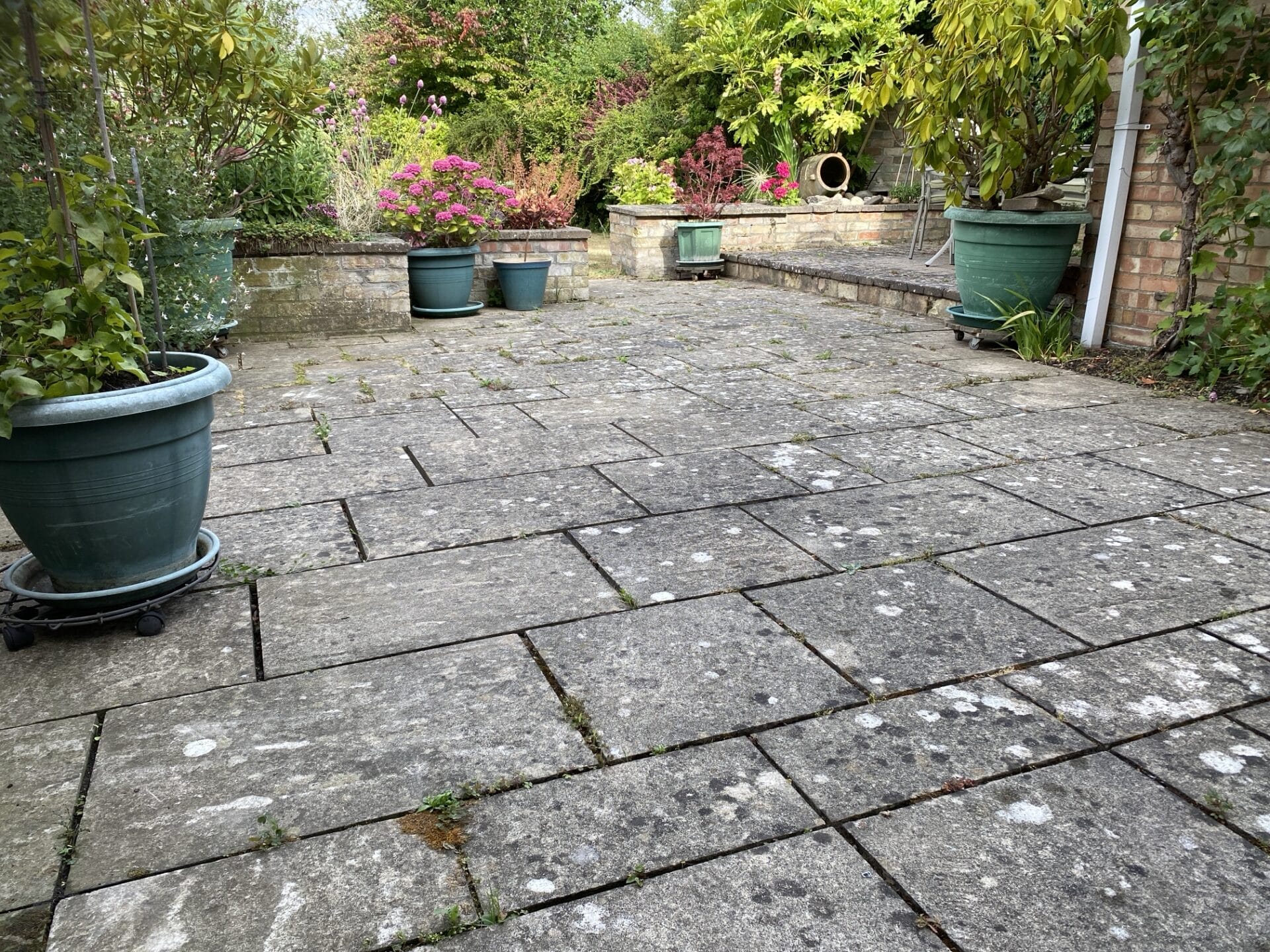
What about black spots, oil stains and stubborn marks?
Not every mark behaves the same way.
Algae and moss often respond well to careful cleaning. General dirt and weathering can usually be improved. Black spots, lichen, rust, oil and old staining can be more stubborn.
Black spots on patios are often lichen, which can cling tightly to the surface. Pressure washing may improve the overall patio but leave some black marks behind if they need further treatment. We explain this in more detail here: What are the black spots on my patio?
Oil stains on driveways can also be difficult, especially if they have had time to soak in. Some oil marks may improve, but older stains can leave a shadow. It is usually better to ask before applying strong unknown products, because the wrong treatment may make the surface patchy or harder to clean.
Does pressure washing damage patios and driveways?
Pressure washing can be very effective, but it needs judgement.
Too much pressure, the wrong nozzle, holding the lance too close or repeatedly working over a fragile area can cause problems. It can disturb weak pointing, remove jointing sand from block paving, mark softer surfaces or make loose areas worse.
This is why a professional should look at the surface first. Before cleaning, it helps to check:
- what the surface is made from
- whether joints, pointing or blocks are loose
- where the water will drain
- whether any area is fragile, sealed or previously treated
- whether sanding, sealing or re-pointing may be needed afterwards
A good result is not just about making the surface brighter on the day. It is about cleaning in a way that suits the material and does not create avoidable problems.
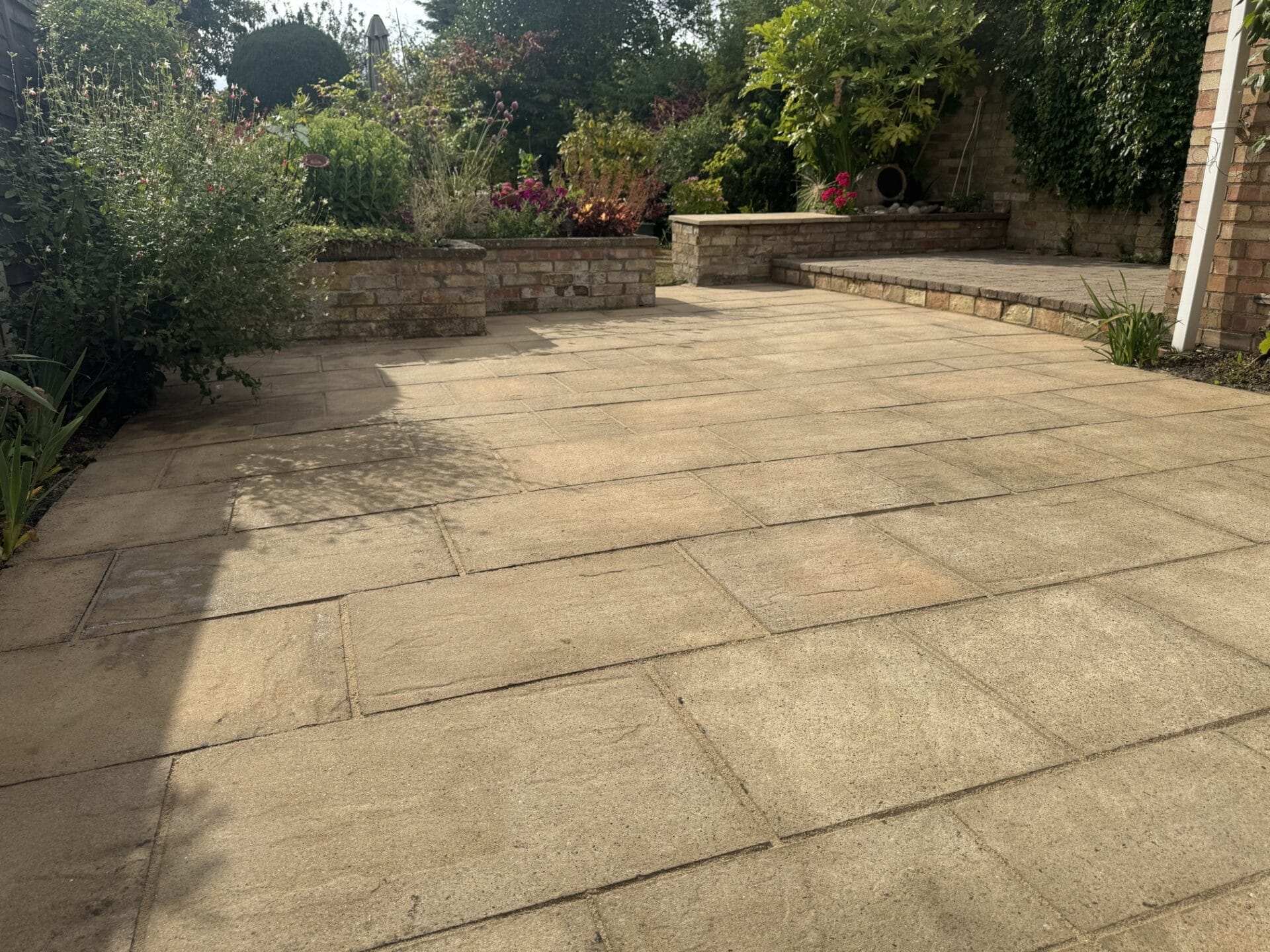
How often should a patio or driveway be cleaned?
There is no perfect timetable for every home.
Many patios and driveways benefit from a deeper clean once a year, especially if they are shaded, under trees, heavily used or prone to moss and algae. Some areas may need attention more often. Others may stay in good condition for longer with simple sweeping and occasional spot cleaning.
The best timing is often spring, summer or autumn. Spring cleaning clears winter build-up before the garden is used more. Summer cleaning can help before guests, family visits or outdoor plans. Autumn cleaning can remove slippery build-up before wetter weather settles in.
For driveways, you can read more here: How often should you clean your driveway?
Small habits that help after cleaning
Once your patio or driveway has been cleaned, simple habits can help keep it looking better for longer.
Sweep leaves before they break down into damp organic matter. Keep drains clear where safe to do so. Move pots and garden furniture occasionally so the surface underneath can dry. Cut back overhanging plants where sensible. Watch shaded corners, steps and edges, because these often turn green first.
For block paving, ask whether re-sanding is needed. For some suitable surfaces, sealing may be worth discussing, but it should not be assumed as part of every clean. The right choice depends on the surface, condition, previous treatment and how you use the area.
So, does regular cleaning extend the life of your patio and driveway?
Yes, it can.
Regular cleaning helps by removing moss, algae, weeds, dirt and staining before they become harder to manage. It can reduce slip risk, improve the appearance of your home, slow avoidable deterioration and help you spot small problems earlier.
The most useful approach is not to promise that every surface can be made perfect. It is to look at the patio or driveway, understand the material, clean it carefully and explain what is realistic.
If your patio or driveway is green, slippery, dull or stained, send us a few photos or ask for a quotation. Cambridge Patio and Driveway Cleaners can assess the surface and help you decide whether it needs a simple clean, a deeper clean, re-sanding, sealing advice or further surface care.
FAQs
Can cleaning make my patio or driveway look new again?
Sometimes it can make a dramatic difference, but it depends on the surface. Cleaning can remove a lot of dirt, moss, algae and build-up, but it cannot reverse every stain, crack, worn area or drainage issue.
Will moss and algae come back after cleaning?
They can return if the conditions stay the same. Shade, damp, leaf fall, poor airflow and standing water all encourage regrowth. Regular sweeping, better airflow and keeping drains clear can help slow it down.
Is pressure washing always the best option?
No. Pressure washing is useful for many patios and driveways, but it must be suitable for the material and condition. Fragile joints, loose slabs, natural stone, porcelain, tarmac and block paving all need sensible judgement.
Should block paving be re-sanded after cleaning?
Often, yes. If pressure cleaning removes old jointing sand, fresh kiln-dried sand may need to be brushed back into the joints once the surface is dry enough. This should be checked as part of the job.
Should I seal my patio or driveway after cleaning?
Possibly, but not always. Sealing depends on the surface, condition, previous treatment and what you want the area to do. It should be discussed after the surface has been assessed.
 Written by Tracey Gilbey, Marketing and Admin Coordinator at Art of Clean.